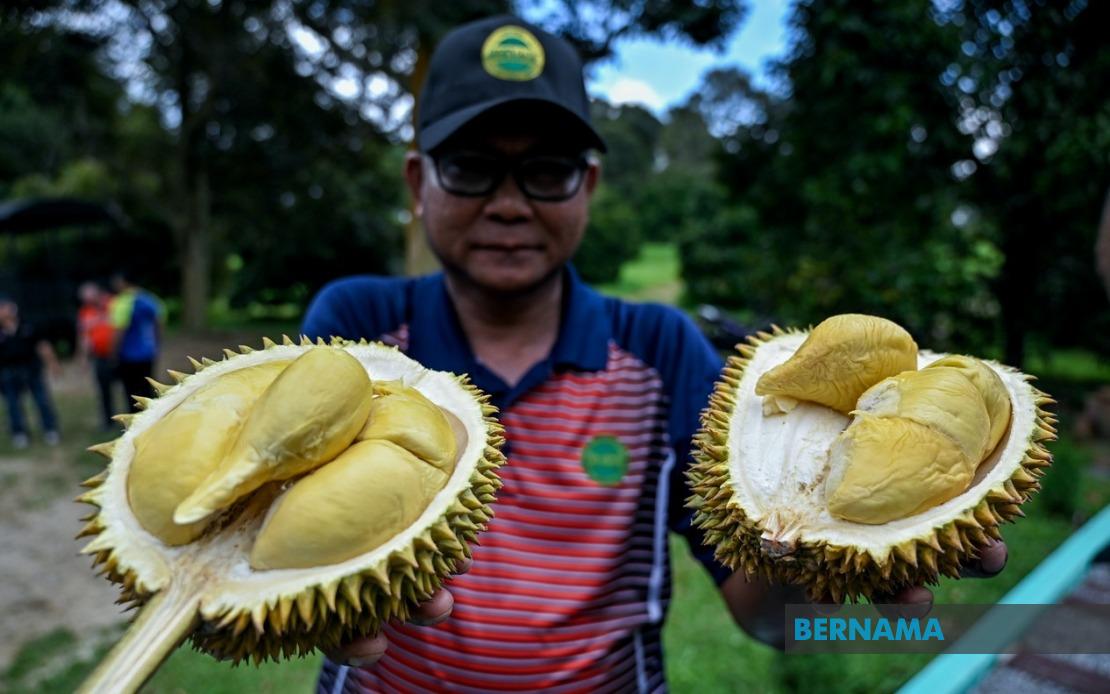
The Malaysian Agricultural Research and Development Institute (MARDI) has achieved a significant milestone in its domestic durian breeding programme, with nearly 25,000 MS88 hybrid durian trees now cultivated across the country. According to Datuk Dr Mohamad Zabawi Abdul Ghani, the institute's director-general, this expansion encompasses roughly 242 hectares of land, with the bulk of plantings concentrated in Selangor and Malaysia's east coast states. The development represents a substantial commitment to advancing the nation's durian sector through scientifically-bred hybrid varieties tailored to modern agricultural and consumer demands.
The MS88 variety belongs to a trio of premium durian hybrids that MARDI has methodically developed since the early 2000s, joining the earlier MDUR78 and MDUR79 cultivars in the institute's commercial portfolio. These predecessors have successfully captured enthusiasm among dedicated durian consumers, establishing a proven market foundation for the newer MS88 introduction. The staggered release strategy across multiple varieties has allowed MARDI to test market response and refine cultivation techniques while building farmer confidence in institutional breeding programmes.
Dr Mohamad Zabawi disclosed his remarks during the Duriotourism MARDI Kuala Kangsar initiative, an educational and promotional event at the MARDI Agrotechnology Park that brought together media representatives and industry stakeholders. The venue itself serves as a living laboratory where researchers and visitors can observe hybrid durian performance in controlled conditions, demonstrating MARDI's commitment to transparency and knowledge-sharing within the horticultural community. This outreach approach helps legitimise the institute's scientific credentials while familiarising growers and traders with emerging varieties before large-scale commercial adoption.
Looking beyond the established MS88 line, MARDI is actively advancing a pipeline of three additional hybrid durian varieties intended to command premium positioning within an increasingly sophisticated market. The institute's research team is subjecting these candidates to rigorous evaluation protocols, assessing multiple dimensions including intrinsic fruit quality characteristics, measurable consumer acceptance across diverse demographic and regional groups, and practical suitability for the diverse farming systems and environmental conditions found across Malaysia's durian-growing zones. This multifaceted screening process reflects MARDI's acknowledgement that breeding success requires balancing horticultural performance with commercial viability and farmer adoption rates.
The development timeline for these emerging varieties remains deliberately protracted, with MARDI officials maintaining discretion regarding nomenclature and public disclosure until an optimal market launch window materialises. Dr Mohamad Zabawi explained that the institute is coordinating the debut of these new hybrids with the peak durian season, a strategic choice that allows prospective growers and consumers to directly experience the fruit under conditions of maximum demand and market attention. By timing the introduction to coincide with heightened consumer interest and media coverage, MARDI can maximise publicity surrounding each new variety's distinctive attributes and commercial prospects.
This sequenced approach to varietal release reflects a broader professional maturation within Malaysia's durian research ecosystem. Unlike previous decades when new cultivars sometimes entered commercial circulation with limited pre-market preparation, contemporary practice emphasises gradual introduction coupled with farmer education and supply chain alignment. The MS88's current penetration across 242 hectares provides valuable real-world performance data that MARDI can reference when promoting successor varieties to sceptical or risk-averse cultivators. Each successful establishment builds institutional credibility essential for encouraging farmer investment in emerging hybrids.
The geographic concentration of MS88 plantings in Selangor and east coast states reflects both infrastructure availability and market proximity considerations. Selangor's position as Malaysia's primary commercial and population centre ensures ready access to domestic wholesale markets and direct-to-consumer retail channels, while east coast concentrations in states such as Pahang and Terengganu align with traditional durian cultivation strengths and existing farmer networks. This distribution strategy balances institutional research objectives with practical commercial objectives, testing performance across Malaysia's varied tropical microclimates whilst establishing supply infrastructure for eventual large-scale commercialisation.
The durian sector holds particular strategic importance for Malaysia's agricultural economy, with the fruit commanding premium prices in both domestic and international markets, particularly across East and Southeast Asia. Investment in hybrid development responds directly to industry demands for enhanced disease resistance, improved fruit consistency, extended shelf-life, and cultivation adaptability to smaller-scale farming operations. As Malaysian durian competes with expanding Thai and Indonesian production, superior genetics represent a differentiation mechanism that protects farmer revenues and maintains domestic market share against regional competitors.
MARI's hybrid programme also addresses sustainability imperatives increasingly central to agricultural policy dialogue. Scientifically-optimised varieties can potentially reduce pesticide dependency, improve water-use efficiency, and enhance productive output per hectare—concerns that resonate with both environmental advocates and resource-constrained smallholder farmers. The institute's emphasis on varietal suitability across diverse farming scales suggests recognition that premium durian production must remain accessible to producers of varying capital endowment, not exclusively large commercial estates.
For Malaysian growers considering adoption of MS88 or forthcoming varieties, the extended evaluation period preceding full-scale introduction offers opportunity for incremental exposure and risk assessment. Collaborative demonstration plots maintained through MARDI's extension networks permit interested farmers to observe hybrid performance under conditions similar to their own operations, reducing information asymmetries that have historically complicated technology adoption. This pedagogical approach—combining scientific rigour with practical accessibility—underpins successful agricultural transformation across Southeast Asia's most dynamic farming communities.

