President Ferdinand Marcos Jr has signalled unwavering confidence in the Philippines' Armed Forces even as the National Bureau of Investigation identifies active military personnel as persons of interest in connection with an alleged assassination conspiracy against the nation's leader. The remarks come amid extraordinary circumstances, with Vice President Sara Duterte's ongoing impeachment trial becoming the forum for revelations about serious security threats to the presidential office.
During proceedings on Wednesday, NBI Director Melvin Matibag disclosed that investigators are examining the involvement of uniformed armed forces members in the suspected plot. His statement also implicated an individual attached to the Vice President's own security detail as another person warranting investigation. These revelations inject an unusual dimension into the impeachment case, transforming it into a venue for discussing matters that typically fall within the purview of national security briefings and presidential security protocols.
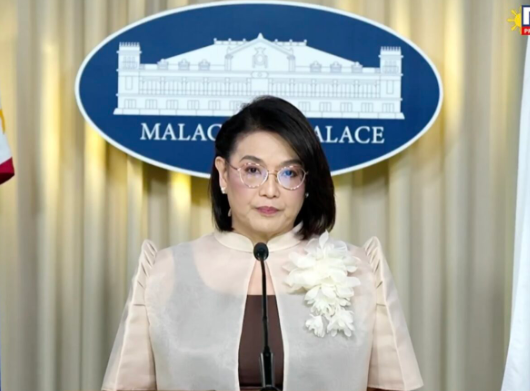
Palace Press Officer Claire Castro addressed the matter during a subsequent press briefing, emphasising that the President's institutional trust in the military establishment remains intact despite the troubling allegations. This position represents a delicate political balance, acknowledging potential security threats while avoiding any suggestion that the armed forces as an institution have become unreliable or compromised. Castro framed the situation as one requiring identification and accountability of individuals rather than wholesale questioning of military loyalty or competence.
The Palace's approach reflects a pragmatic understanding of civil-military relations in the Philippine context. Marcos cannot afford to visibly lose confidence in the institution responsible for his personal security and the nation's defence, yet the government must appear to take seriously any credible threat to the President's life. Castro's remarks therefore emphasise that wrongdoing by individual uniformed personnel should be treated as aberrations requiring investigation rather than indicators of systemic institutional failure.
Castro also articulated concern about those who might seek to violate the law under the guise of protecting particular political interests. This observation appears directed at the broader political landscape, where factionalism within security agencies has periodically surfaced as a concern for Philippine administrations. The implicit message is that loyalty to individuals should not override adherence to constitutional and legal obligations, a principle particularly relevant in a nation with a history of military interventions in political disputes.
Remarkably, Vice President Duterte herself made startling public statements during the impeachment proceedings, claiming that she had warned a third party about potential violence directed at herself, President Marcos, fellow administration figures Liza Araneta, and presidential cousin Martin Romualdez. Her cryptic invocation of instructions left in case of her death suggested the Vice President takes personal security threats seriously, though the specific context and targets of her concerns remained unclear during her testimony.
The appearance of these security matters within an impeachment trial creates unusual procedural complications. The NBI subsequently issued a subpoena to Vice President Duterte, seeking her formal testimony regarding the assassination plot allegations, but she declined to comply. This non-compliance adds another layer of complexity to an already turbulent political moment, raising questions about whether security concerns or other considerations influenced her decision not to respond to the investigative summons.
For Malaysian observers, the Philippine situation underscores persistent governance challenges in managing civil-military relations during periods of political tension. The intersection of constitutional crises with national security matters presents a test of institutional resilience. When assassination plots allegedly involve active military personnel and there exists sufficient concern for the investigative bodies to formally pursue leads, it signals a security state under considerable strain.
The Palace's carefully calibrated messaging—maintaining institutional confidence while acknowledging individual accountability—represents a holding pattern rather than a resolution. This approach buys time for investigators to pursue leads, but it also leaves fundamental questions about security apparatus reliability unresolved. For a President whose administration depends significantly on military support, appearing to doubt the armed forces creates political vulnerability, yet ignoring credible threats poses existential risks.
The larger implication for regional observers is that Southeast Asian democracies operating in post-authoritarian contexts continue grappling with the challenge of subordinating military institutions to civilian control while maintaining functional security relationships. The Philippine experience illustrates how political crises can quickly escalate into security crises when allegations of unlawful conspiracy touch the armed forces themselves.
As the investigation proceeds and the impeachment trial continues, the tolerance of these uncomfortable ambiguities will likely face mounting pressure. Whether the NBI can substantiate its claims about military involvement in the alleged plot, and whether Vice President Duterte will ultimately cooperate with investigators, may determine whether this episode becomes a cautionary tale about institutional vulnerabilities or a case study in successful management of internal security threats.

