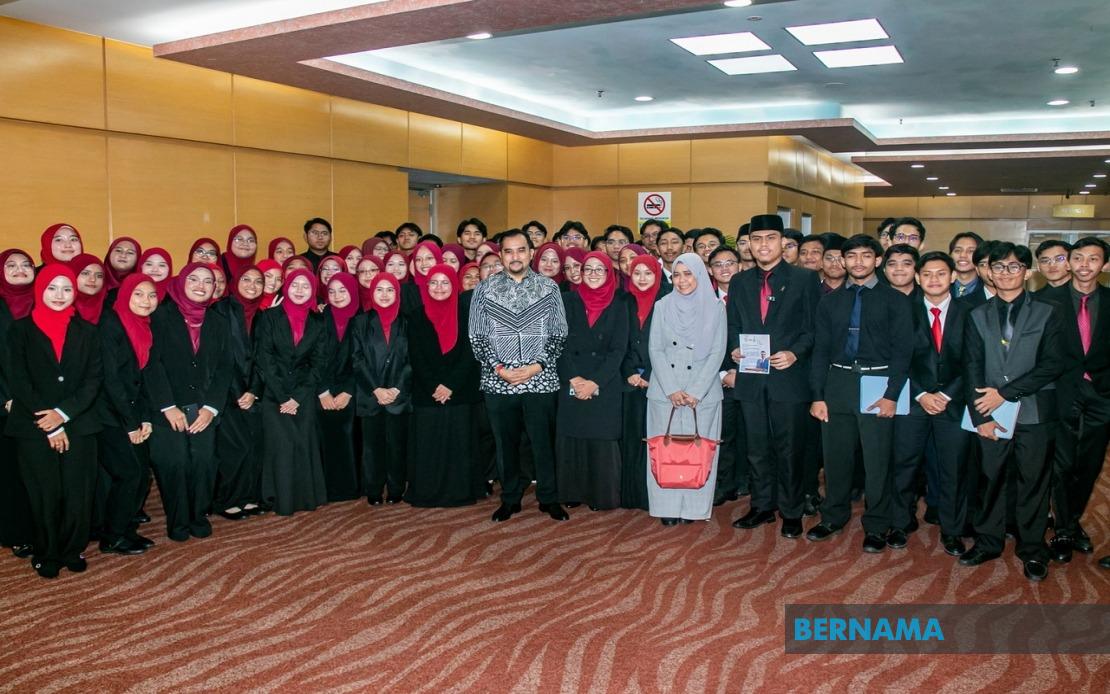
Majlis Amanah Rakyat (MARA) has reopened a medical education pathway that remained dormant for seven years, enrolling 78 students into Al-Azhar University in Egypt as part of an expanded overseas scholarship initiative. The reinstatement of the programme, which ceased operations in 2019, represents a strategic pivot in how Malaysia's premier funding body approaches professional medical training within resource constraints. MARA chairman Datuk Dr Asyraf Wajdi Dusuki announced the development following Cabinet endorsement, framing the decision as both fiscally prudent and responsive to domestic demand for affordable medical education.
The financial calculus underpinning this resumption carries particular weight for Malaysian policymakers wrestling with the escalating costs of professional education. Each student pursuing the five-year medical programme at Al-Azhar will require an outlay of RM350,000 inclusive of accommodation and living expenses, a figure substantially reduced through a 50 per cent discount negotiated with the Egyptian institution. This represents less than half the typical cost of domestic medical training, where per-student expenditure ranges from RM700,000 to RM800,000. For a nation committed to widening access to professional qualifications among deserving but economically disadvantaged cohorts, such savings translate into meaningful expansion of scholarship capacity without proportional budget increases.
The political dimensions of this initiative reveal deeper institutional dynamics within Malaysia's education and development ecosystem. Datuk Seri Anwar Ibrahim's government granted the necessary approval, a decision that carries symbolic weight given the administration's emphasis on merit-based advancement and efficient resource allocation. MARA's reinvigoration of the Al-Azhar pipeline signals confidence in international medical qualifications and demonstrates willingness to diversify Malaysia's medical professional sourcing beyond domestic universities, which face capacity constraints despite ongoing expansion.
Al-Azhar University, one of the Islamic world's oldest and most respected institutions, operates within Egypt's medical education framework, which maintains recognition across Muslim-majority nations and increasingly within broader international accreditation structures. The university's substantial discount reflects both its institutional relationship with MARA and Egypt's interest in deepening educational ties with Southeast Asian partners. This economic arrangement benefits both jurisdictions: Malaysia secures affordable yet credible medical training for qualified candidates, while Egypt generates revenue and strengthens diplomatic relationships through educational collaboration.
Beyond the Al-Azhar initiative, MARA is simultaneously executing a broader overseas scholarship deployment affecting 600 students graduating from its three residential preparatory colleges. This staged rollout, commencing the following week, directs scholars toward diverse destinations spanning the Commonwealth nations of Australia, Canada, and the United Kingdom, alongside non-Anglophone countries including South Korea and New Zealand. Such geographical diversification reflects contemporary education trends toward building human capital through exposure to varied academic and cultural environments, preparing Malaysian professionals for increasingly international career pathways.
The calibre of institutions accepting MARA scholars demonstrates the competitive positioning of sponsored students within global higher education hierarchies. Eleven students secured places at Imperial College London alone, while cumulative data reveal 40 MARA scholars distributed across top-ten ranked universities internationally, with an additional 107 accepted into institutions ranked within the world's top twenty. These metrics validate MARA's selection processes and suggest that domestic screening mechanisms effectively identify high-potential candidates capable of competing successfully against global peer cohorts, a critical consideration for talent development in an increasingly knowledge-intensive economy.
The resumption of the Al-Azhar medical programme carries implications extending beyond individual student trajectories to address systemic physician supply challenges facing Malaysia. Medical schools domestically, while expanding intake capacity, remain unable to satisfy projected demand for qualified practitioners across public healthcare systems and private medical sectors. International training pipelines, particularly in countries with compatible regulatory frameworks and recognised credentials, function as pressure valves within constrained educational infrastructure. Moreover, scholars who train abroad often bring exposure to alternative clinical practices, research methodologies, and healthcare systems perspectives that enrich Malaysia's broader medical profession upon return.
The partnership model underpinning this arrangement warrants closer examination for replicability across other professional domains. By leveraging international institutional relationships and securing institutional discounts through established connections, MARA achieves cost efficiency while maintaining educational quality standards. This template could theoretically extend to engineering, law, or specialised technical fields where international training complements domestic capacity. However, sustainability depends upon continued diplomatic engagement, institutional relationship maintenance, and assurance that graduates meet Malaysian regulatory requirements for professional practice.
For current and prospective MARA scholars, the expanded overseas portfolio signals institutional commitment to professional mobility and international experience as development priorities. The combination of established destinations with emerging markets such as South Korea reflects MARA's strategic positioning toward technology-intensive, high-growth economies where Malaysian graduates can develop competitive advantages. This diversification also reduces concentration risk, avoiding over-reliance on traditional Commonwealth pathways whilst building networks across emerging educational hubs in East Asia.
The financial burden alleviation represented by MARA scholarships addresses persistent equity concerns within Malaysia's professional education landscape. Students from lower and middle-income backgrounds who demonstrate academic excellence gain access to international medical training they could not otherwise afford, a democratisation of opportunity aligned with constitutional principles of advancement based on merit. However, the reality remains that even subsidised international training remains inaccessible to those lacking foundational preparation, underscoring the complementary importance of MARA's residential colleges in identifying and nurturing talent from diverse socioeconomic backgrounds.
Looking forward, the reinstatement of Al-Azhar as a medical training destination within MARA's portfolio suggests confidence in medium-term continuity of diplomatic and institutional arrangements. Whether this represents permanent restoration or a renewable programme cycle remains operationally unclear, but the Cabinet-level approval signals governmental commitment rather than experimental initiative. The coming cohorts' performance metrics—comprising graduation rates, licensing examination outcomes, and professional registration success—will determine future programme scaling and potentially inform expansion toward additional international medical partnerships in jurisdictions with surplus training capacity and recognised credentials.

