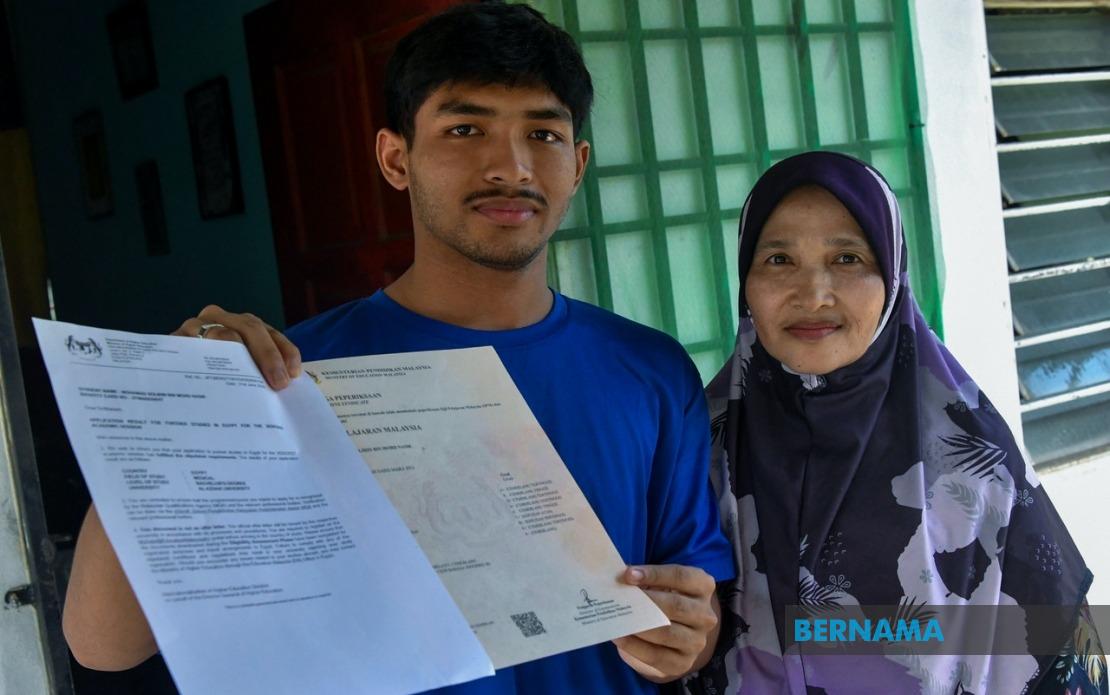
When Mohamad Solihin Mohd Nasir received news that he had been accepted to study medicine at Al-Azhar University in Egypt, the 19-year-old faced an agonizing choice. The prestigious opportunity came with a hefty price tag of approximately RM100,000 to cover tuition and living expenses across the five-year programme—a sum his financially struggling family simply could not afford. With his mother managing health challenges on her own and no father to lean on, Mohamad Solihin stood on the brink of abandoning a lifelong ambition to become a doctor. That changed when Majlis Amanah Rakyat (MARA) intervened, offering him a pathway to realize his medical dreams despite the obstacles stacked against him.
The turning point came during a video call between Mohamad Solihin and MARA chairman Datuk Dr Asyraf Wajdi Dusuki at his family home in Kampung Kubang Keranji, Kelantan. During the conversation, the MARA leadership outlined two distinct options for the promising student. The first would see MARA facilitate his entry to Al-Azhar University while providing support for the necessary Arabic language preparation to meet the institution's entry criteria. The second alternative involved pursuing medical studies domestically through MARA sponsorship at Universiti Sains Malaysia Health Campus (USMKK), removing the financial barriers that had nearly derailed his ambitions. By presenting multiple pathways, MARA demonstrated a commitment to accommodating student preferences while ensuring financial hardship would not become a barrier to excellence.
Mohamad Solihin's personal circumstances exemplify the demographic MARA has prioritized in recent years. He lost his father, Mohd Nasir Abdul Rahman, to a heart attack in 2014 while still in primary school, leaving his family bereft of a primary income earner. His mother, Faridah Mohamad, now 60 years old, manages a thyroid condition that significantly affects her wellbeing and earning capacity. As the youngest of five siblings, Mohamad Solihin has depended on support from his older brothers and sisters, creating a household structure fragile enough to be upended by unexpected educational expenses. Remarkably, despite these circumstances, he maintained an impressive cumulative grade point average of 3.96 at Kelantan Matriculation College, demonstrating exceptional academic commitment and potential.
The young man's aspiration to become a cardiothoracic surgeon carries profound personal resonance. His father's death from cardiac disease became both a source of pain and inspiration, crystallizing in his mind the critical importance of cardiovascular medicine and the lives that can be saved through specialization in this field. This deeply rooted motivation distinguishes his ambition from mere career aspiration—it represents a meaningful response to personal tragedy channeled toward saving others from similar losses. Such purposefulness often indicates the kind of driven, intrinsically motivated student who becomes an exceptional healthcare professional.
Datuk Dr Asyraf Wajdi Dusuki's comments during the video call provided insight into MARA's strategic approach to educational equity. The chairman emphasized that the agency deliberately concentrates its resources on high-achieving students from disadvantaged circumstances, particularly those who have experienced parental loss. This targeting acknowledges that academic merit alone does not predict financial access to education, and that some of the nation's most promising young people face the greatest obstacles to realizing their potential. By prioritizing students like Mohamad Solihin, MARA positions itself not merely as a funding source but as an active mechanism for ensuring that socioeconomic circumstance does not determine educational outcomes for the brightest minds from humble backgrounds.
The efforts to support Mohamad Solihin extend beyond MARA's institutional involvement. His former teachers at Majlis Amanah Rakyat Jeli (MRSM Jeli) launched a dedicated fundraising campaign on his behalf, while the student himself pursued applications to multiple government and religious organizations. These applications targeted the Kelantan Islamic Religious and Malay Customs Council, Kelantan Islamic Foundation, and Kelantan Darulnaim Foundation—organizations with specific remits to support deserving members of their communities. This multi-pronged approach reflects both the critical nature of the financial challenge and the existence within Malaysian society of various institutional mechanisms designed to support exceptional students facing hardship.
Modamad Solihin's mother has become an advocate in her own right for her son's prospects. In public statements, Faridah Mohamad expressed both pride in her son's achievement and the desperation of their financial situation. Her honest acknowledgment that the family possessed no resources to fund his studies, combined with her hopes that external support would materialize, resonated with the broader Malaysian public conversation about educational access and social mobility. Her vulnerability in speaking about the family's circumstances helped humanize what might otherwise remain an abstract policy discussion about educational funding.
The timeline for Mohamad Solihin's departure to Egypt—potentially between August 21 and 29 if funding is secured—creates a compressed window for finalizing arrangements. This urgent schedule reflects the practical realities of international educational enrollment, where deadlines for course commencement cannot be extended indefinitely. The compressed timeframe also intensifies the significance of MARA's rapid intervention, as delays in securing sponsorship could have resulted in forfeiting the Al-Azhar place and losing an entire year of study. The agency's ability to move decisively during this critical period demonstrated responsiveness to genuine emergency situations in educational access.
For Malaysian context, this case illustrates broader questions about talent identification and resource allocation in a developing nation context. Southeast Asia faces persistent challenges in converting academic potential into professional output, particularly when talented individuals from disadvantaged backgrounds lack the financial scaffolding to reach tertiary education. Malaysia's various scholarship and sponsorship schemes—including MARA, the Ministry of Education, and multiple state-level initiatives—represent attempts to address this structural inequality. However, individual cases like Mohamad Solihin's highlight both the success of these mechanisms and their limitations, as the student nearly fell through the cracks despite his exceptional qualifications.
The existence of multiple charitable and institutional funding pathways for a single student also reveals something important about Malaysian society's approach to educational equity. Rather than a single consolidated system, the nation has developed a patchwork of government agencies, religious organizations, and community institutions, each with overlapping but distinct mandates. For students navigating this landscape, success often depends on awareness, persistence, and access to institutional networks—factors that correlate imperfectly with academic merit. Mohamad Solihin's teachers played a crucial role in activating these various support mechanisms, suggesting that informed institutional advocates can significantly improve outcomes for disadvantaged students.
Looking forward, Mohamad Solihin's trajectory carries implications for medical education in the region and Malaysia's healthcare workforce development. If he successfully completes his medical degree at Al-Azhar University—one of the Arab world's most prestigious institutions—he would return with credentials recognized across the Islamic world and increasingly in Southeast Asia. His specialized interest in cardiothoracic surgery, a field facing both global and regional shortages, positions him to make meaningful contributions to Malaysian healthcare capacity. Moreover, his journey from near-rejection to supported pursuit exemplifies how institutional intervention can unlock human potential that would otherwise remain unrealized, highlighting the return on investment that educational support for exceptional students can generate.
Mohamad Solihin's case also underscores the ongoing relevance of need-based support systems in Malaysia's educational ecosystem. Even as the nation has developed into an upper-middle-income country with expanding higher education capacity, financial barriers continue to exclude capable students from disadvantaged backgrounds. The persistence of such barriers—and the necessity of multiple organizational interventions to overcome them—suggests that educational equity remains an incomplete project requiring sustained attention and resource commitment. For policymakers and institutional leaders, Mohamad Solihin's situation serves as a reminder that excellence and hardship often coexist, and that institutional responsiveness to this reality determines whether untapped human potential is realized or squandered.

