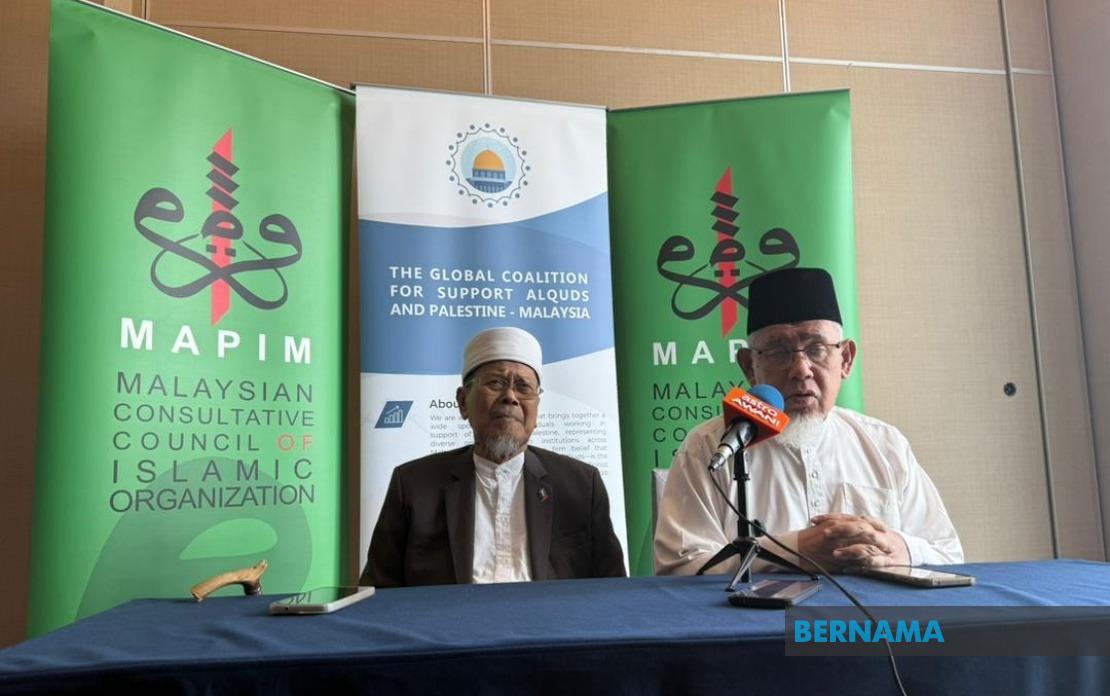
The Malaysian Consultative Council of Islamic Organisations (MAPIM) will launch a significant gathering in Ipoh tomorrow, bringing together mosque leaders and officials from across Southeast Asia and the Muslim world. Working alongside the Perak Islamic Religious Department (JAIPk), the two-day Regional Mosque Conference 2026 represents an ambitious effort to foster cooperation among Islamic institutions and address contemporary challenges facing Muslim communities. The initiative underscores Malaysia's evolving role as a bridge-builder within regional Islamic networks, positioning Ipoh as a centre for interfaith dialogue and institutional strengthening during a period of heightened geopolitical sensitivity in the Middle East.
Approximately 400 delegates will converge at a leading Ipoh hotel, representing mosques from eight Southeast Asian nations: Indonesia, Singapore, Brunei, Timor-Leste, Myanmar, Cambodia, Thailand and Vietnam. Beyond the region, the conference will welcome participants from Turkey, Iran and Pakistan, reflecting broader Muslim-majority alliances and diaspora networks. This composition signals MAPIM's intent to position the gathering as a genuinely international forum rather than merely a domestic or bilateral affair, though the Southeast Asian focus reveals strategic priorities tied to deepening institutional ties within ASEAN-member countries and neighbouring states.
MAPIM president Mohd Azmi Abdul Hamid articulated the organization's vision during a press conference, framing the conference as more than ceremonial commemoration. The gathering coincides with World Mosque Day, observed annually on August 21 to mark the 1969 arson attack on Al-Aqsa Mosque in Jerusalem. Rather than treating this remembrance as symbolic ritual alone, Mohd Azmi emphasized the need to convert such occasions into momentum for substantive institutional reform and community mobilization. This philosophical approach reflects growing debate within Malaysian Islamic circles about the effectiveness of commemorative events and the necessity for tangible, actionable outcomes.
The conference programme encompasses seven principal objectives designed to create lasting structural changes within the regional mosque ecosystem. These include establishing formal cooperation networks linking mosques across borders, actively recruiting and engaging young people in mosque activities, fostering economic participation among congregations, and deepening partnerships with Islamic non-governmental organizations. By framing youth involvement and economic participation as core goals, organizers acknowledge the challenge of maintaining mosque relevance amid demographic shifts and changing patterns of community engagement, particularly among younger Muslims increasingly disconnected from traditional institutional structures.
A cornerstone of the conference will be its production of a binding declaration and implementation roadmap, enabling participating mosques and Islamic NGOs to translate discussion into concrete action upon returning to their home countries. This emphasis on post-conference deliverables suggests organizers have learned from previous regional initiatives that lack enforcement mechanisms and fade shortly after conclusion. The conference will feature academic presentations and international dialogues examining the mosque's evolving role, alongside dedicated discussions addressing Palestine and the Al-Aqsa Mosque—contentious geopolitical subjects that carry significant emotional resonance across Muslim-majority Asia.
Three flagship initiatives will debut during the conference, each designed to extend impact beyond Ipoh. A regional mosque coalition focused on Palestine advocacy will provide institutional infrastructure for coordinated advocacy work across participating countries. Simultaneously, MAPIM will unveil a comprehensive study exploring the contemporary role of mosques in Muslim societies, potentially influencing policy discussions in participating nations. Most notably, the organization will introduce the MAPIM Gold Dinar, an innovative fundraising mechanism intended to simplify public contributions toward the Al-Aqsa Mosque Fund. This financial instrument reflects growing sophistication in Islamic fundraising strategies, enabling supporters to acquire tangible assets while directing proceeds toward a globally resonant cause.
The Gold Dinar initiative deserves particular attention for Malaysian readers, as it represents an experiment in Islamic finance accessibility at the grassroots level. By offering a standardized product facilitating contributions to an international cause, MAPIM potentially creates a new model for channeling diaspora resources toward overseas Islamic institutions and humanitarian objectives. The mechanism also addresses practical challenges in cross-border fund transfers, particularly given international scrutiny of charitable money flows to Middle Eastern organizations. By packaging contributions within a recognizable commodity framework, the initiative may navigate regulatory sensitivities while mobilizing broader participation than traditional donation appeals.
Mohd Azmi articulated the conference's dual purpose: advocating for global humanitarian concerns, especially those centring on Palestine and Al-Aqsa, whilst simultaneously strengthening mosque institutional capacity within Southeast Asia. This combination reflects a strategic calculation that mosque networks can simultaneously address transnational Muslim solidarity concerns and local community needs. The framing also signals MAPIM's positioning as a voice representing Southeast Asian Muslim interests within global Islamic discourse, particularly on issues where Western countries and Muslim-majority nations frequently diverge.
For Malaysia specifically, the conference holds significance beyond immediate organizational outcomes. As a Muslim-majority nation hosting international Islamic delegations, Malaysia reinforces its historical positioning as a moderate Muslim-majority state capable of convening diverse Islamic actors. The conference demonstrates that Malaysian Islamic institutions exercise sufficient regional standing to attract participation from multiple countries and more distant Muslim powers. This soft power dimension, though not explicitly stated, underlies MAPIM's decision to stage an international gathering and explains official participation from the Perak state government, reflecting how regional Islamic cooperation resonates with Malaysian political leadership.
The conference also reflects broader patterns within Southeast Asian Islam, where mosque-centred institutions serve multifunctional roles encompassing spiritual guidance, social welfare provision, youth education and community economic development. By bringing together mosque representatives specifically, rather than broader religious scholars or political leaders, MAPIM targets the institutional infrastructure through which Islam operates at community level across the region. This approach recognizes that mosques, rather than universities or clerical councils, remain the primary institution through which most Southeast Asian Muslims encounter organized religion.
The emphasis on sustainable implementation plans addresses a chronic challenge facing regional Islamic initiatives: the proliferation of conferences that generate declarations subsequently ignored. By requiring participating mosques and NGOs to commit to specific, measurable actions prior to departure, organizers attempt to ensure the Ipoh gathering produces institutional change rather than merely rhetorical consensus. Whether such mechanisms prove effective will determine whether this conference becomes a genuinely transformative moment for regional mosque networks or remains another significant gathering ultimately overshadowed by subsequent events.
The timing of the conference, amid international tensions surrounding Palestine and ongoing geopolitical competition within Southeast Asia, ensures the gathering operates within a charged context. Participating governments and institutions will navigate competing pressures: demonstrating solidarity with international Muslim causes whilst managing relationships with Western allies and addressing domestic religious sensitivities. The conference thus serves as a barometer of how Southeast Asian Islamic institutions balance transnational religious commitments against pragmatic national interests—a tension that will likely surface during discussions and shape the eventual declaration's language and commitments.

