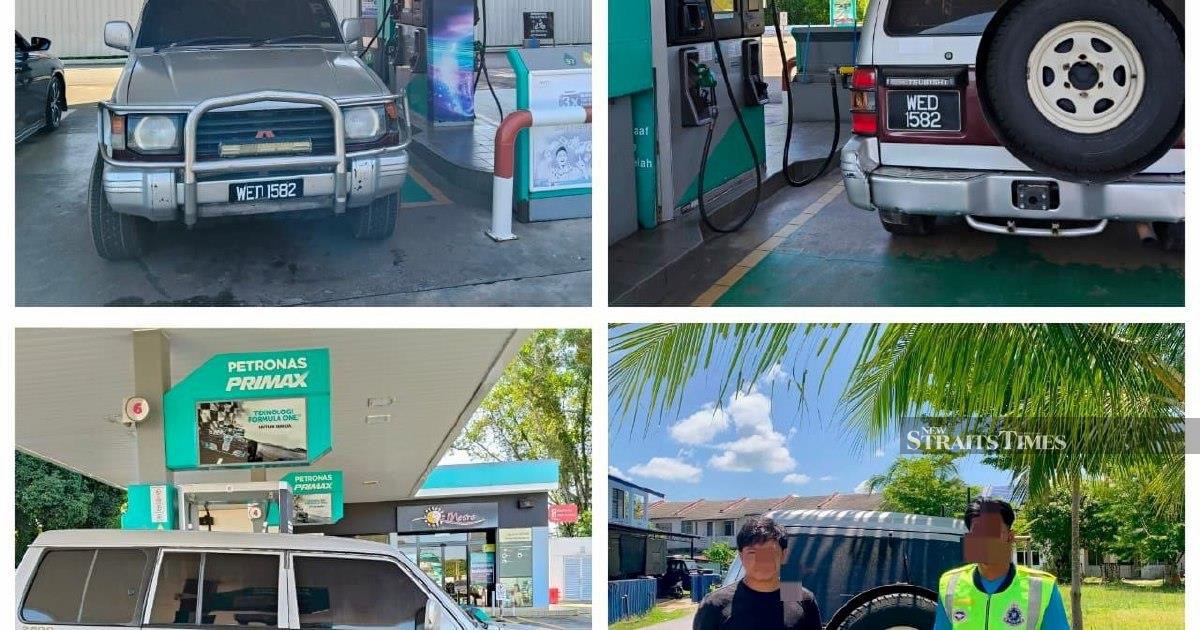
A 36-year-old man has been detained at a petrol station in Rantau Panjang following his arrest for allegedly orchestrating multiple purchases of petrol earmarked for smuggling across the Malaysian-Thai border. The suspect was apprehended yesterday as part of an ongoing crackdown on fuel smuggling activities in the border region, which has become increasingly prevalent as price differentials between the two countries create lucrative opportunities for illicit traders.
Rantau Panjang, situated in Kelantan's southern reaches, serves as a major crossing point between Malaysia and Thailand. Its strategic location has made the town a focal point for smuggling operations targeting both fuel and consumer goods, with the porous border allowing for relatively easy movement of contraband. The petrol station setting suggests authorities were conducting surveillance or received intelligence about coordinated fuel-purchasing patterns that indicated commercial smuggling rather than personal consumption.
Fuel smuggling from Malaysia into Thailand has intensified in recent years, driven by the significant price gap between the two nations. Malaysian petrol, subsidised and regulated through its domestic system, costs considerably less than Thai fuel at government-controlled pumps. This disparity creates margins substantial enough to justify the operational costs and risks associated with illegal cross-border trade. The practice depletes Malaysia's fuel reserves, undermines government revenue from petroleum sales, and distorts market equilibrium in border communities.
The modus operandi of repeatedly purchasing petrol rather than a single large transaction suggests the suspect may have been operating as part of a larger network designed to avoid detection. Bulk purchases at individual stations might trigger regulatory attention or exceed daily purchase limits imposed by some petrol retailers, making incremental purchases across multiple visits a deliberate strategy to circumvent monitoring systems. This pattern indicates sophisticated planning rather than opportunistic smuggling.
Law enforcement agencies along the Malaysian-Thai border face considerable challenges in combating fuel smuggling. The volume of legitimate cross-border traffic makes interdiction difficult, and the relatively low profile of fuel contraband compared to drugs or weapons means it sometimes receives less priority in resource allocation. Border patrols must contend with difficult terrain, limited visibility at night, and the challenge of distinguishing between authorised and unauthorised fuel movements without disrupting legitimate commerce.
The arrest underscores the government's intensified focus on border security and revenue protection. Customs and excise authorities have increasingly deployed technology and manpower to identify smuggling networks operating in Kelantan and other northern states where the Thai border presents unique enforcement challenges. Successful interdiction often requires intelligence gathering and coordinated operations that extend beyond simple traffic stops.
For Malaysian readers, fuel smuggling carries broader implications for national resources and fiscal policy. Each litre of petrol that exits the country illegally represents a loss to the government's petroleum revenue, which funds essential public services. As Malaysia's oil and gas sector continues facing pressures from global energy transition trends, protecting domestic fuel supplies becomes increasingly important for economic stability.
The suspects involved in these operations often belong to loose networks of opportunistic traders rather than organised crime syndicates, though the sophistication of methods can vary considerably. Some smugglers employ elaborate schemes involving hidden compartments in vehicles, coordination with contacts on both sides of the border, and money-laundering mechanisms to disguise profits. Others operate more simply, exploiting personal connections and informal distribution channels in Thai communities near the border.
Thailand's domestic fuel pricing remains a contentious political issue, with governments frequently unable to fully subsidise petrol to match Malaysian prices. This policy decision, while driven by Thai budgetary considerations, inadvertently fuels demand for smuggled Malaysian fuel among Thai consumers and retailers seeking to undercut official prices. The economic incentive structures on both sides of the border essentially guarantee ongoing pressure for illicit fuel trade unless pricing policies change substantially.
This arrest is likely one element of broader enforcement efforts rather than an isolated incident. Authorities typically pursue smuggling networks methodically, using initial arrests to gather intelligence about organisational structures, supply chains, and distribution methods. The apprehension may lead to additional investigations targeting suppliers, distribution networks, and buyers on the Thai side, assuming Malaysian authorities coordinate with their Thai counterparts through bilateral agreements.
The case highlights the persistent challenge of border management in an era of economic globalisation and cross-border integration. Despite Malaysia and Thailand's cooperation through various regional frameworks and bilateral arrangements, the fundamental economic incentives driving smuggling remain powerful. Long-term solutions require either convergence in fuel pricing policies, enhanced technological enforcement capabilities, or both.
Moving forward, this arrest reinforces the ongoing nature of border enforcement operations that protect Malaysia's economic interests and fiscal stability. The case will likely proceed through Malaysia's legal system, potentially resulting in substantial penalties under customs and smuggling legislation designed to deter participation in such schemes.

