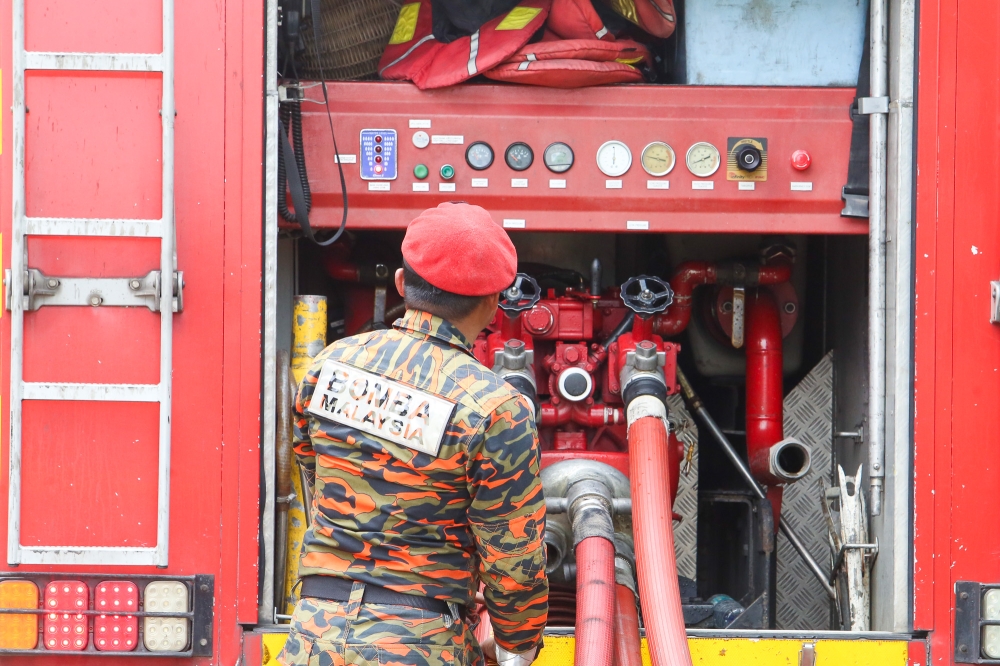
Police in Jitra have arrested a man on suspicion of deliberately torching his mother's residence following an intense family quarrel, marking yet another incident where escalating domestic discord has culminated in property destruction and potential endangerment. The arrest comes as authorities intensify efforts to address arson cases stemming from unresolved family grievances across residential areas in Kedah's northern districts.
The suspect, detained at a police station in Jitra, is being investigated under provisions relating to deliberately causing fire to endanger life or property. Preliminary police inquiries suggest the fire was not accidental but rather a deliberate act triggered by an escalation of pre-existing tensions within the household. Such cases underscore the critical intersection between family conflict resolution and public safety, where personal disputes can rapidly transform into serious criminal matters with potential fatalities or extensive damage.
Details surrounding the exact nature of the family quarrel remain under investigation, though police confirmed that tensions had been simmering prior to the alleged incident. The timing and circumstances of the fire suggest premeditation rather than a spontaneous outburst, raising questions about warning signs that may have been overlooked or unaddressed within the family unit. In Malaysia's relatively tight-knit communities, particularly in smaller towns like Jitra, such domestic explosions often shock neighbours who may have been unaware of underlying household tensions.
The incident raises broader concerns about the adequacy of family counselling services and conflict mediation mechanisms available to ordinary Malaysians. Unlike urban centres where professional intervention services are more readily accessible, residents in smaller towns frequently lack convenient access to trained mediators or family therapists who might help de-escalate disagreements before they reach dangerous levels. This geographical disparity in social services remains a persistent challenge for state and federal authorities attempting to address root causes of domestic violence and property crimes.
Arson cases stemming from family disputes present particular investigative challenges for law enforcement. Establishing motive alongside concrete evidence requires careful reconstruction of events, witness statements, and forensic analysis of fire patterns and accelerant residues. Police must balance swift investigation with ensuring sufficient evidence to secure convictions that withstand judicial scrutiny, particularly in cases where family members may be reluctant witnesses or where emotional tensions complicate the investigative process.
The destruction of residential property in such incidents carries financial and psychological consequences extending far beyond the immediate family. Insurance claims, relocation logistics, and the loss of sentimental belongings create cascading problems that reverberate through family structures already fractured by conflict. For the mother in this case, the loss of her home represents a double trauma—the property damage compounded by the betrayal of having her own child implicated in the destruction.
Neighbouring Jitra residents, meanwhile, face unsettling reminders of how rapidly domestic disputes can transform into dangerous situations affecting community safety. Fire spread unpredictably, particularly in residential areas where houses stand in close proximity, and what begins as a targeted act can easily engulf neighbouring properties. Community members living near incident sites often experience anxiety and loss of sense security, knowing that family tensions in adjacent homes pose uncontrolled risks.
The arrest also highlights the importance of early intervention mechanisms and community awareness programs designed to identify households experiencing severe conflict. Relatives, neighbours, and community leaders often possess valuable information about deteriorating family situations but may lack clear pathways to report concerns or access support services. Many Malaysians remain uncomfortable involving authorities in what they perceive as private family matters, even when safety risks escalate substantially.
From a legal perspective, the investigation will establish whether the suspect acted with intention to cause harm or property destruction, or whether circumstances suggest diminished culpability. Courts will examine the severity of the preceding quarrel, any history of violence within the household, and evidence regarding planning or impulsivity. Such determinations significantly affect sentencing outcomes and whether rehabilitation or custodial measures predominate in judicial decisions.
The case underscores recurring patterns in Malaysian crime statistics where family-related violence and property destruction during disputes account for substantial case loads in lower courts. Social welfare agencies and police departments have increasingly recognised that addressing these matters requires coordinated responses combining legal consequences with social intervention and family restoration efforts. Prosecuting offenders serves essential deterrent functions, yet long-term prevention depends equally upon strengthening community support networks and ensuring vulnerable household members can access protection and counselling.
As investigations continue, authorities in Jitra remain focused on establishing the precise sequence of events preceding the fire and confirming the suspect's culpability through forensic and witness evidence. The case will likely proceed through the judicial system while families and community members process its implications for domestic safety and the responsibility authorities bear to protect residents from harm originating within homes themselves.

