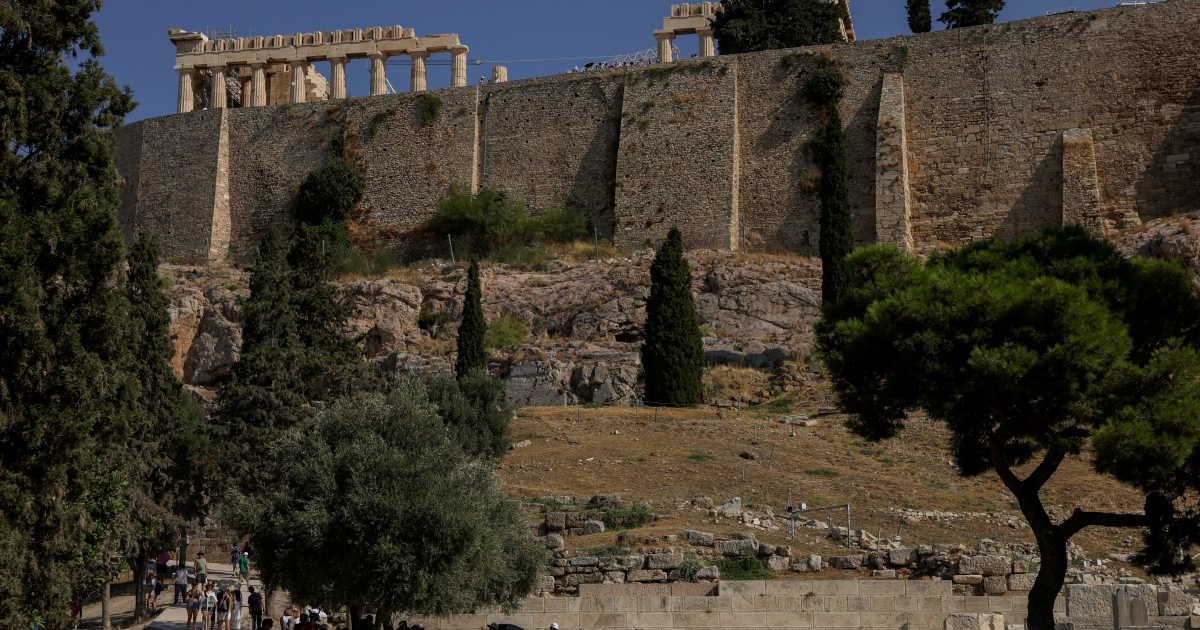
A 60-year-old man has been taken into custody following an unprovoked knife attack on two Greek-American tourists at the Acropolis in central Athens. The incident occurred on Tuesday in the vicinity of one of Greece's most visited archaeological attractions, heightening concerns about visitor safety at major tourism destinations across the Mediterranean region.
The attack unfolded in an area that draws hundreds of thousands of international visitors annually, many of whom are unfamiliar with their surroundings and may be less vigilant about personal security. Greek police responded swiftly to the incident and detained the suspect at the scene. Authorities have not yet disclosed the circumstances leading to the altercation or whether the attacker and victims knew each other prior to the assault.
The Acropolis represents the architectural and symbolic heart of ancient Athens, crowned by the Parthenon temple and surrounded by numerous classical structures that date back thousands of years. The site functions as both a crucial cultural monument and a primary economic engine for Greece's tourism sector, which contributes substantially to the nation's GDP and employment. Any security incident in this area inevitably raises questions about protective measures and crowd management protocols.
For Malaysian travellers and Southeast Asian tourists generally, incidents involving foreign nationals abroad typically trigger increased awareness about destination safety. Greece remains a popular holiday choice for regional visitors seeking classical European history and Mediterranean experiences, and such occurrences may prompt travel advisories or cautionary discussions among potential visitors from our part of the world.
The Greek authorities have not released extensive details about the victims' condition or the severity of their injuries. Standard police procedures following such incidents involve medical assessment of the wounded parties, formal statements from witnesses, and preliminary investigation into the attacker's motivations. Greek law enforcement agencies have considerable experience managing security at major archaeological and historical sites that attract large international crowds.
Tourist safety remains a perennial concern for countries dependent on international visitor revenue. Greece's tourism industry has faced various challenges in recent years, ranging from economic pressures to logistical issues, and security incidents—though statistically uncommon—can disproportionately influence travel decisions and media coverage. The incident represents a rare but troubling breach in an otherwise generally stable tourism environment.
The detention of the suspect suggests that Greek police maintain effective rapid-response capabilities in densely populated heritage areas. The Acropolis district benefits from visible police presence given its status as a major tourist hub and symbolic national site. The swift arrest indicates that security infrastructure in the vicinity functioned as intended, though the underlying question of what motivated the attack remains unanswered.
Comparable incidents occasionally surface at popular archaeological and historical destinations worldwide, though violent attacks on tourists remain statistically rare relative to the volume of international visitors to such sites. Greece's handling of this incident will likely be scrutinised both domestically and internationally, particularly regarding whether additional security measures or preventative protocols warrant implementation.
The broader implications for Southeast Asian tourism patterns remain to be seen. Malaysia and neighbouring countries maintain substantial outbound tourism sectors, with Europe constituting an important long-haul destination market. While isolated criminal incidents should not substantially alter travel patterns, they do contribute to the collective perception of destination risk that influences travel insurance costs and decision-making processes among potential visitors.
Greek authorities will presumably conduct a thorough investigation into whether the 60-year-old attacker had prior criminal history, mental health concerns, or other contextual factors that might explain the violence. Such investigations typically inform whether incidents reflect broader systemic security failures or represent isolated aberrations. The forthcoming details about the suspect's background and the incident's circumstances will likely receive significant media attention both in Greece and among international tourism stakeholders.
For Malaysian readers planning Mediterranean holidays, such events serve as reminders to maintain situational awareness at popular sites, travel in groups when feasible, and remain informed about local conditions at destinations. While Greece remains substantially safer than many global destinations, and the tourism infrastructure there remains well-developed, exercising standard travel precautions represents prudent practice regardless of location.

