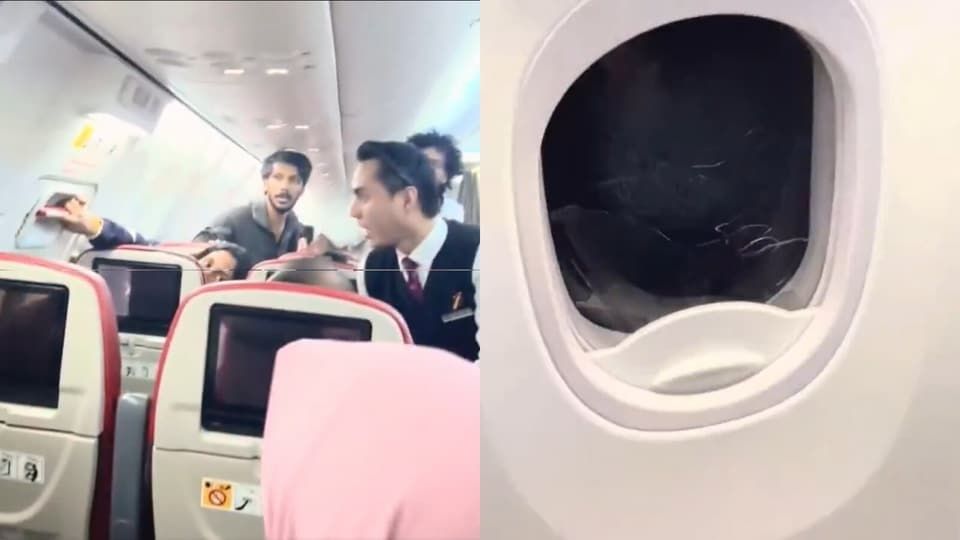
A 36-year-old man from Palakkad, Kerala, has been arrested following a distressing mid-air incident aboard a Batik Air flight travelling from Kuala Lumpur to Kochi. Identified as Jamsheer Athanikkal, the passenger allegedly attempted to force open the emergency exit of the Boeing 737 aircraft during the flight on Wednesday night, sparking immediate concern among the 137 passengers and crew on board. The incident, which unfolded between 9.30pm and 11.05pm while the aircraft was airborne, highlighted the critical importance of swift passenger and crew intervention in preventing potentially catastrophic outcomes at high altitude.
According to the First Information Report filed by Batik Air's Security In-Charge at Kochi airport, Jamsheer damaged the inner window panel of the emergency exit using his foot and subsequently attempted to force the door open. Witnesses report that he also made threatening gestures towards fellow passengers and members of the cabin crew during the ordeal. The rapid response of alert passengers seated nearby and the flight crew proved instrumental in preventing a crisis; they physically restrained him before he could escalate his actions further. Critically, the aircraft's inherent design and the cabin pressure at cruising altitude ensured the emergency door remained sealed despite the damage to the window panel, providing a crucial safety buffer.
One passenger, Matty Mathew, documented the harrowing experience and shared details on social media along with video footage. According to his account, most travellers were sleeping during the late-night service when a distinctive rushing sound of air suddenly pierced the quiet cabin. This noise, caused by the breached window panel, jolted passengers awake and alerted crew to the unfolding emergency. Mathew's post emphasised that the combination of aircraft design features and immediate human intervention prevented what could have developed into a life-threatening situation. He expressed gratitude for the safe outcome, noting that whilst the experience proved profoundly frightening for everyone aboard, all passengers and crew members remained unharmed.
Upon landing at Kochi airport early Thursday morning, Jamsheer was immediately taken into custody by Kerala Police. Authorities have initiated a comprehensive investigation into his motivations and mental state during the incident. The charges filed against him under Indian law carry serious implications: Section 351(3) of the Bharatiya Nyaya Sanhita addresses criminal intimidation, Section 11A of the Aircraft Act pertains to violations of safety and security protocols, and Section 118(e) of the Kerala Police Act covers actions that endanger public safety. These multiple charges reflect the gravity of attempting to compromise aircraft safety whilst airborne with hundreds of lives at stake.
For passengers throughout the region who regularly travel between Malaysia and India, this incident raises important questions about in-flight security and emergency response procedures. Batik Air, which operates numerous regional routes connecting Southeast Asian hubs with Indian cities, maintains strict safety protocols that proved effective during this crisis. The airline's crew training and emergency procedures, combined with the passenger awareness that likely contributed to the swift restraint of the individual, demonstrate the layered safety systems that aviation authorities have implemented across the region.
This alarming episode comes merely two days after another serious mid-air incident involving an Indian carrier. Air India flight AI2379, operating from Phuket, Thailand, to Delhi, experienced a sudden and unexplained loss of altitude whilst at cruise level on Tuesday. The flight, carrying 137 passengers and eight crew members, managed to recover and successfully land in Delhi despite the frightening descent. Following this incident, 13 passengers and four crew members required hospitalisation for treatment, with Air India providing ongoing support and coordinating closely with medical facilities to assist those affected and their families.
The Air India incident raised immediate concerns within the aviation safety community, particularly given that the aircraft involved was a seven-year-old Airbus, according to flight-tracking data from Flightradar24. The airline promptly notified relevant regulatory authorities and commenced formal investigations, whilst also engaging directly with the aircraft manufacturer to determine whether mechanical factors contributed to the sudden altitude loss. Such rapid coordination between carriers, manufacturers, and regulators is standard practice in the industry but underscores the ongoing scrutiny that aviation safety receives, particularly following anomalies that cannot be immediately explained.
These two incidents occurring within such close proximity have sparked renewed attention to passenger behaviour protocols and medical emergency procedures on long-haul regional flights. Airlines operating routes connecting Malaysia, India, and Thailand have undoubtedly reviewed their screening procedures and in-flight monitoring systems. The Kuala Lumpur-Kochi route is frequently travelled by workers, business professionals, and families transiting between the two nations, and such incidents inevitably influence passenger confidence and airline operational decisions.
The successful resolution of the Batik Air emergency owes much to the attentiveness of fellow passengers and the preparedness of cabin crew members trained to handle such confrontations. In an era when approximately ten million passengers traverse Southeast Asian airspace weekly across major carriers, the ability to respond swiftly and effectively to disruptive or dangerous behaviour remains paramount. The incident also underscores the engineering resilience of modern aircraft; the emergency exit design that kept the door sealed despite physical damage ultimately prevented a catastrophic decompression scenario that could have endangered everyone aboard.
As investigations continue into both incidents, aviation authorities across the region face mounting pressure to ensure that every possible precaution is implemented to prevent future occurrences. For Malaysian travellers and those using regional hubs like Kuala Lumpur International Airport for connections to India, these events serve as stark reminders of the critical importance of aviation safety protocols, crew training, and passenger cooperation. The swift action taken by alert passengers and trained crew during the Batik Air incident ultimately preserved lives and prevented a tragedy that might have reshaped regional aviation policy for years to come.

