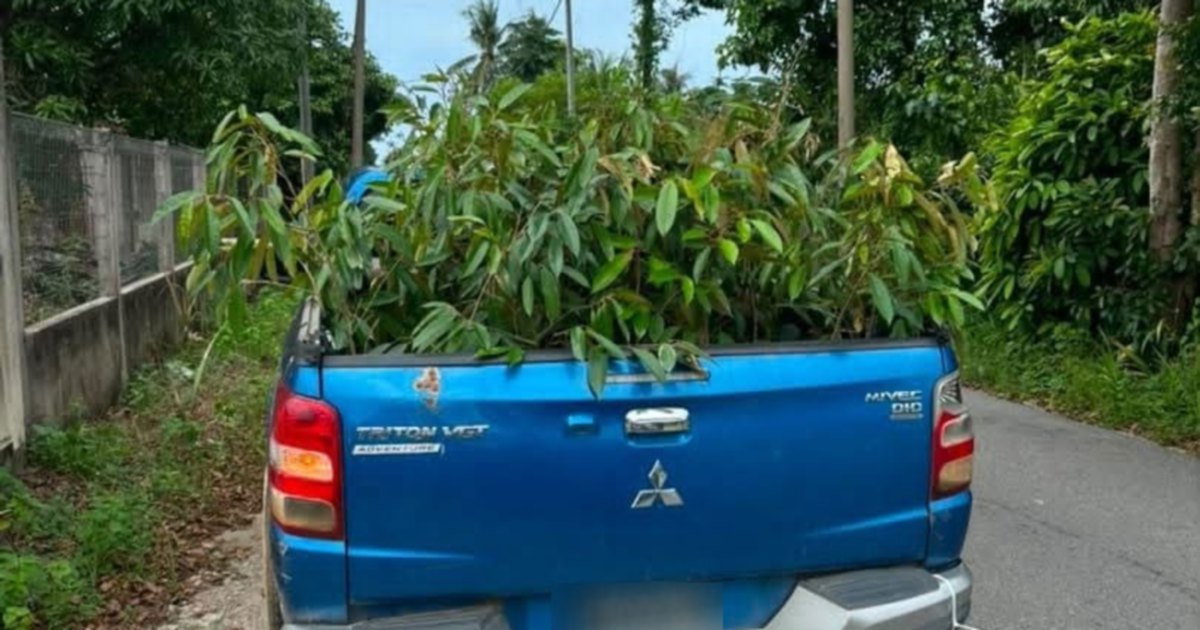
Authorities in Kelantan have intensified crackdowns on agricultural smuggling following the arrest of a 55-year-old suspect in Tumpat, where enforcement officers recovered 52 durian saplings believed to have been illicitly brought across the Thai border. The General Operations Force intercepted the contraband during an operation conducted yesterday, marking another notable case in the ongoing battle against illegal plant trafficking in the region.
The seizure underscores the persistent challenge facing Malaysian customs and agricultural authorities along the country's northern borders, where porous entry points and high-value agricultural commodities create incentives for organised smuggling networks. Durian saplings, particularly prized varieties, command significant market value in both domestic and regional markets, making them attractive targets for smugglers seeking to bypass official import channels and associated duties and quarantine inspections.
The Tumpat area, located in southern Kelantan near the Golok River border crossing with Thailand, has emerged as a critical zone for detecting illicit agricultural shipments. The proximity to Thailand—a major source of horticultural products for the regional market—combined with the district's geography, creates natural pathways for contraband movement. Smugglers exploit these routes to avoid official inspection points and the regulatory framework governing plant imports into Malaysia.
Agriculture authorities in Malaysia maintain stringent biosecurity protocols designed to protect local crop varieties and prevent the introduction of pests and diseases from neighbouring countries. Import restrictions on plant materials, including saplings, reflect these protective measures. Smuggling operations circumvent these safeguards, potentially introducing unvetted biological material that could pose risks to Malaysia's horticultural sector. The saplings seized in this operation would not have undergone standard phytosanitary certification procedures, raising questions about their health status and compatibility with local growing conditions.
The commercial stakes in durian cultivation have expanded considerably as regional demand for premium fruits has intensified. Malaysian durian farmers compete actively in both domestic and export markets, where certain varieties command premium prices. The infiltration of untraceable imported saplings—particularly if they represent superior or newly developed cultivars—threatens the competitive positioning of legitimate local nurseries and growers who operate within legal frameworks and bear associated costs for compliance, quarantine, and certification.
The arrest represents one component of broader enforcement efforts targeting agricultural contraband flows. The General Operations Force, Malaysia's paramilitary border security agency, has progressively broadened its operational focus to encompass not only traditional smuggling commodities such as cigarettes and fuel, but also high-value agricultural materials. This expansion reflects recognition that agricultural smuggling generates substantial illicit profits while posing distinct risks to national food security and plant health systems.
Kelantan's position along the Thai border positions it as a critical frontier for enforcement agencies. The state has witnessed sustained border security operations targeting multiple smuggling categories. The integration of agricultural contraband detection into routine General Operations Force patrols indicates institutional adaptation to evolving smuggling patterns and improved intelligence-sharing between agricultural agencies and security forces. However, the continued flow of such materials suggests that enforcement capacity requires sustained enhancement.
The legal framework governing plant importation in Malaysia specifies requirements for permits, quarantine periods, and phytosanitary certificates prior to movement across borders. Smuggling operations deliberately bypass these mechanisms, exposing the challenge authorities face in managing permeable border zones where detection resources remain finite relative to trafficking volumes. The suspect's apprehension will likely result in prosecution under relevant import regulations, though sentencing patterns for agricultural smuggling remain inconsistent across Malaysian courts.
Regional cooperation mechanisms between Malaysian and Thai authorities have historically focused on combating narcotics and conventional contraband. Expanding these collaborative frameworks to encompass agricultural smuggling detection could enhance interdiction capacity on both sides of the border. Intelligence-sharing regarding suspected smuggling networks, particularly those operating across the northern frontier, remains underdeveloped relative to the scale of illicit agricultural traffic.
The seizure of these 52 durian saplings, while individually modest in scale, reflects the systematic nature of agricultural smuggling operations serving regional markets. Enforcement successes, measured by individual arrests and commodity recovery, require sustained commitment and resource allocation to disrupt smuggling networks operating with relative impunity across economically marginalised border communities. The case demonstrates that agricultural contraband constitutes a distinct enforcement priority requiring sector-specific expertise and intelligence capabilities.

