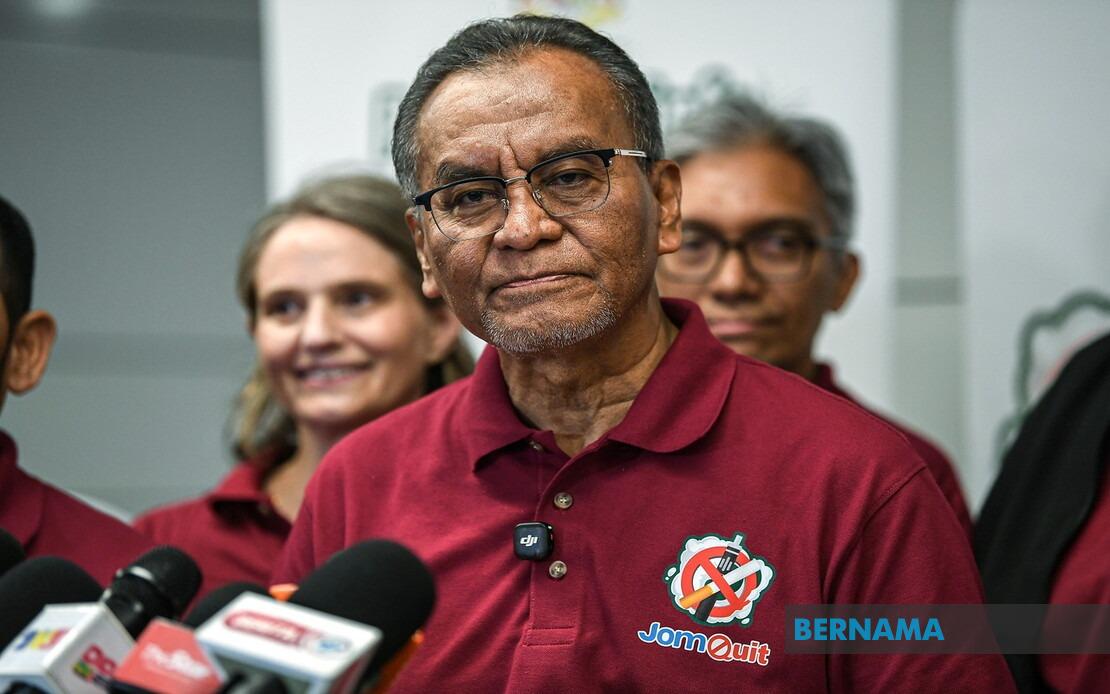
Malaysia's Health Minister Datuk Seri Dr Dzulkefly Ahmad has sounded the alarm over rising malnutrition among children under five in Kuala Lumpur, describing the situation as a matter of serious national concern. Speaking during the launch of an expanded community feeding initiative, he underscored that the problem extends far beyond mere statistics, affecting the critical developmental years of thousands of children while placing tremendous strain on families struggling to access adequate nutrition and health services.
Data from the National Health and Morbidity Survey reveals the magnitude of the challenge facing the capital. In Kuala Lumpur, approximately 23.4 per cent of young children suffer from stunting—a condition characterised by insufficient height for their age that reflects chronic malnutrition and can cause permanent developmental delays. Compounding this, 12.4 per cent are underweight, indicating acute nutritional deficiency. Additionally, 8.1 per cent experience wasting, a severe form of malnutrition that leaves children vulnerable to infections and illness. Perhaps most troubling is that the crisis exists alongside a different challenge: 7.5 per cent of children are overweight, illustrating Malaysia's struggle with a dual nutrition burden.
The coexistence of both undernutrition and overnutrition in the same population reflects broader structural challenges in urban food systems and socioeconomic disparities. While some families cannot afford adequate quantities of nutritious food, others have access primarily to cheap, calorie-dense processed products. This paradox is not unique to Malaysia but is increasingly common across middle-income nations in Southeast Asia, where rapid urbanisation has disrupted traditional dietary patterns without necessarily improving overall nutritional outcomes.
The Health Ministry has adopted a community-centred strategy to identify and support vulnerable children who may slip through the cracks of conventional healthcare systems. By deploying interventions directly into neighbourhood settings, the ministry aims to reach those children whose families face barriers to accessing government health facilities—whether due to geographic distance, work schedules, awareness gaps, or other socioeconomic constraints. This proactive outreach represents a departure from passive, facility-based approaches and reflects recognition that vulnerable populations require active engagement rather than passive waiting for services.
Central to this effort is the Urban Community Feeding Programme, or PCF Bandar, a pilot model first introduced in 2013 that has since expanded to multiple constituencies. The programme targets children aged one to six, a critical window for physical growth and cognitive development. Over a six-month intervention period, participating families receive structured support including monthly monitoring of their child's growth trajectory, regular provision of nutritious food baskets, and fortnightly deliveries of fresh fruits and vegetables. This multifaceted approach addresses not only the immediate nutritional gap but also builds family capacity through education and normalisation of healthy eating practices.
The Seputeh constituency has become a demonstration site for this expanded model, with funding secured through partnership arrangements. Similar programmes now operate in the neighbouring constituencies of Lembah Pantai and Wangsa Maju, suggesting a coordinated approach across central Kuala Lumpur's urban corridors. These initiatives appear designed to test scalability and identify best practices before potential nationwide rollout, an important consideration given the resource implications of sustaining such programmes across Malaysia's diverse geography and demographic contexts.
For Malaysian policymakers, the malnutrition figures carry significant implications. Early childhood malnutrition is scientifically linked to reduced cognitive capacity, lower educational attainment, and diminished lifetime earnings potential. At the societal level, allowing preventable malnutrition to persist represents both a humanitarian failure and an economic drag—resources spent managing nutrition-related diseases and developmental delays later in life could be redirected to productive investments. The government's intervention thus serves not only immediate humanitarian goals but also long-term human capital development.
The programme's emphasis on community-level delivery also reflects lessons learned from public health interventions across the region. Centralised, top-down approaches often fail to reach the most vulnerable populations due to stigma, information asymmetries, or simple lack of trust in government institutions. By embedding services within communities and partnering with local organisations and constituency representatives, the Health Ministry increases the likelihood of genuine uptake and sustained engagement from families.
However, addressing malnutrition sustainably requires addressing root causes: poverty, unemployment, food insecurity, and inadequate access to healthcare. While the PCF Bandar programme provides crucial immediate relief, its six-month duration means support is inherently temporary. Questions remain about how families sustain improved nutrition after programme completion and whether broader social safety nets require strengthening. The Health Minister's framing of malnutrition as affecting real children within real families represents a welcome human-centred approach, but translating concern into systemic change demands coordination across health, education, social welfare, and economic development sectors.
For Malaysia's development trajectory, the persistence of malnutrition in an urban area as developed as Kuala Lumpur suggests that economic growth alone does not automatically translate into universal nutrition security. Parts of the population remain economically marginalised despite the nation's upper-middle-income status. This calls for deliberate, targeted policy action to ensure that prosperity reaches all demographic groups, particularly young children whose early experiences shape lifelong health and potential. The Health Ministry's initiative represents a step in the right direction, but sustained political commitment and adequate resource allocation will ultimately determine whether such programmes can transform trajectories for vulnerable children.

