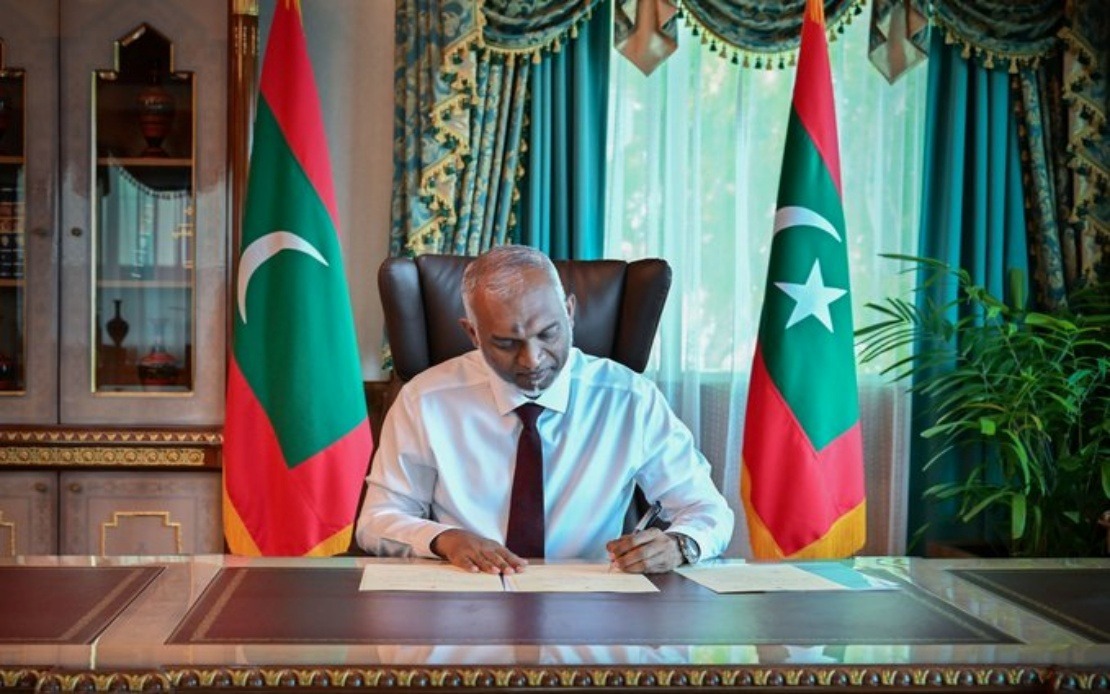
Maldives President Mohamed Muizzu has extended warm National Day greetings to Malaysia, using the occasion to highlight the enduring partnership between the two Indian Ocean nations and signal his administration's intention to deepen ties across multiple sectors. In separate communications to His Majesty Sultan Ibrahim, King of Malaysia, and Prime Minister Datuk Seri Anwar Ibrahim, Muizzu praised the quality of relations and expressed confidence in their future trajectory, underscoring the consistency of diplomatic engagement between Malé and Kuala Lumpur despite regional geopolitical shifts.
The Maldives leader's message to the Yang di-Pertuan Agong emphasised that Malaysia and Maldives have sustained warm relations spanning five decades, grounded in mutual respect, shared interests, and a collaborative approach to regional challenges. According to a statement released by the Maldives presidency, Muizzu specifically acknowledged the foundation of friendship upon which the bilateral relationship rests, framing this as a strategic asset for both nations at a time when Indian Ocean states are increasingly seeking to consolidate regional partnerships.
In his correspondence with Prime Minister Anwar Ibrahim, Muizzu highlighted the strengthening of what he characterised as brotherly relations, attributing this progress to sustained high-level political engagement and robust people-to-people exchanges. The Maldives president's choice of language—emphasising familial bonds rather than merely diplomatic courtesy—reflects the deeper nature of ties between predominantly Muslim nations that share cultural and religious commonalities alongside geopolitical interests. This framing also suggests Muizzu's interest in positioning Malaysia as a key partner in the Maldives' broader regional strategy.
The presidential statement further conveyed Muizzu's confidence that the friendship between the two countries would continue to develop, creating pathways for expanded economic engagement and improved prospects for their respective populations. This language is particularly significant given the Maldives' economic dependence on tourism and the potential for Malaysian investment and visitor flows. For Malaysia, strengthened ties with the Maldives offer opportunities to enhance its standing in South Asian geopolitics and to tap into Indian Ocean maritime commerce networks.
Beyond the Maldives' outreach, Malaysia received separate National Day messages from Pakistan and India, reflecting the broader international recognition of Malaysian independence and the significance of the date in regional diplomatic calendars. Pakistan's Ministry of Foreign Affairs transmitted its congratulations through social media platforms, extending wishes for Malaysia's enduring peace and sustained prosperity. The deployment of such greetings via public channels underscores the role of digital diplomacy in modern international relations, where ceremonial messages also serve to reinforce public messaging about bilateral goodwill.
India's response came through Minister of External Affairs Subrahmanyam Jaishankar, who addressed his congratulations to Foreign Minister Datuk Seri Mohamad Hasan alongside broader wishes for the Malaysian government and citizenry. Jaishankar's inclusion of a reference to India and Malaysia's Comprehensive Strategic Partnership signalled New Delhi's commitment to elevating the relationship beyond traditional diplomatic formalities. This mention is noteworthy for Malaysian policymakers, as it reflects India's strategic interest in deepening institutional cooperation with Southeast Asian partners amid its own regional repositioning.
The convergence of these messages on Malaysia's National Day illustrates the country's standing within South and South-East Asian diplomatic circles. For Malaysia, which navigates complex relationships across the Indian Ocean region and within Southeast Asia, such affirmations of bilateral commitment serve multiple purposes: they validate the nation's diplomatic initiatives, provide domestic audiences with evidence of international esteem, and establish rhetorical baselines for future negotiations on trade, security, and cultural collaboration.
The Maldives' particular emphasis on economic engagement resonates with Malaysia's own regional economic strategy, which increasingly focuses on maritime trade and investment opportunities throughout the Indian Ocean. Given the Maldives' geographic position along crucial shipping lanes and its role as a hub for regional tourism and financial services, deepened Malaysia-Maldives cooperation could yield tangible benefits in logistics, financial services, and tourism development. For the Maldives, access to Malaysia's more diversified economy and technological capabilities represents a hedge against over-reliance on tourism revenues.
Muizzu's ascension to the Maldives presidency in 2023 marked a significant reorientation of the nation's foreign policy, with renewed emphasis on strengthening ties with neighbouring countries and regional powers rather than pursuing more isolationist or non-aligned approaches. His proactive engagement with Malaysia on its National Day reflects this broader diplomatic posture and suggests the Maldives views Malaysia as central to its vision of regional interconnectedness and stability. The regular high-level engagements mentioned in the presidency statement indicate a frequency and seriousness of bilateral interaction that extends well beyond ceremonial occasions.
For Malaysia's leadership, particularly under Prime Minister Anwar Ibrahim's administration, such reciprocal acknowledgements from regional partners validate the government's emphasis on deepening South-East and South Asian integration. The Comprehensive Strategic Partnership referenced by India and the strengthened relations touted by the Maldives align with Malaysia's broader foreign policy objectives of maintaining balanced relationships throughout the region while pursuing concrete economic and strategic advantages. These National Day messages, though ceremonial in form, thus carry substantive implications for Malaysia's diplomatic positioning and future engagement across multiple bilateral and multilateral frameworks.

