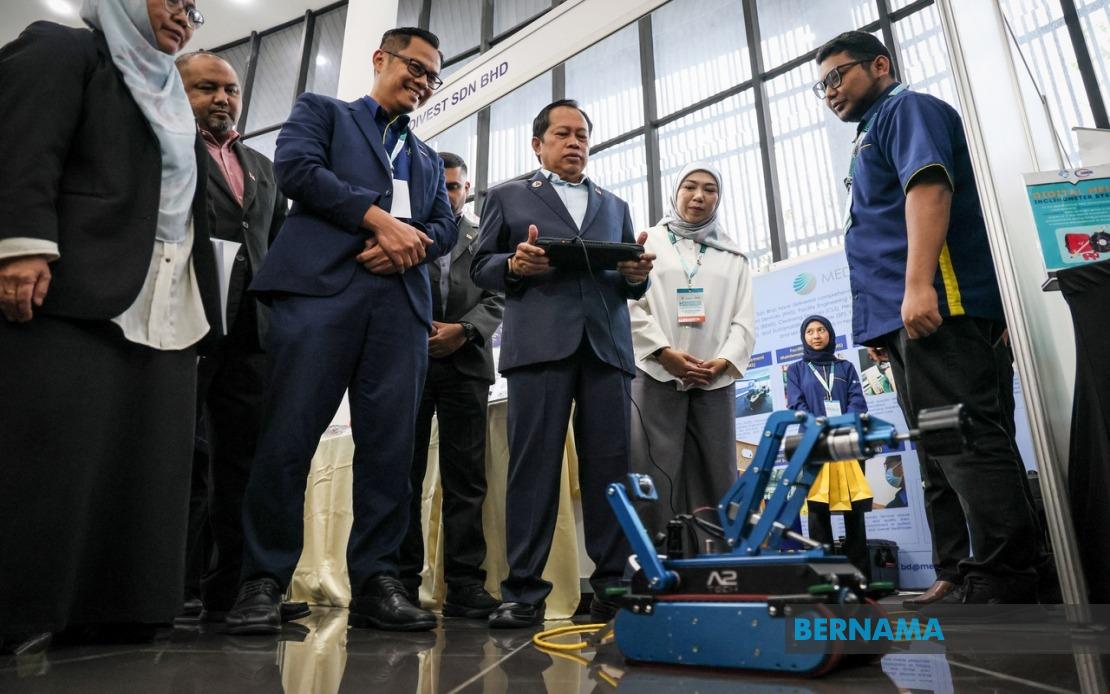
Malaysia's Works Ministry is making a deliberate push to expand the nation's facility management sector, recognising that the construction industry's traditional focus on building new infrastructure has left a substantial gap in the maintenance and upkeep of completed assets. Deputy Works Minister Datuk Seri Dr Ahmad Maslan revealed that the facility management and maintenance market is worth RM39.59 billion across the three-year span from 2023 to 2025, yet the sector remains significantly undersupplied with qualified contractors, presenting an unusual window of opportunity for established construction firms to diversify their revenue streams.
According to data compiled by the Construction Industry Development Board (CIDB), 1,541 facility management and maintenance projects have been formally declared during the 2023 to 2025 period. This represents a substantial pipeline of work across Malaysia's built environment, encompassing everything from residential and commercial buildings to critical public infrastructure such as roads and bridges. Yet this enormous market is being served by a surprisingly limited contractor base: only 468 companies currently hold registration under the F01 and F02 facility management specialisations with CIDB. This arithmetic alone reveals the depth of the opportunity—nearly three projects for every registered FM contractor, suggesting significant unmet demand and scope for new entrants to capture market share.
Deputy Minister Ahmad articulated the Ministry's perspective during the launch of the Contractors Convention 2026: NexGen Builders in Butterworth, framing facility management as a business domain that has been systematically overlooked by the construction industry. His comments reflect a subtle but important strategic shift in how policymakers view the relationship between development and asset longevity. The traditional Malaysian approach has emphasised the completion of new projects, after which buildings, roads, and bridges receive minimal attention until deterioration becomes severe. This reactive approach squanders public resources and ultimately shortens asset lifespans, necessitating costly premature replacements.
The Ministry's advocacy for contractors to register as FM specialists addresses a fundamental misalignment in Malaysia's construction ecosystem. Many established contractors view facility management as peripheral to their core business, regarding it as unglamorous maintenance work rather than lucrative infrastructure development. This perception has created an artificial scarcity of professional FM capacity despite strong underlying demand from both government agencies managing public assets and private entities responsible for maintaining commercial and residential properties. By highlighting the RM39.59 billion valuation and explicitly inviting contractors to enter the field, Ahmad signalled that the government considers FM a legitimate and attractive sector worthy of serious investment by construction companies.
The timing of this initiative aligns with Malaysia's broader infrastructure maturation. Many signature projects completed during the rapid development decades of the 1990s and 2000s are now entering their middle and later operational years, when maintenance costs typically escalate and asset degradation accelerates without professional intervention. Roads built fifteen years ago, commercial complexes approaching two decades of operation, and public buildings serving hundreds of thousands daily all require systematic, skilled management to continue functioning safely and efficiently. The accumulated maintenance backlog across Malaysia's built environment likely exceeds current FM contractor capacity by several multiples.
Central to the Ministry's strategy is the launch of CIS 33:2026, a Facility Management Good Practice Guide developed by CIDB. This standardised framework represents an important institutional move toward professionalising a sector that has historically operated without consistent industry-wide standards. The guide establishes systematic methodologies, sustainability principles, and best practice protocols that FM contractors, asset owners, and facilities managers can use as a common reference point. Such standardisation typically precedes sector growth because it reduces perceived risk for newcomers—contractors can now enter the FM market with confidence that they are adhering to recognised industry benchmarks rather than operating in an unregulated environment.
The implications for Malaysian contractors are considerable. Construction firms facing margin pressure in increasingly competitive infrastructure bidding processes might view facility management as a complementary revenue stream with different competitive dynamics. An established contractor with existing relationships with government agencies and property developers could leverage those connections to secure FM contracts while maintaining their traditional construction operations. This diversification strategy has proven effective internationally, where construction conglomerates often derive steady, predictable income from long-term FM service contracts that provide better cash flow than project-based construction work.
For the broader Malaysian economy, expanding the FM contractor base directly improves asset productivity and extends infrastructure lifespan. A bridge maintained on a systematic schedule remains safe and functional for decades beyond its design life; left to deteriorate, it eventually becomes unusable and must be replaced at enormous expense. Similarly, commercial and residential properties managed professionally retain tenant satisfaction, maintain market value, and avoid emergency repairs that disrupt business operations. When Malaysia invests billions in infrastructure, the return on that investment depends critically on professional management and maintenance—neglecting FM is economically irrational, yet it remains endemic across much of the country.
Ahmad's reframing of facility management as something more than support services represents a philosophical reorientation within Malaysia's construction sector. Historically, FM was regarded as a cost centre managed by facility chiefs or building managers with modest budgets and limited authority. The Ministry's approach treats FM as a legitimate business subsector with entrepreneurial potential, professional standards, and substantial market volumes. This shift could attract the kind of professional contractor expertise, technological investment, and process innovation that the sector requires to mature into a sophisticated, efficient industry capable of maximising the value of Malaysia's built environment.
Looking forward, the combination of explicit government encouragement, emerging professional standards through CIS 33:2026, and a vast undersupplied market suggests that facility management will become an increasingly competitive arena within Malaysia's construction industry. Contractors responding to the Ministry's invitation will be entering a field that currently operates with relatively little professional infrastructure management expertise, creating first-mover advantages for competent, well-resourced entrants. As the sector matures and more contractors register, competition will intensify, margins will likely compress, and standards will improve—the classic trajectory of emerging industries transitioning toward maturity. For now, however, the opportunity remains substantially open, and the RM39.59 billion market represents perhaps Malaysia's most underexploited construction-related business opportunity.

