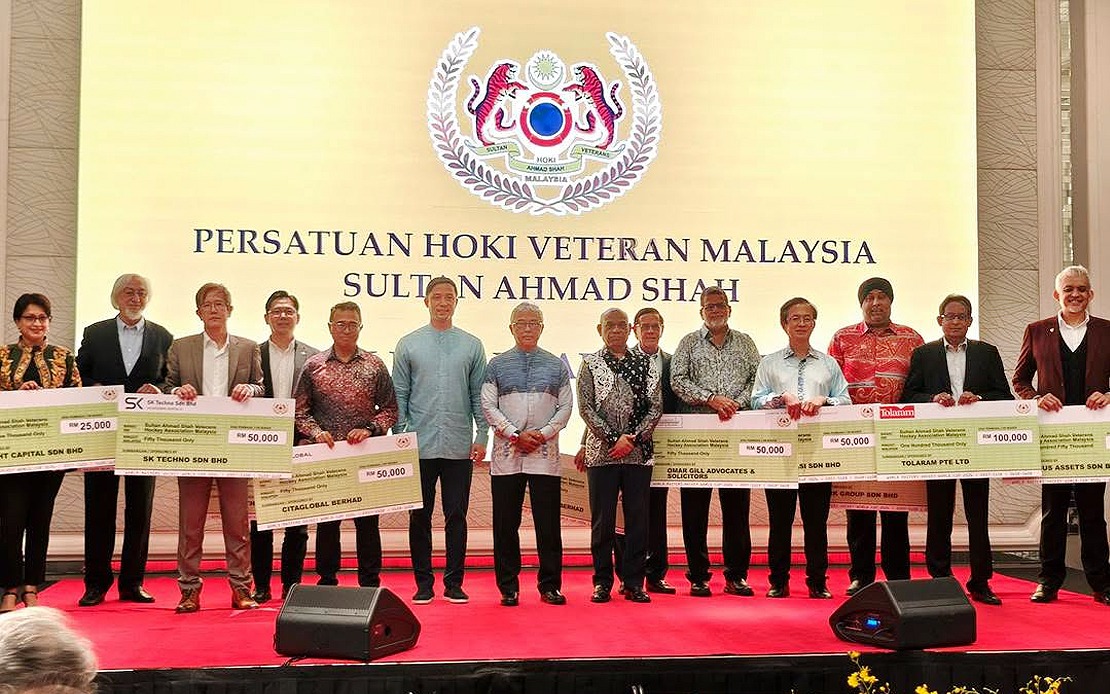
Malaysia's veteran hockey programme has received a substantial financial injection of RM1.36 million to prepare for next year's Masters Hockey World Cup, one of the sport's most prestigious biennial competitions. The funds, assembled through contributions from multiple sources, will support the national contingent competing across five age-bracket categories at venues spread between the Netherlands and Belgium from July 22 to August 16, 2026. The financial backing was announced at a Royal High Tea ceremony in Kuala Lumpur, with the Sultan of Pahang, Al-Sultan Abdullah Ri'ayatuddin Al-Mustafa Billah Shah, present as patron of the Sultan Ahmad Shah Malaysian Veteran Hockey Association.
According to the association's president, Tengku Arif Temenggong Tengku Fahad Mu'adzam Shah, the monetary support represents a significant commitment to veteran athletics in Malaysia. The funding addresses three critical operational areas: covering accommodation expenses for the travelling squad, managing international travel costs, and financing tournament-related preparations. Beyond these baseline requirements, the association intends to deploy portions of the funds to support individual athletes who face financial barriers to participation. This approach reflects a deliberate strategy to attract Malaysia's pool of retired national-level players, some of whom may have moved away from competitive sport due to financial constraints rather than loss of ability or interest.
The competitive structure of the 2026 championship encompasses five distinct age divisions, each with designated venues and match schedules. Players aged 40 will compete at HC Schiedam in the Dutch town of Schiedam, while the 45 and 50-year-old categories will contest matches at HC Rotterdam, also in the Netherlands, with these three age groups concluding their tournaments by August 1. The older cohorts face slightly extended scheduling; the 60-year-old category will play at HC Olympia in Brasschaat, Antwerp, Belgium, and the 65-year-old division will compete in Breda at BHV Push, with matches running through August 16.
The Masters Hockey World Cup occupies a singular position within international veteran sports. The tournament represents the flagship event for ageing athletes seeking to maintain competitive engagement at the highest level and draws elite veteran teams from across the globe. The championship operates on a biennial cycle, ensuring that national programmes can develop sustained competitive pipelines without the disruption of annual qualification pressures. The 2026 edition will mark the eighth iteration of the tournament since World Masters Hockey was formally established in 2012, a date that reflects the merger of the International Masters Hockey Association and the World Grand Masters Association—a consolidation that unified previously fragmented veteran hockey governance into a single authoritative body.
For Malaysia, participation in such prestigious tournaments carries significance beyond medal accumulation. Veteran sports programmes serve as institutional repositories for national sporting heritage, keeping alive the expertise and competitive culture developed during athletes' prime years. The investment signals government and institutional confidence in maintaining Malaysia's veteran hockey presence on the global stage, a consideration that becomes increasingly important as Southeast Asian nations develop more comprehensive sports development frameworks that account for athletes' lifespans rather than concentrating resources exclusively on youth and elite categories.
The funding announcement also highlights the practical challenges that often constrain veteran athlete participation in international competition. Unlike professional or youth-level sports, where substantial corporate sponsorship or government athletic stipends may be available, veteran athletes typically finance their competitive pursuits through personal resources. Malaysian athletes who competed at the highest national levels decades ago may now face competing financial priorities in their lives—mortgages, children's education, family support obligations—that make international tournament travel prohibitively expensive. By explicitly allocating funds to subsidise former national team players, the association demonstrates understanding that financial gatekeeping can exclude precisely those individuals whose experience and pedigree could elevate the squad's competitive standing.
The logistical scale of mounting an international hockey expedition cannot be understated. Transporting a competitive squad across continents requires coordinated management of travel documentation, accommodation arrangements coordinated with local organisers, equipment logistics, and provision for medical and technical support. The RM1.36 million allocated represents a realistic budget for such requirements when distributed across multiple athletes and support staff. This level of investment reflects Malaysia's seriousness about the campaign and suggests that the association has conducted detailed cost accounting rather than simply assembling token funding.
Regionally, Malaysia's commitment to veteran hockey positions it competitively within Southeast Asia and against international rivals from established hockey nations. The tournament in the Netherlands and Belgium will attract teams from countries with substantially longer and more resourced hockey traditions. Malaysian representation at such events contributes to the nation's sporting prestige and provides experienced athletes with cross-cultural sporting engagement—benefits that extend beyond the immediate competitive outcomes of match results.
The timing of the funding announcement, occurring well ahead of the July 2026 championships, affords the association adequate preparation time. With more than eighteen months available before competition, the squad can engage in structured training programmes, undertake preliminary tournaments for team cohesion, and manage selection processes across the five age categories with deliberation rather than haste. Such forward planning typically produces superior competitive results and allows athletes to adjust personal and professional circumstances to accommodate training and competition schedules.
The Sultan of Pahang's involvement as patron provided ceremonial weight to the announcement but also signalled institutional backing from Malaysia's royal structure. In Malaysian sporting governance, such patronage carries both symbolic and practical dimensions, often facilitating governmental support or institutional cooperation. The presence of the Sultan indicated that this veteran hockey campaign enjoyed elevated status within national sporting priorities, a positioning that can prove advantageous in accessing additional resources or overcoming bureaucratic obstacles.
Looking forward, the success of the 2026 campaign will likely influence future funding decisions and governmental attitudes toward veteran sports programming. Strong medal results would vindicate the financial investment and potentially catalyse expanded support for veteran athletics across other disciplines. Conversely, disappointing outcomes might prompt reassessment of resource allocation. However, the association's framwork of supporting financially disadvantaged former national players suggests that outcomes beyond pure medal success—including the intangible benefits of keeping veteran athletes engaged in competitive sport and maintaining Malaysia's international hockey presence—figure prominently in the programme's evaluation criteria.
The RM1.36 million funding represents a concrete commitment to a segment of Malaysia's sporting population often overlooked in discussions that concentrate exclusively on youth development or elite professional athletes. By investing in veteran hockey, Malaysia acknowledges that athletic careers extend beyond peak performance years and that former representatives retain value as both competitors and ambassadors for national sporting achievement.

