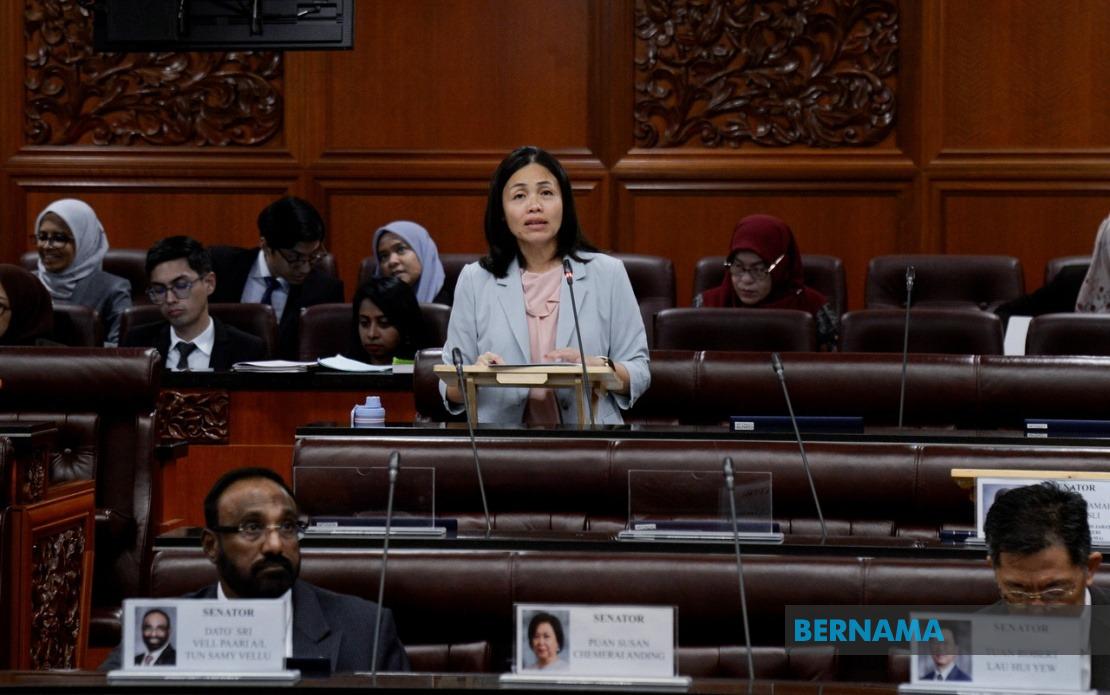
Malaysia's upper chamber of Parliament has endorsed landmark legislation to reinvigorate the Communications and Multimedia Commission (MCMC) as the country grapples with mounting challenges in its digital ecosystem. The Dewan Negara passed the Communications and Multimedia Commission (Amendment) Bill 2026 by majority vote on August 3 following substantive debate among 11 Senators, marking a decisive step toward modernising regulatory frameworks for an industry that increasingly underpins national infrastructure and economic growth.
Deputy Minister of Communications Teo Nie Ching highlighted the tangible impact of MCMC's enforcement operations in recent months while presenting the case for legislative reform. The regulator succeeded in removing more than 222,000 pieces of online gambling content during the first seven months of 2026 alone, evidence of accelerating digital enforcement capabilities that have grown exponentially in scope and sophistication over recent years. The trajectory demonstrates a dramatic intensification of content moderation: only two instances were documented in 2022, but this surged to 18,814 removals in 2023, 189,484 in 2024, and 289,486 throughout 2025, indicating both rising proliferation of problematic content and MCMC's enhanced capacity to identify and act against violations.
Beyond content takedowns, the commission has pursued aggressive infrastructure-level interventions targeting the servers and platforms enabling illegal gambling operations. Throughout the period spanning 2022 to July 31, 2026, Malaysian authorities working with MCMC have successfully blocked access to 6,982 gambling websites through technical controls implemented at the network level. While gambling regulation formally remains the purview of the Royal Malaysia Police, the amendment recognises that effective enforcement in the digital age requires MCMC to provide sophisticated technical assistance, digital forensic analysis, and access-blocking capabilities coordinated with police requests. This division of labour reflects how cybercriminal activities now transcend traditional jurisdictional boundaries, demanding regulatory agencies to collaborate seamlessly.
A central thrust of the amendment addresses governance independence by establishing new constraints on executive appointment power. The revised legislation explicitly prohibits politicians from serving as MCMC chairman, with the text precluding any individual who holds or held membership in Parliament or state assemblies from occupying the position. This reflects growing international recognition that communications regulators require insulation from short-term political pressures to maintain credibility and pursue enforcement decisions based on technical merit rather than factional advantage. Teo underscored that the amendment aims to limit ministerial discretion in appointments, ensuring that individuals selected to lead MCMC possess documented qualifications and professional credentials appropriate to the role's demands.
Senators contributing to debate recognised the constitutional weight of these reforms. Datuk Abdul Halim Suleiman characterised the amendment as indispensable given how Malaysia's communications and multimedia sector has transcended its status as merely an economic domain to become critical strategic infrastructure analogous to energy grids or transportation networks. The effectiveness of regulatory reform, he argued, ultimately depends not on legal authority alone but on MCMC's institutional capacity to exercise functions with professionalism, transparency, and genuine commitment to public protection. This framing situates the amendment within broader debates about digital governance during an era when telecommunications networks, data flows, and online platforms shape everything from commerce to social cohesion.
Senator Muhammad Hasbie Muda injected an additional dimension by emphasising that regulatory empowerment must be accompanied by rigorous attention to expertise and merit-based selection processes. He cautioned against reform designed merely to expand MCMC's functional scope and coercive powers without simultaneously ensuring those powers are wielded with transparency, operational effectiveness, and democratic accountability. This perspective reflects concern within the legislature that even well-intentioned regulatory expansion risks becoming counterproductive if entrusted to individuals lacking necessary technical knowledge or professional commitment to public service principles. The tension between granting regulators sufficient authority and constraining that authority through accountability mechanisms runs throughout contemporary communications law.
The legislative package itself comprises 17 distinct clauses addressing multiple dimensions of MCMC's mandate and structure. A key provision amends Section 16 of Act 589 to clarify and expand the commission's functions relating to digital infrastructure development and platform standard-setting. This textual refinement signals Parliament's intention that MCMC should exercise proactive stewardship over the technical foundations of Malaysia's digital ecosystem rather than merely reactive enforcement against violations. Standard-setting authority permits regulators to shape how platforms operate before problems arise, potentially preventing harms through design requirements rather than responding only after misconduct occurs.
The amendment's passage by the Dewan Negara follows the Dewan Rakyat's approval on July 15, 2026, completing the legislative process through both chambers of Parliament. The timing reflects urgency surrounding digital governance as Malaysia confronts escalating challenges ranging from online gambling proliferation to misinformation, cybercrime, and platform monopolies. Regional neighbours including Singapore and Thailand have similarly strengthened communications regulators in recent years, suggesting that enhanced MCMC authority reflects broader Southeast Asian policy trends toward asserting greater governmental oversight of digital markets.
For Malaysian citizens and businesses, the amendment carries significant implications. Stricter content moderation may reduce exposure to gambling solicitations and related harms, particularly for vulnerable populations including youth and individuals with addiction vulnerabilities. The depoliticisation of MCMC leadership could enhance regulator credibility and professional autonomy, potentially improving consistency and impartiality in enforcement decisions that affect media companies, telecoms operators, and digital platforms conducting business in Malaysia. Conversely, expanded regulatory authority raises questions about potential overreach, censorship risks, and whether MCMC possesses sufficient technical expertise and institutional culture to wield such powers responsibly over time.
International observers will scrutinise how MCMC implements its enhanced mandate in coming months and years. Communications regulators worldwide face inherent tensions between protecting public interests and respecting free expression, and Malaysia's regulatory model will inevitably reflect choices about where to locate that boundary. The amendment's emphasis on independence and merit-based governance suggests Parliament intends to position MCMC as a professional institution insulated from patronage and short-term political calculation. Whether that intention translates into institutional practice will substantially influence the regulatory environment for digital innovation, free speech, consumer protection, and cybersecurity across Southeast Asia's third-largest economy.

