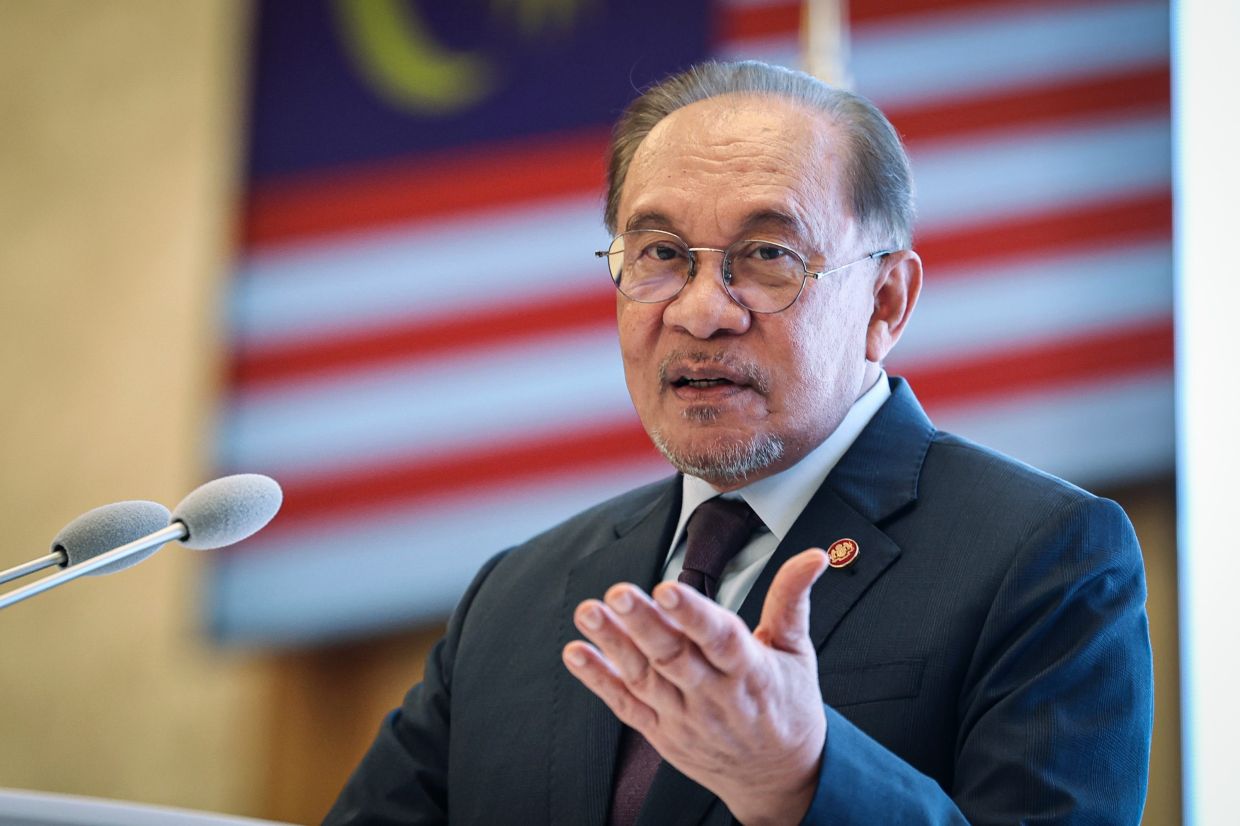
Malaysia's geographical position as a crossroads of global commerce has become the foundation of a carefully calibrated economic diplomacy strategy, Prime Minister Datuk Seri Anwar Ibrahim revealed at the 39th Asia-Pacific Roundtable this week. Speaking as both leader and Finance Minister, Anwar characterised the nation's role as a strategic trading hub not merely as an economic advantage but as a defining feature of how the country projects influence and manages international relationships in an increasingly multipolar world.
The government's approach to economic engagement reflects a deliberate effort to consolidate and expand the country's network of commercial partnerships. Over successive administrations, Malaysia has invested considerable diplomatic capital in strengthening bonds with long-standing trading partners and investment sources, recognising that stable economic relationships form the bedrock of both prosperity and geopolitical stability. This evolution has seen the country move beyond passive participation in global markets to actively shaping the rules and frameworks that govern international trade.
Central to this strategy is Malaysia's prominent role in advancing regional trade liberalisation initiatives. The country has positioned itself among the leading voices advocating for reduced tariff barriers, improved market access for goods and services, and more balanced investment arrangements. This advocacy extends across multiple frameworks: the ASEAN Free Trade Area continues to deepen regional integration, while participation in the Regional Comprehensive Economic Partnership represents Malaysia's commitment to broader Asian economic architecture. Meanwhile, involvement in the Comprehensive and Progressive Agreement for Trans-Pacific Partnership signals the nation's determination to remain connected to major trading blocs in an era of shifting global alignments.
Underpinning all of these initiatives is an unwavering commitment to ASEAN centrality as the organising principle of Malaysia's foreign policy. Despite acknowledging the bloc's occasional difficulties in achieving consensus, Anwar emphasised that Southeast Asian unity remains indispensable for advancing not only Malaysia's immediate interests but the region's collective wellbeing. This stance reflects a pragmatic understanding that in an environment of great power competition, ASEAN's cohesion and diplomatic voice provide essential counterbalance to external pressures that might otherwise fragment regional responses to transnational challenges.
Yet the Prime Minister signalled an important strategic evolution: Malaysia is now actively cultivating commercial relationships with markets that have historically received less attention from Kuala Lumpur's diplomatic apparatus. West Asia, Central Asia, Latin America and Africa represent frontiers where Malaysia sees untapped potential for mutually beneficial engagement. This geographical diversification responds to multiple imperatives simultaneously—reducing dependence on any single trading relationship, accessing new sources of investment capital, and positioning Malaysian companies and expertise in emerging growth markets before competitors establish dominant positions.
The framework through which Malaysia pursues these newer partnerships emphasises genuine collaboration built on complementary strengths rather than extractive relationships. Anwar highlighted several sectors where this approach proves particularly potent. Malaysia's established expertise in halal industry certification and standards-setting positions the country as a natural partner for markets with substantial Muslim populations and growing consumer bases. Similarly, the digital economy offers avenues for technology transfer and entrepreneurial collaboration, while agricultural cooperation leverages Malaysian expertise in tropical agriculture and agricultural technology. Green technology represents perhaps the most forward-looking domain, as nations across these emerging markets grapple with balancing development imperatives with environmental sustainability.
Energy cooperation has emerged as a critical pillar of this diversification strategy, and Anwar highlighted recent developments in Central Asia as exemplary of how economic and geopolitical considerations align. During an official visit to Turkmenistan, Petronas concluded agreements with state-owned entities to explore and develop two substantial gas fields, arrangements that extend beyond simple commercial transactions. Accompanying these project agreements was a comprehensive hydrocarbon development framework establishing long-term cooperation parameters and encompassing human capital development and technical expertise sharing. Such arrangements create enduring interdependencies and transform energy relationships into multifaceted partnerships spanning infrastructure, technology, and human resources.
This layered approach to economic diplomacy reflects an understanding that in the contemporary global environment, straightforward commercial transactions frequently prove insufficient to cement lasting relationships. By interweaving energy development with capacity-building initiatives and technical cooperation, Malaysia transforms what might otherwise be transactional arrangements into genuine partnerships. This model becomes particularly relevant for Central Asian nations seeking to monetise hydrocarbon reserves while building institutional capabilities to manage complex resource extraction operations.
The strategic imperative driving these initiatives is rooted in an increasingly uncertain global environment characterised by trade tensions, supply chain vulnerabilities exposed by recent disruptions, and structural shifts in the international order. Anwar characterised diversification not as merely tactical economic positioning but as a fundamental national necessity. The concentration of trade relationships or supply chains within narrow geographical or political frameworks exposes economies to systemic risks—interruptions to key partnerships during disputes, sanctions regimes targeting critical suppliers, or demand fluctuations in concentrated markets can cascade through entire economies. Malaysia's pursuit of broad-based, geographically distributed economic ties serves as insurance against such scenarios.
Looking forward, the government aims to maintain existing partnerships while methodically building new relationships, ensuring that Malaysia's economic architecture remains resilient, adaptive and oriented toward sustained growth. This forward-looking dimension acknowledges that the international environment will continue evolving, requiring flexibility in strategic positioning while maintaining core commitments to regional integration and stability. By combining deepened engagement through existing frameworks like ASEAN with measured expansion into new markets, Malaysia seeks to craft an economic posture capable of weathering disruption while capitalising on emerging opportunities.

