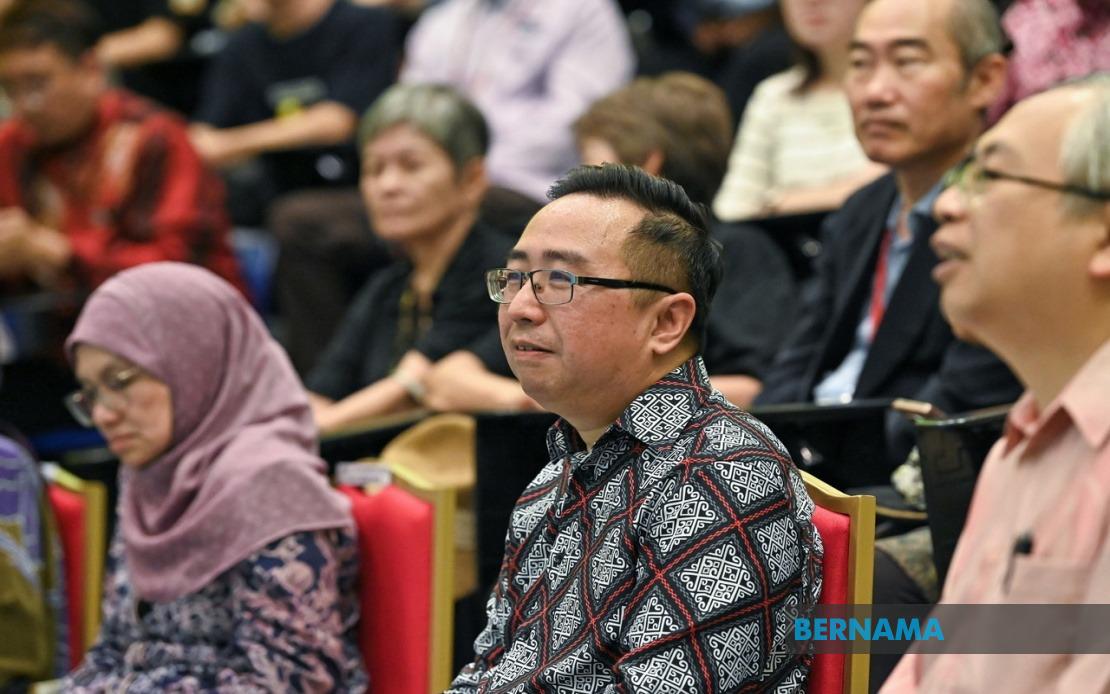
Science and technology graduates entering Malaysia's job market face exceptionally favourable employment prospects, driven by a wave of advanced manufacturing investments flowing into the country. Science, Technology and Innovation Minister Datuk Chang Lih Kang made this assessment while officiating the 20th Malaysia Festival of the Minds at Universiti Tunku Abdul Rahman (UTAR) Kampar Campus, emphasizing that demand for skilled professionals in these fields currently exceeds the available workforce.
The labour market imbalance represents a significant shift in Malaysia's economic landscape. Where many nations grapple with graduate unemployment, Malaysia is experiencing the opposite problem—companies struggle to fill highly specialised technical positions. This shortage reflects both the rapid expansion of the high-tech sector and the traditional reluctance among Malaysian students to pursue demanding science and technology disciplines. The minister's remarks serve as a direct rebuttal to widespread anxieties about artificial intelligence and automation displacing human workers, positioning technology instead as a job creator.
Chang emphasised that the government's outreach efforts, exemplified by the festival, aim to reshape student perceptions about technology careers. Rather than waiting for young people to approach the Ministry of Science, Technology and Innovation (MOSTI) with questions about AI's societal impact, the ministry is adopting a proactive engagement strategy. By directly addressing student concerns at universities across the country, officials hope to inspire greater uptake of STEM education and channel more talent into sectors where Malaysia is building competitive advantages.
The tangible backing for this narrative comes through substantial financial commitments. The government has allocated RM92 million from the Malaysia Science Endowment (MSE), while five industry partners have contributed an additional RM93 million, creating a RM185 million investment pool. This capital injection targets the enhancement of Malaysia's advanced packaging technology capabilities over the next twenty-four months, addressing what officials identify as a critical vulnerability in the semiconductor industry's supply chain.
The public-private financing model underlying this initiative reflects broader strategic thinking about how Malaysia should develop critical technologies. Rather than positioning the government as the sole funder of technological advancement, the arrangement ensures industry shares both financial responsibility and long-term commitment. This matching-fund approach theoretically creates stronger alignment between workforce development and actual employer needs, since companies investing substantial capital have direct incentive to ensure training programmes produce job-ready graduates.
Advanced packaging technology represents a particularly strategic focus area for Malaysia's semiconductor ambitions. Packaging—the process of encasing semiconductor chips and connecting them to circuit boards—has historically been labour-intensive and located in cost-competitive regions. However, as semiconductor manufacturing becomes increasingly sophisticated, advanced packaging techniques require highly skilled technical workforces. By developing these capabilities domestically, Malaysia positions itself as more than merely an assembly hub, potentially capturing higher-value segments of the global semiconductor value chain.
The timeline for achieving these objectives proves ambitious but not unrealistic. Officials have set 2028 as the target date for substantially enhancing Malaysia's advanced packaging capabilities, providing roughly four years for research institutions and companies to translate the RM185 million investment into operational capabilities. This phased approach allows for iterative development while maintaining momentum through regular milestone reviews and funding tranches.
For Malaysian students currently deciding whether to commit to lengthy STEM degree programmes, Chang's message offers concrete reassurance. The minister is essentially promising that the bottleneck in Malaysia's technology sector is not insufficient demand but rather insufficient qualified supply. Graduates emerging from rigorous programmes in electrical engineering, materials science, semiconductor physics, or related fields should enter labour markets where employers compete actively for talent, typically resulting in premium compensation packages.
However, the optimistic assessment requires nuance when examined regionally. While Malaysia's high-tech sector shows undeniable growth momentum, competition for regional talent remains fierce. Singapore, South Korea, and Taiwan actively recruit Malaysian engineers and scientists, often offering superior salaries and career development opportunities. Malaysia's ability to retain talent depends not merely on job availability but on creating career trajectories, research opportunities, and compensation packages comparable to neighbouring technology hubs.
The festival initiative itself serves multiple policy objectives beyond simple career promotion. By engaging students directly at universities, MOSTI attempts to shape narratives around technology's societal role before misconceptions solidify. Many students absorb dystopian AI narratives from media and entertainment, potentially deterring them from careers they might otherwise find rewarding. Early intervention through educational events positions government and industry voices as credible alternatives to sensationalised media coverage.
Chang's emphasis on abundant opportunities rather than merely sufficient ones also carries psychological weight. The phrase suggests not just employment but genuine career choice—a meaningful distinction in students' minds. Rather than grimly securing whatever technical position becomes available, graduates might expect to select among competing offers aligned with their interests and values. This framing addresses a real concern among high-achieving students who worry that highly specialised technical training narrows rather than expands future possibilities.
The semiconductor and advanced packaging sectors represent precisely the kind of high-value manufacturing activities that Malaysia's economic planners identified as essential for moving beyond middle-income status. These industries generate substantial export revenues, attract foreign direct investment, and create clusters of complementary businesses and services. Success in building domestic advanced packaging expertise could therefore reverberate far beyond individual job creation, potentially establishing Malaysia as a regional centre of semiconductor excellence.
As Malaysia competes globally for both foreign investment and domestic talent, the government's willingness to commit RM92 million in public funding while securing matching private investment signals serious long-term commitment. This approach demonstrates that addressing talent gaps requires simultaneous action on education, research infrastructure, and industry coordination—none of which emerges automatically from market forces. Whether students respond by pursuing science and technology education in the numbers Malaysia's expanding high-tech sector requires remains the critical question overshadowing even optimistic official projections.

