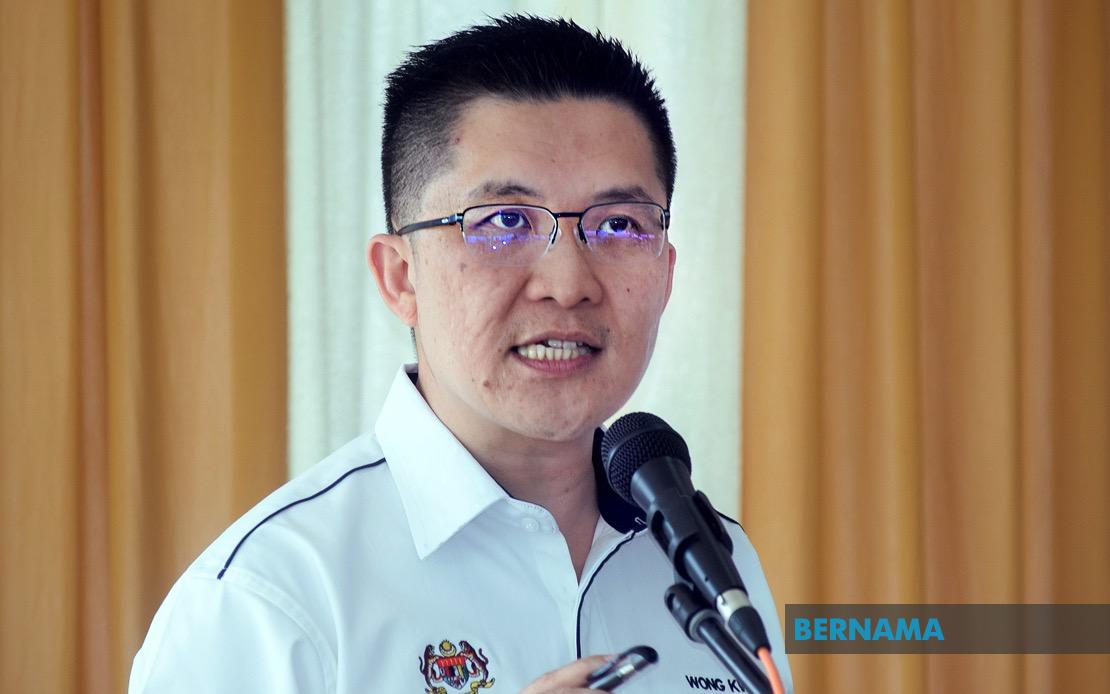
Malaysia's Tamil national-type schools (SJKT) continue to form a significant pillar of the country's multilingual education landscape, with 528 institutions currently operating across the nation and serving a combined enrolment of 78,501 students as of May this year. Speaking in the Dewan Rakyat, Deputy Education Minister Wong Kah Woh provided an updated snapshot of this important educational sector, detailing both the scale of operations and the various support mechanisms being deployed to sustain and enhance Tamil medium education in the country.
The trajectory of student participation in Tamil-medium secondary education reveals a gradual shift in enrolment patterns over recent years. Data presented to parliament shows that 8,023 candidates registered for the Sijil Pelajaran Malaysia (SPM) examination in 2023, a figure that has declined incrementally to 7,925 in 2024, 7,693 in 2025, and 7,494 new candidates this academic year. While these numbers indicate a downward trend, they underscore the continued relevance of Tamil education within Malaysia's examination framework, with the subject remaining firmly embedded as one of the language options available to students nationwide. This consistency reflects the government's commitment to preserving linguistic diversity within the national education system.
Ministry of Education officials have reassured stakeholders that the Tamil language will continue to occupy a permanent place within Malaysia's examination ecosystem. The Examinations Syndicate has committed to maintaining Tamil as a language subject offering, ensuring that schools choosing to provide this option can do so with confidence. Moreover, the ministry has clarified an important provision: students attending schools that do not offer Tamil medium instruction remain eligible to sit the SPM examination in the language, provided they meet standard examination registration requirements. This flexibility permits greater access to the subject regardless of students' school placement.
The government's broader educational agenda incorporates Tamil language development as a strategic priority. The Ministry of Education has outlined a comprehensive framework for strengthening Tamil education that extends beyond simple subject provision. Key initiatives include the forthcoming implementation of the 2027 School Curriculum, which will incorporate Tamil language and literature components, alongside sustained efforts to enhance the quality of classroom instruction and expand the literary canon available to Tamil-medium learners. These measures represent a structural commitment to ensuring that Tamil education evolves in tandem with Malaysia's overall curriculum development trajectory.
Johor represents a particularly significant hub for Tamil education, hosting 71 SJKTs that collectively serve 12,906 pupils, demonstrating the substantial demand for Tamil medium schooling in the state. Within Johor Bahru district specifically, 15 institutions operate with a combined enrolment of 7,840 students. Four schools in the district have emerged as major educational hubs: SJKT Taman Tun Aminah leads with 1,529 pupils, followed by SJKT Ladang Rini with 1,055, SJKT Jalan Yahya Awal with 890, and SJKT Masai with 768 students. These figures underscore the concentration of Tamil-medium education demand within the Johor Bahru metropolitan area, reflecting demographic patterns and parental educational preferences in the region.
Capital investment in Tamil school infrastructure demonstrates the government's financial commitment to the sector. The ministry has allocated RM4.3 million each for new building construction at SJKT Ladang Rini and SJKT Kulai Besar, projects expected to increase capacity by between 200 and 300 additional student places. These infrastructure enhancements are designed to accommodate projected enrolment growth and improve educational facilities at schools serving high-demand areas. Such investments signal a willingness to expand the physical footprint of Tamil education where demographic demand justifies such expansion.
A persistent challenge within the SJKT network involves managing schools with minimal enrolment. Two institutions in Johor Bahru—SJKT Ladang Sungai Plentong and SJKT Ladang Mados—currently operate with fewer than 30 pupils each, presenting operational and resource efficiency questions. Rather than implementing blanket closure policies, the Ministry of Education has developed a nuanced roadmap addressing under-enrolment through multiple mechanisms. As of May 31, 2026, 135 under-enrolled SJKTs nationwide have implemented multi-grade class structures, pooling students across different year levels to maintain viable learning environments. Additionally, 36 SJKTs have received approval for relocation to areas with stronger demographic demand, a policy approach that preserves educational access while optimizing resource utilization.
Teacher availability and professional capacity represent critical foundations for sustaining quality Tamil education. Current staffing levels in the SJKT system exceed established requirements, with 1,733 qualified Tamil language teachers in place against a requirement of 1,334 positions—a surplus of approximately 399 educators. At the secondary school level, the picture is equally positive, with 648 teachers employed against a requirement of 584, yielding an additional 64 educators. These figures suggest that teacher shortages do not currently constrain expansion of Tamil medium education, and that the system possesses sufficient human capital to support curriculum improvements and the implementation of new pedagogical approaches.
The Ministry of Education has provided explicit clarification regarding the integrity of national examination grading systems, addressing public concerns about the transparency of assessment processes. Examination results are determined not by predetermined quota systems or target percentages for particular grade distributions, but rather through systematic evaluation of each candidate's actual performance against established curriculum requirements and subject-specific competency standards. This process involves structured panels composed of subject matter experts, curriculum specialists, and educational measurement professionals who collectively examine candidate responses, assessment instrument characteristics, and established grading benchmarks. The ministry noted that this methodological approach aligns with practices employed in leading international examination systems.
Grade boundaries may fluctuate from year to year based on the demonstrated performance of a particular candidate cohort and the technical characteristics of examination instruments utilized in any given year. Rather than representing arbitrary adjustments, these variations reflect adherence to internationally recognized assessment practices that prioritize measuring student competency against fixed standards rather than forcing outcomes into predetermined distributions. This distinction carries important implications for assessment credibility and the validity of qualifications awarded to successful candidates, ensuring that examination results genuinely reflect mastery of subject content rather than serving as tools for managing statistical distributions.