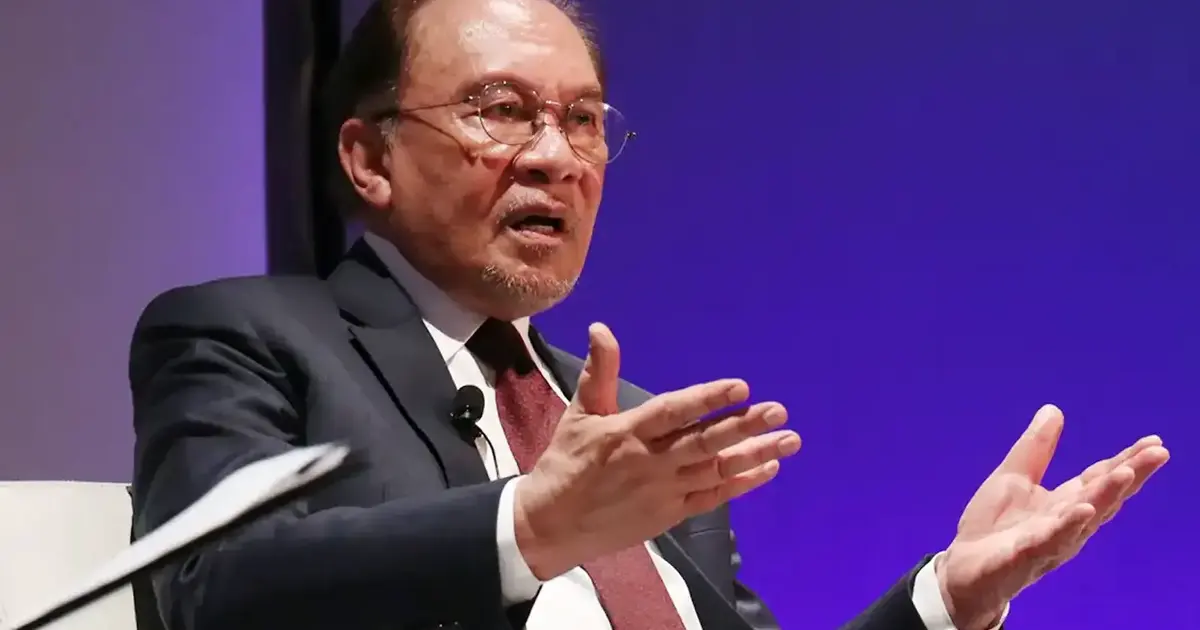
Prime Minister Anwar Ibrahim has credited Malaysia's second-quarter GDP expansion as proof that the country's economy possesses underlying strength and resilience despite global headwinds. The positive growth figures provide a timely endorsement of the government's economic stewardship and validate the policy direction pursued over the past three years, according to the premier's assessment.
Anwar's remarks underscore a broader narrative that Putrajaya's comprehensive reform agenda has borne tangible results in fortifying Malaysia's economic foundations. The government has maintained that persistent structural challenges inherited from previous administrations required sustained intervention and strategic recalibration. By strengthening these fundamentals, Malaysian policymakers believe the economy is now better positioned to weather external shocks and capitalise on regional opportunities.
For Malaysian investors and businesses, the government's confidence in economic trajectory carries significance. The second-quarter performance suggests that despite persistent inflationary pressures and uncertain global trading conditions affecting many developing economies, Malaysia's diversified economy continues to generate steady expansion. This resilience becomes particularly meaningful when contextualised against volatility in regional markets and global supply chain disruptions that have hampered neighbouring economies.
The prime minister's framing of recent economic performance as validation of his administration's approach reflects a deliberate political strategy. By linking GDP growth directly to government policy implementation, Anwar is positioning his government's economic management as a key achievement heading into the crucial years ahead. This messaging carries electoral implications, establishing the administration's economic credentials before potential future campaigns.
Malaysia's economic recovery and expansion have been underpinned by multiple factors beyond government policy alone. Robust commodity prices, particularly for palm oil and liquefied natural gas, have provided substantial export revenue that buoys overall growth figures. Domestic consumption patterns have also stabilised as Malaysians adapted to post-pandemic economic conditions, while tourism recovery has injected vitality into service sectors previously hammered by travel restrictions.
However, structural economic concerns persist beneath the headline growth figures. Malaysia continues grappling with productivity challenges that limit longer-term competitiveness, skills mismatches in the labour market, and infrastructure gaps that constrain development in peripheral regions. The government's three-year reform programme aims to address these deeper issues, yet meaningful transformation typically requires extended timescales beyond political cycles.
Regional context amplifies the significance of Malaysia's economic performance. Within the Association of Southeast Asian Nations, Malaysia functions as a middle-income economy facing particular vulnerabilities to technological disruption and competition from lower-cost producers. The government's emphasis on structural strengthening reflects awareness that merely managing cyclical growth proves insufficient for achieving high-income status and sustaining prosperity across all segments of society.
The relationship between government policy and GDP outcomes remains complex and multifaceted. While administrations naturally claim credit for positive economic indicators, attributing expansion solely to recent reforms oversimplifies causation. Long-standing institutional arrangements, private sector dynamism, and external market conditions all significantly influence growth trajectories. Nevertheless, effective policy implementation can remove obstacles to growth and create conditions conducive to business expansion and investment.
Looking forward, the sustainability of Malaysia's economic performance depends substantially on the government's capacity to execute its reform agenda comprehensively. Initiatives targeting digital infrastructure development, renewable energy transition, and human capital enhancement require substantial ongoing investment and political commitment. For Malaysian stakeholders from manufacturing firms to tech startups, clarity about long-term policy direction influences investment decisions and business planning horizons.
The prime minister's emphasis on fundamental economic strengthening rather than temporary stimulus measures suggests confidence in the trajectory of structural reforms. This approach contrasts with short-term revenue-raising schemes or cyclical spending programmes that provide immediate but unsustainable boosts to growth statistics. Putrajaya's positioning of recent GDP expansion as evidence of durable economic fortification aims to build credibility for a longer-term transformation agenda requiring patience and sustained implementation.
International observers monitoring Malaysia's economic development closely track whether recent growth translates into improved living standards for ordinary Malaysians. Income inequality remains a persistent challenge, with benefits from economic expansion unevenly distributed across regions and demographic groups. The government's reform narrative must demonstrably connect to tangible improvements in employment quality, wage growth, and opportunity access for broader population segments beyond urban professional classes.
As Malaysia navigates an increasingly complex global economic environment characterised by geopolitical tensions, technological upheaval, and climate-related pressures, the government's emphasis on strengthening economic fundamentals carries strategic importance. The second-quarter GDP data provides political ammunition for the administration's policy stance, yet ultimate validation will depend on whether growth becomes sustainable, inclusive, and sufficient for Malaysia to achieve its aspirational development goals. The coming quarters will test whether the outlined reforms materialise into consistent performance improvements or become merely rhetorical flourishes accompanying temporary cyclical upswings.

