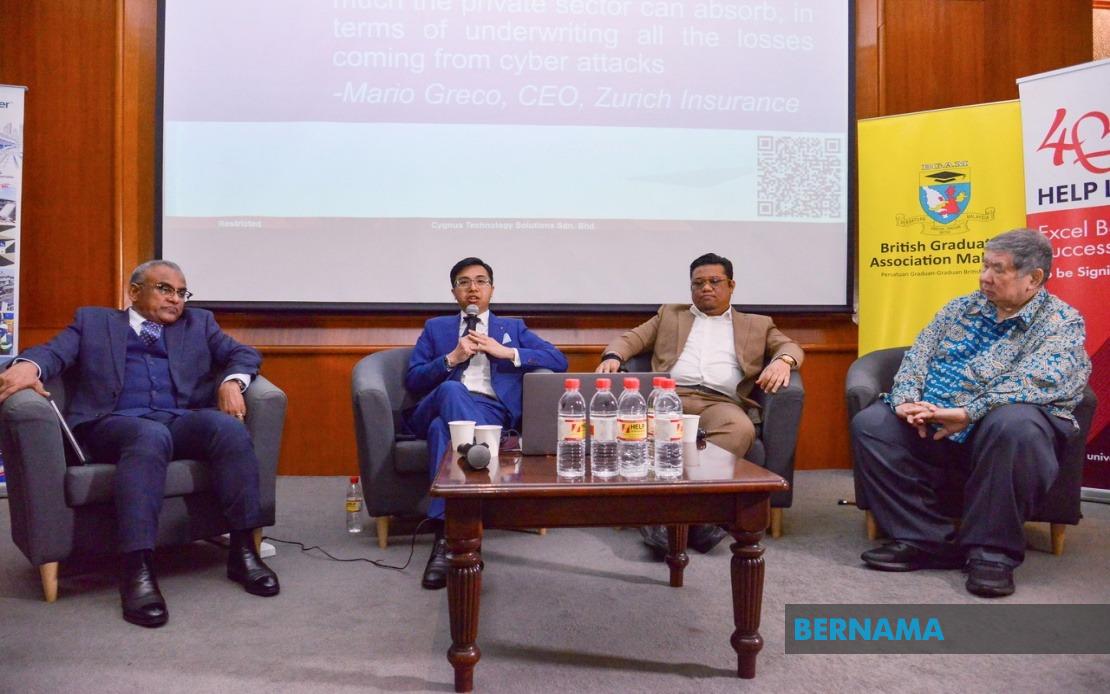
Malaysia's fight against organised scamming has reached a critical inflection point, with the nation recording more than 66,000 online fraud cases and losses totalling approximately RM2.97 billion last year alone. This alarming surge reflects a transformation in how criminal syndicates operate—moving away from simple, isolated schemes toward a coordinated, technologically sophisticated assault on the nation's digital and financial systems. Speaking at the BGAM Lecture Series: Scam Awareness 2.0-Action & Prevention hosted at HELP University, Datuk Kamarudin Md Ali, exco member of the Malaysia Crime Prevention Foundation and president of the British Graduates Association Malaysia, characterised the problem as a full-fledged national emergency that extends far beyond individual victims to threaten families, businesses and the broader fabric of societal trust.
What distinguishes today's scam landscape from earlier waves of fraud is the deliberate weaponisation of artificial intelligence and sophisticated social engineering techniques. Rather than relying purely on technical hacking of computer systems, modern scam operations target human psychology with precision. Prof Datuk Seri Dr Akhbar Satar, director of the HELP University Institute of Criminology and Criminal Justice, articulated this shift bluntly during the forum: scammers do not hack machines—they hack minds. This distinction carries profound implications for Malaysia's defensive strategy, suggesting that no amount of cybersecurity software alone can adequately protect citizens whose vulnerabilities lie in their psychological susceptibility to manipulation, emotional appeals and trust exploitation.
The scope of Southeast Asia's scam problem places Malaysia squarely within a regional crisis of staggering proportions. According to Datuk Seri Ramli Mohamed Yoosuf, former director of Bukit Aman's Commercial Crime Investigation Department, Southeast Asia has emerged as the global epicentre of commercial crime, with estimated regional losses between USD88 billion and USD114 billion anticipated for 2025. The infrastructure supporting this criminal enterprise is both transnational and surprisingly visible—organised scam compounds operating across Myanmar, Cambodia, Laos and the Philippines are believed to generate approximately USD40 billion annually, a figure that underscores the industrial scale at which these operations function. These compounds increasingly leverage AI-generated deepfakes to impersonate trusted figures, orchestrate cryptocurrency laundering schemes to obscure illicit proceeds, and exploit trafficked labour from more than 80 countries, creating a diversified criminal ecosystem that transcends Malaysia's borders yet directly victimises its citizens.
The deployment of AI technology by scammers represents a qualitative leap in the threat environment. Deepfakes—synthetic media created through machine learning—enable criminals to fabricate convincing video or audio impersonations of family members, government officials, banking executives or corporate leaders. A victim receiving a video call from what appears to be their son or daughter, requesting urgent funds, faces a psychological manipulation far more potent than any traditional social engineering. Similarly, AI-powered chatbots can engage potential victims in seemingly authentic conversations, learning and adapting their approach in real time based on individual responses. This convergence of psychological vulnerability with technological sophistication creates an asymmetry in the fraud arms race that conventional law enforcement alone cannot address.
The Malaysian government has responded with legislative and institutional measures aimed at tightening the regulatory perimeter. The Cybersecurity Act 2024 represents a statutory attempt to establish minimum security standards and accountability mechanisms across digital service providers. Enhanced compliance with Financial Action Task Force standards targets the money laundering and asset concealment mechanisms that allow scammers to profit from their crimes. The establishment of the National Scam Response Centre signals institutional recognition of the problem's cross-sectoral nature, requiring coordination between law enforcement, financial regulators, telecommunications authorities and technology platforms. However, as multiple speakers emphasised, these enforcement-focused approaches, while necessary, remain insufficient without a complementary public awareness and education campaign.
Tan Sri Dr Syed Hamid Albar, Asia e University chancellor and former Home Minister who officiated the lecture series, positioned scam prevention squarely within a broader framework of public trust and digital ecosystem confidence. Scams, he argued, transcend categorisation as mere financial crimes—they fundamentally erode the social cohesion and institutional confidence upon which modern economies depend. When citizens fear that their communications can be weaponised against them, that financial institutions cannot guarantee security, or that even family members' identities can be fraudulently assumed, the resulting anxiety reshapes behaviour across the entire digital economy. This recognition underscores why the response must be what Syed Hamid termed a whole-of-society approach, anchored not in reactive enforcement after crimes occur but in proactive education that builds resilience into the population itself.
Educational institutions occupy a central position in this preventative framework. Universities, as Prof Akhbar Satar noted, bear responsibility for strengthening digital literacy among their graduates while simultaneously cultivating the critical thinking and ethical foundations necessary for informed decision-making in an age of synthetic media and psychological manipulation. This educational mission extends beyond technical cybersecurity training to encompass what might be termed psychological hygiene—teaching citizens to recognise the emotional triggers and cognitive biases that scammers deliberately exploit. The integrity-centred approach articulated by Prof Akhbar—that corruption and scams both represent a failure of ethical foundations—suggests that character development and ethical education deserve equal prominence alongside technical training in institutional curricula.
The panel discussion that concluded the event, moderated by Malaysian Press Institute president Datuk Yong Soo Heong and featuring Malaysia Anti-Scam Community Organisation consultant Rahmat Fitri Abdullah among others, explored practical measures through which individuals and organisations can fortify their defences. Emerging trends in commercial crime investigations, the intersection of cybersecurity with digital trust, and media literacy all emerged as critical competencies for contemporary Malaysian society. The discussion reinforced an understanding that scam prevention cannot be delegated entirely to government agencies or technology companies—it requires active participation from financial institutions, telecommunications providers, media organisations and grassroots community groups working in concert.
The gathering of government leaders, law enforcement specialists, cybersecurity professionals and academics at HELP University reflected a tentative convergence around the necessity of collaborative response. Yet the velocity of technological change and the economic incentives driving organised scam operations mean that institutional responses must continuously innovate and adapt. The syndicate compounds generating USD40 billion annually are not static targets—they are themselves investing in newer AI capabilities, refining social engineering methodologies and exploring novel cryptocurrency concealment techniques. Malaysia's defensive posture must therefore embed flexibility and rapid iteration, moving beyond one-time legislative fixes toward continuous institutional learning.
The human dimension remains both Malaysia's greatest vulnerability and its most potent resource for defence. Scammers succeed not because technology is insufficiently advanced but because citizens remain psychologically susceptible to carefully crafted deception. Conversely, an informed, digitally literate, emotionally intelligent populace becomes the most resilient defence against organised fraud. The path forward requires sustained commitment to public education, institutional coordination, technological innovation and ethical culture-building—a comprehensive campaign against not merely individual scammers but the entire criminal ecosystem enabling them to operate with apparent impunity across Southeast Asia.

