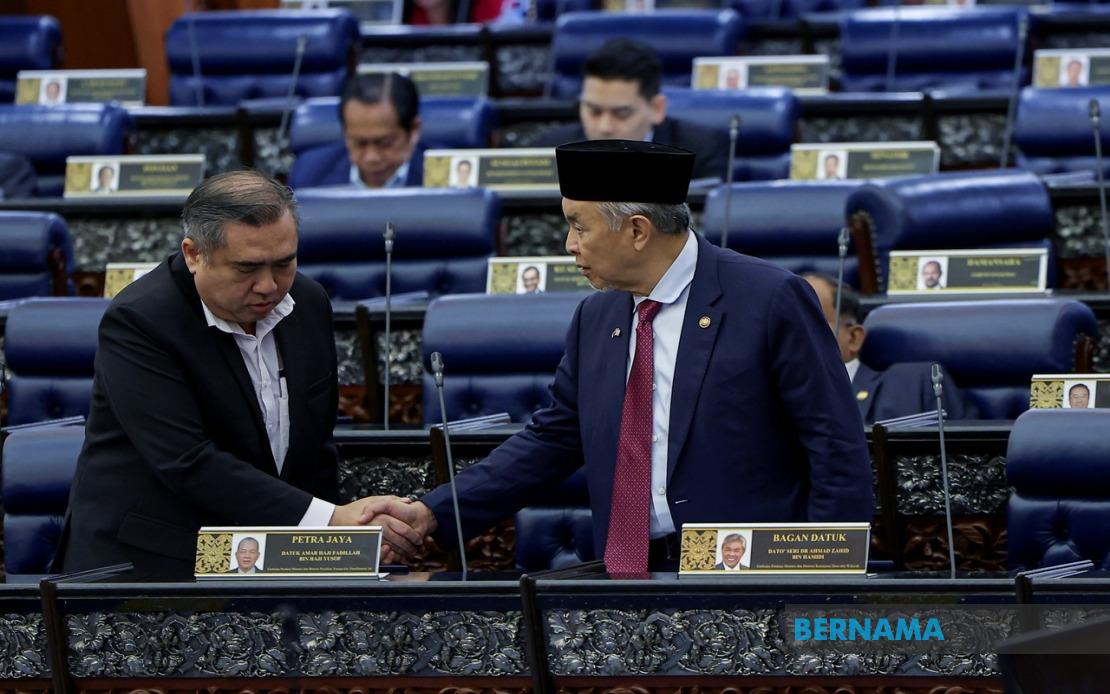
Transport Minister Anthony Loke formally introduced the Road Transport (Amendment) Bill 2026 for first reading in the Dewan Rakyat on June 22, initiating what promises to be a substantial overhaul of Malaysia's traffic enforcement framework. The proposed legislation strengthens the regulatory infrastructure underpinning the original Road Transport Act, with the minister confirming that the second reading will proceed during the current parliamentary session. The comprehensive package of amendments reflects growing governmental concern about rising road casualties and the need for more deterrent-based enforcement mechanisms across the country.
At the heart of the Bill lies a systematic escalation of financial penalties across a broad spectrum of traffic violations. Standard fines for common infractions will increase from a minimum threshold of RM300 to RM500, affecting multiple categories of offences. This adjustment applies to drivers who fail to display vehicle registration numbers, operate motor vehicles without valid licences, exceed speed limits, breach regulations governing vehicle construction and safety equipment, ignore traffic signals and instructions, and participate in illegal street racing. The doubling of baseline fines represents the most visible aspect of the reform, designed to create immediate financial consequences that deter casual rule-breaking among the driving public.
The Bill introduces particularly stringent measures targeting suspended drivers, a category responsible for significant accident rates. Drivers operating vehicles while their licences remain suspended will face imprisonment of up to three years, substantially higher than the previous maximum of one year, alongside fines ranging from RM3,000 to RM10,000 compared to the earlier ceiling of RM5,000. This dramatic increase reflects legislative determination to remove from the roads individuals who have already demonstrated regulatory non-compliance serious enough to warrant licence suspension. The enhanced punishment structure aims to transform this offence from a minor administrative matter into a genuine criminal consequence, fundamentally altering the risk-reward calculation for suspended drivers considering whether to drive.
Street racing and unauthorized speed-testing represent the Bill's most heavily penalized infractions, reflecting the government's concern about organized driving activities that endanger public safety. First-time offenders engaging in racing or speed-testing on public roads face fines between RM2,000 and RM10,000, imprisonment up to two years, or both. Repeat offenders encounter substantially escalated consequences: minimum five-year imprisonment combined with fines of RM5,000 to RM20,000. This graduated penalty structure effectively transforms street racing from an entertainment activity into a serious criminal offence with prison sentences comparable to moderately severe felonies. For Malaysian motorists, particularly younger drivers susceptible to racing culture, these provisions introduce a categorical shift in legal consequences.
False statements and fraudulent declarations relating to vehicle registration and licensing receive similarly robust treatment under the proposed amendments. Clause 28 proposes criminal penalties reaching RM200,000 in fines or ten years' imprisonment, establishing a high barrier against document falsification and deceptive administrative practices. This provision extends enforcement capabilities into the documentary sphere, targeting organized schemes involving counterfeit licensing documents or fraudulent vehicle registration papers. The severity of these penalties acknowledges that administrative fraud undermines the entire enforcement architecture by allowing unqualified or dangerous drivers to obtain legitimate-appearing documentation.
The Bill expands enforcement officer authority through multiple mechanisms designed to enhance traffic management capacity. Police officers and road transport enforcement personnel gain broader discretionary powers to control traffic flow and redirect vehicles, particularly relevant during peak periods or following accidents. Complementing these operational enhancements, new procedures for detaining and disposing of micromobility vehicles address the regulatory gap created by the proliferation of e-scooters and similar devices on Malaysian roads. These provisions acknowledge evolving transportation patterns in urban centres, where traditional motor vehicle regulations prove insufficient for managing newer mobility categories.
Offences against enforcement officers receive enhanced legal protection through amendments establishing that obstructing or assaulting traffic and road transport officers constitutes an arrestable offence. This provision directly addresses incidents where drivers verbally abuse, threaten, or physically resist enforcement personnel, transforming such conduct from potential minor infractions into matters warranting arrest and prosecution. By creating this categorical protection, the legislation recognizes that officer safety directly correlates with enforcement effectiveness. Officers facing abuse or assault cannot perform their duties effectively, creating a safety spiral that ultimately compromises road safety outcomes.
The Bill modifies compound offence procedures by increasing the maximum compound amount from RM300 to RM500, providing enforcement officers greater flexibility in settling violations outside the court system. This administrative efficiency mechanism allows officers to resolve straightforward infractions quickly while preserving court resources for serious cases or contested violations. The RM200 increase maintains proportionality with the broader fine adjustments throughout the legislation, ensuring that compound settlements remain appropriately calibrated relative to formal penalties.
Ministerial powers expand under Clause 22, which transfers authority to set fees for issuing entry permits to foreign motor vehicles. This administrative flexibility addresses the practical challenge of coordinating cross-border vehicular movement while maintaining regulatory oversight. By empowering the Transport Minister to establish fee structures, the legislation enables responsive adjustment to changing circumstances in regional motor vehicle movements without requiring parliamentary action for each fee modification.
For Malaysian motorists and transport stakeholders, the Bill's comprehensive approach reflects a deliberate policy shift toward deterrence-based road safety. The doubled minimum fines will affect millions of drivers annually, while the enhanced penalties for serious violations establish meaningful criminal consequences that may alter behaviour among high-risk groups. Small businesses operating commercial vehicles will need to reassess compliance costs, particularly regarding fleet safety equipment and driver licensing requirements. Insurance premiums may rise reflecting increased penalty exposure, particularly for commercial operators.
The amendments arrive amid ongoing national discussions about road fatality rates, which consistently rank Malaysia among the deadliest nations for traffic accidents relative to population size. While increased penalties alone cannot eliminate dangerous driving, the comprehensive legislative framework targets multiple enforcement gaps simultaneously. The measures acknowledge that effective road safety emerges from layered interventions combining enhanced penalties, expanded officer authority, and administrative efficiency improvements.
Regionally, Malaysia's approach parallels similar legislative trends in neighbouring countries that have systematically increased traffic penalties and enforcement capabilities. Singapore, Thailand, and other ASEAN members have implemented comparable penalty increases, suggesting that the Road Transport (Amendment) Bill 2026 reflects a broader regional consensus regarding appropriate penalty levels for common violations. Cross-border drivers will need to familiarize themselves with Malaysia's revised penalty structure as they operate vehicles regionally.
The parliamentary journey ahead for this Bill will likely generate debate regarding proportionality and implementation practicality, particularly concerning whether doubled minimum fines will disproportionately affect lower-income drivers while high-income violators can absorb penalties with minimal behaviour modification. Questions may also emerge regarding enforcement prioritization, given that expanding penalty structures requires corresponding increases in enforcement capacity to deliver credible deterrence. The second reading debate will illuminate these implementation considerations and political perspectives on the balance between punitive measures and road safety investment.