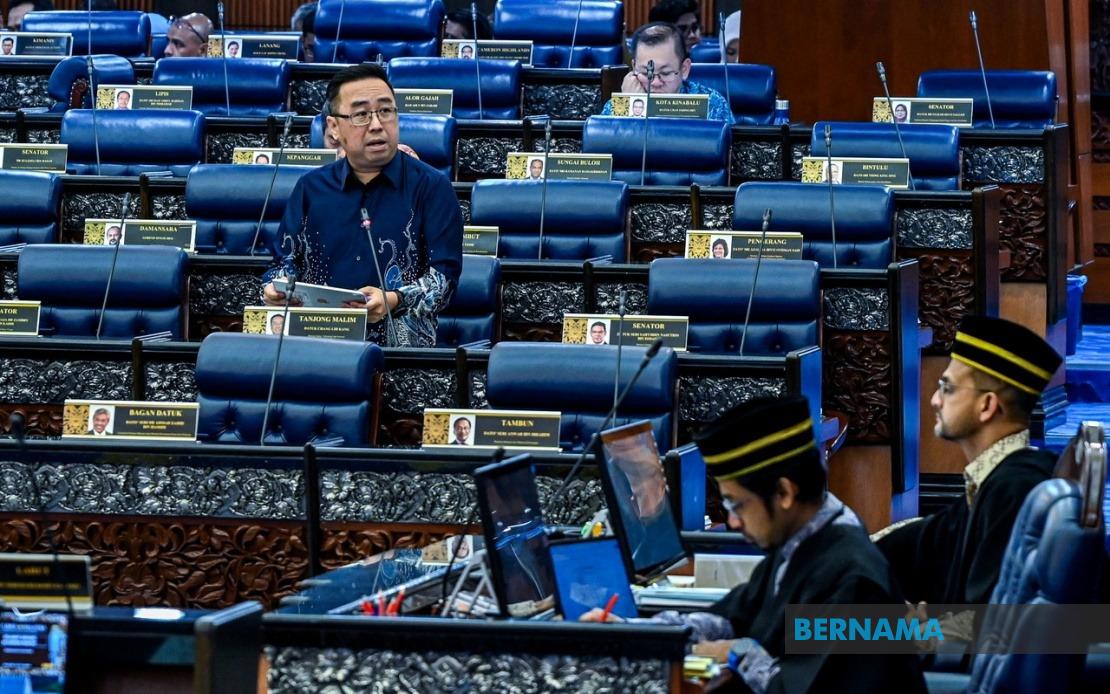
Malaysia is moving aggressively to position itself as a competitive player in next-generation semiconductor manufacturing, with the government committing RM185 million to develop and commercialise advanced packaging technology through a strategic pilot project. Science, Technology and Innovation Minister Datuk Chang Lih Kang announced in parliament on July 9 that the Malaysia Science Endowment (MSE) initiative targets transitioning the technology to market readiness within a two-year capacity-building window, marking a pivotal moment for the country's efforts to climb the semiconductor value chain.
The ambitious project brings together a consortium of five local companies alongside government institutions, fundamentally reshaping how Malaysia approaches semiconductor innovation. Rather than relying on imported expertise and foreign-owned manufacturing hubs, the initiative emphasises building homegrown technological capabilities and intellectual property. This consortium model allows participating companies to develop advanced packaging competencies collectively while reducing individual financial risk—a pragmatic approach that balances commercial viability with industry-wide skill development.
The funding structure operates on a carefully calibrated progression system centred on Technology Readiness Level metrics. The RM185 million grant is specifically designed to elevate the technology from TRL 5, where it remains largely experimental with preliminary testing, through to TRL 9, representing full commercialisation readiness with proven manufacturing and deployment systems. This systematic approach ensures that government support addresses genuine technology maturation gaps rather than subsidising indefinitely.
Crucially, the initiative comes with an explicit exit strategy. Minister Chang emphasised that once the technology reaches TRL 9 and the two-year capacity-building phase concludes, the government will transfer full operational and financial responsibility to the participating companies. This transition point is designed to prevent the semiconductor sector from developing chronic dependence on state funding, instead forcing companies to demonstrate genuine market viability by securing independent customers and commercial financing.
The timing of this initiative reflects Malaysia's strategic recognition that the global semiconductor landscape is shifting. As tensions around chip supply chains persist and major economies race to develop domestic manufacturing capabilities, Malaysia recognises an opportunity to transition beyond assembly and testing—its traditional roles—into higher-value design and advanced packaging operations. These activities command substantially greater margins and technical prestige within the global semiconductor ecosystem.
The advanced packaging technology itself addresses a critical bottleneck in contemporary chip manufacturing. As semiconductors become more powerful and complex, the methods for packaging and interconnecting components grow more sophisticated. Advanced packaging enables the integration of multiple chips and components into single packages, reducing size while enhancing performance—essential for emerging applications that Minister Chang specifically highlighted including artificial intelligence, data centres, high-performance computing systems, and 5G networks.
For Malaysia's technology sector, successful development of indigenous advanced packaging capabilities would represent a watershed moment. The country has historically functioned as an important but subordinate player in the global semiconductor supply chain, hosting manufacturing facilities and performing assembly work for multinational corporations. Developing genuine technological innovation and intellectual property in advanced packaging could fundamentally alter this dynamic, creating opportunities for local companies to license technology, establish themselves as suppliers to major international chipmakers, and attract higher-skilled employment and investment.
The strategic context extends beyond semiconductors alone. Advanced packaging technology sits at the intersection of multiple strategic sectors that Malaysia and Southeast Asia are prioritising. Artificial intelligence systems demand increasingly sophisticated chip architectures that depend on advanced packaging innovations. Data centre expansion across the region requires reliable, high-performance semiconductor solutions. The emerging quantum computing field, mentioned specifically in the minister's remarks, represents the frontier of semiconductor technology with enormous long-term implications. By investing now in packaging capabilities, Malaysia positions itself not merely as a current-day manufacturer but as a participant in technologies that will define computing for decades.
The consortium structure merits particular attention for what it reveals about Malaysian policy thinking. Rather than attempting to create a single national champion company, the government opted for a collaborative framework that distributes both risk and capability across multiple entities. This approach acknowledges that semiconductor technology is too complex and rapidly evolving for any single organisation to master independently, while also hedging against the scenario where one company fails to execute effectively.
International precedent supports this model. Taiwan, South Korea, and Singapore have all developed their semiconductor dominance partly through government-supported consortia that allowed competing companies to collaborate on pre-competitive research and technology development. The MSE advanced packaging initiative mirrors this proven formula adapted to Malaysia's current circumstances and capabilities.
The pathway from current TRL 5 status to market-ready TRL 9 will require sustained technical execution over the two-year window. The companies involved must successfully scale laboratory processes to production capacity, validate manufacturing reliability, establish quality assurance protocols, and develop customer relationships—all while competing against established players with decades of operational experience. This execution challenge may prove more demanding than the technology development itself.
Looking beyond the immediate two-year horizon, success in this pilot project would likely catalyse broader semiconductor ecosystem development. A proven advanced packaging capability would attract related supplier industries, encourage electronics companies to relocate operations closer to their packaging suppliers, and potentially position Malaysia as a regional semiconductor hub. For neighbouring countries including Thailand, Vietnam, and Indonesia that also manufacture electronics, Malaysia's success would create both competition and opportunities for regional supply chain integration.
The RM185 million investment should be understood not merely as a current-year budget allocation but as seed funding for what could become a substantially larger industry segment. If the consortium achieves its commercialisation target, the government's role would diminish precisely as the sector's contribution to the economy increases—the intended trajectory of any successful technology development programme.

