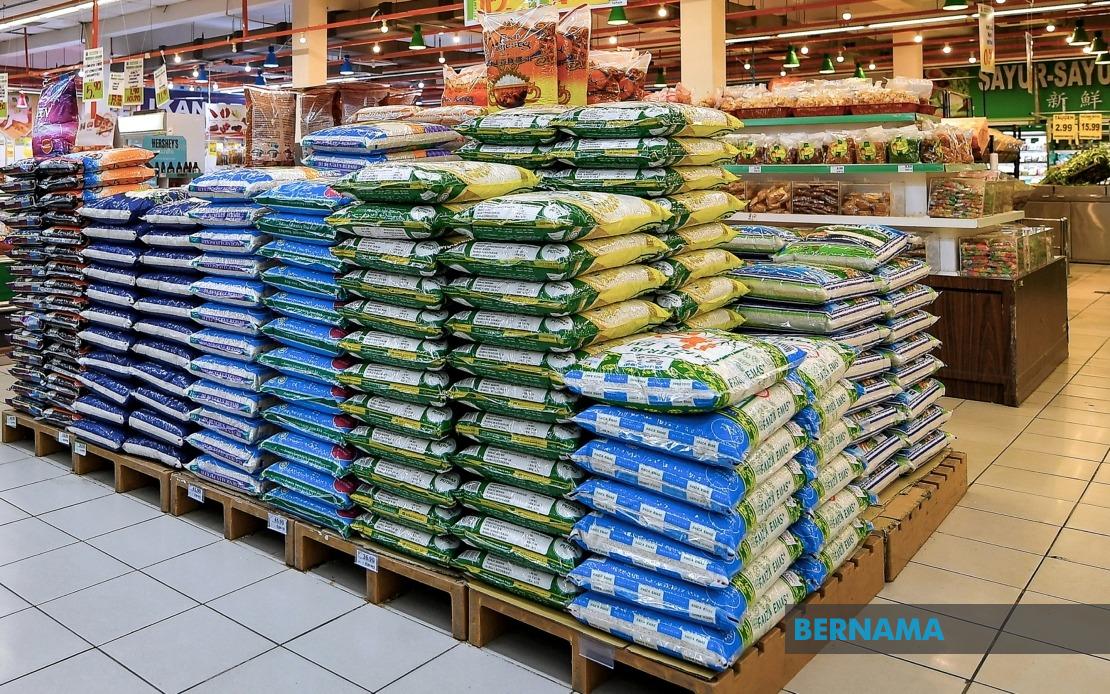
Malaysia's staple food security framework is holding firm despite mounting global supply chain disruptions, with domestic rice reserves substantial enough to cushion the nation against external shocks for half a year. Economy Minister Akmal Nasrullah Mohd Nasir made this reassurance public following high-level deliberations at the National Economic Action Council, underlining the administration's focus on preventing commodity price volatility from reaching household budgets across the country.
The minister's statement carries particular weight given international food price instability that has rippled through Asian markets over recent months. By positioning Malaysia as having secured buffer stocks equivalent to half a year's consumption, authorities are signalling confidence in their preparedness protocols—a measure that typically requires substantial forward planning and capital allocation. This stockpiling strategy reflects lessons learned from previous global supply disruptions and represents a deliberate policy choice to insulate Malaysian consumers from import-dependent volatility.
Central to the government's consumer protection stance is an explicit commitment that Local White Rice prices will experience no upward movement in the near term. This price freeze applies to the BPT designation, the standard variety consumed across Malaysian households, making it a direct measure affecting millions of families. In an environment where neighbouring nations and competing economies have experienced food inflation pressures, Malaysia's ability to maintain price stability depends heavily on the adequacy of these reserve stocks and the government's willingness to absorb potential cost pressures internally.
Prime Minister Datuk Seri Anwar Ibrahim's leadership of the National Economic Action Council meeting underscores the seriousness with which the administration treats food security matters. When prime ministers directly chair discussions on commodity supplies, it signals that such issues have transcended routine ministerial-level coordination and entered the realm of strategic national economic priorities. This elevation reflects awareness that food price spikes can rapidly translate into political instability and erosion of purchasing power among lower-income groups.
The government's simultaneous rollout of RM45.98 million in incentive payments to 118,908 paddy farmers across Peninsular Malaysia demonstrates a two-pronged approach: securing consumer supply while simultaneously supporting domestic agricultural producers. The Paddy Farmers Plowing Incentive programme directly acknowledges the structural challenges facing Malaysia's rice farming sector, where climate volatility and escalating production expenses have squeezed farmer profitability. By injecting capital support, the administration aims to maintain domestic production capacity and prevent farmer exodus from the sector.
Climate change represents an underappreciated threat to Malaysia's food security architecture. Increasingly erratic rainfall patterns, flooding events, and extended dry periods have made paddy cultivation more unpredictable, forcing farmers to absorb higher input costs merely to maintain current output levels. The government's explicit recognition of these pressures in its subsidy distribution suggests policymakers understand that affordable food supplies depend not merely on reserves but on sustaining a viable domestic production base. Without continued farmer engagement, Malaysia could face longer-term structural vulnerabilities.
From a regional perspective, Malaysia's emphasis on food supply stability carries implications for Southeast Asian economic cohesion. Nations across the Association of Southeast Asian Nations have varying capacities to maintain strategic food reserves, with some far more vulnerable to price shocks than others. Malaysia's explicit confidence in its six-month buffer potentially sets a standard within the region and may invite scrutiny of neighbouring countries' preparedness levels. It also positions Malaysia as a more resilient economy in international investor assessments, a consideration that influences capital flows and currency valuations.
The timing of these announcements reflects broader geopolitical uncertainties that have disrupted global commodities markets. Ukraine's role as a major grain exporter, energy price volatility affecting fertilizer production, and pandemic-related shipping disruptions have all contributed to an environment where food security can no longer be assumed. Malaysia's proactive communication about its reserves serves a dual purpose: reassuring domestic consumers and demonstrating to international markets that the country possesses genuine structural resilience rather than merely offering reassuring rhetoric.
For Malaysian consumers already navigating inflation pressures across other essential categories, the rice price guarantee provides meaningful psychological relief and tangible purchasing power preservation. Rice constitutes a foundational staple in Malaysian diets across all demographic groups, and its price stability anchors broader food security expectations. When this basic commodity is stable, consumers can more confidently budget for household expenses, potentially sustaining consumption patterns that support broader economic activity.
Looking forward, the sustainability of these commitments depends on several variables beyond ministerial control. Global rice prices, currency exchange rates, and unexpected supply disruptions in major producing regions could all test Malaysia's reserve adequacy. The government's willingness to maintain price controls despite potential fiscal pressures will reveal the genuine depth of its food security commitment. Should input costs rise substantially, authorities may face difficult choices between absorbing costs through subsidies or gradually adjusting consumer prices despite earlier commitments.
The farmer incentive payments also merit longer-term evaluation. While RM45.98 million provides immediate relief, the sustainability of domestic rice production ultimately depends on making farming economically viable for the next generation of cultivators. If incentives remain temporary while underlying economic challenges persist, Malaysia may face gradual attrition of its agricultural workforce, eventually threatening the domestic production capacity that underpins long-term food security independence.

