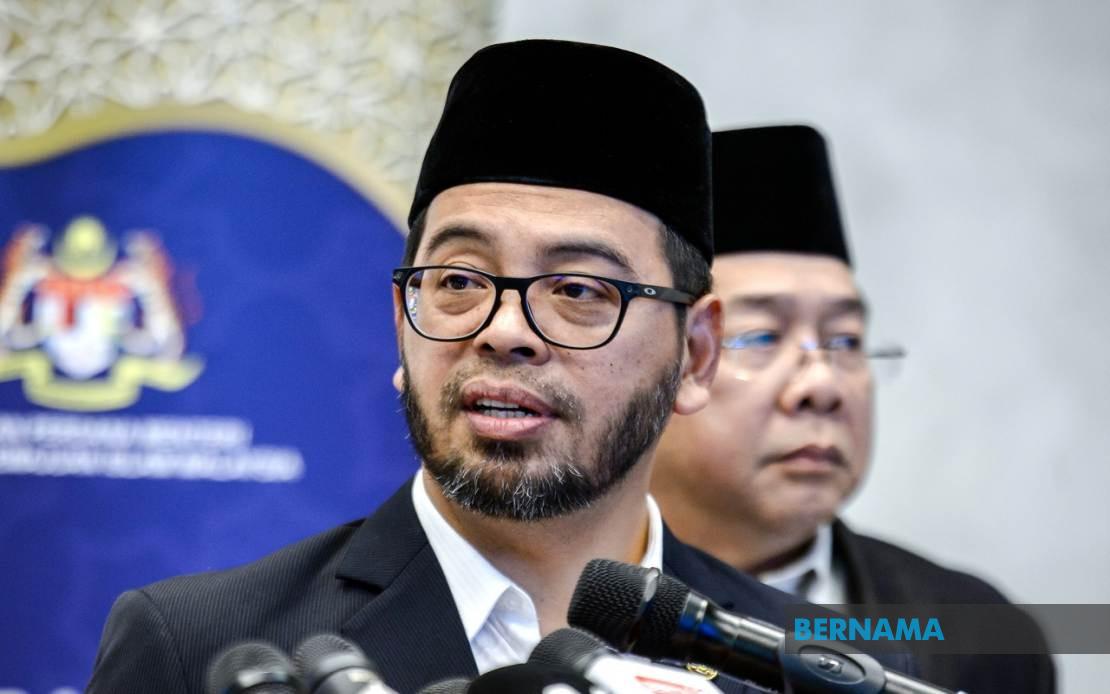
Malaysia's Religious Affairs Minister Dr Zulkifli Hasan has issued a forceful rebuke against what he describes as the arbitrary detention of Sheikh Muhammad Hussein, the Grand Mufti of Jerusalem and custodian of the Al-Aqsa Mosque. The incident occurred following last Friday prayers at one of Islam's holiest sites and, despite the cleric's subsequent release, has prompted Kuala Lumpur to escalate its diplomatic response. The Prime Minister's Department (Religious Affairs) views the temporary detention as fundamentally incompatible with basic principles of religious liberty and respect for sacred Islamic spaces.
The significance of this episode extends beyond the immediate treatment of a single religious figure. Sheikh Muhammad Hussein occupies one of the most sensitive positions in Islamic leadership, serving as the spiritual custodian of a mosque that sits at the geographic and symbolic heart of the Israeli-Palestinian conflict. His detention, even if brief, carries symbolic weight that resonates throughout the Muslim world. For Malaysia, which has positioned itself as a champion of Muslim causes in international forums, the incident represents precisely the type of situation that demands a measured yet unequivocal response, particularly given the mosque's unparalleled status within Islamic tradition.
Dr Zulkifli's statement reflects Malaysia's consistent advocacy for Palestinian rights and opposition to what Kuala Lumpur characterizes as Israeli occupation practices. By framing the detention as an infringement on religious freedom rather than a simple law enforcement action, the minister has elevated the matter beyond bilateral Palestinian-Israeli dynamics. The language used—emphasizing violations of worship rights and threats to sanctuary—appeals to universal principles enshrined in international law while positioning Malaysia within the broader community of nations committed to human rights protection.
Significantly, the minister has called upon two major international institutions to intervene: the United Nations and the Organisation of Islamic Cooperation. This dual appeal reflects different strategic objectives. The UN reference invokes international law and universal humanitarian standards, while the OIC reference mobilizes the collective voice of 57 Muslim-majority nations. Malaysia's approach suggests that the issue merits attention not merely as a dispute between two parties but as a matter affecting the global Muslim community's fundamental freedoms and the inviolability of religious sites.
The statement pledges Malaysia's continued solidarity with the Palestinian people and commitment to supporting efforts toward what the minister describes as "just peace." This phrasing is deliberate, avoiding language that might be perceived as one-sided while maintaining clear alignment with Palestinian interests. For Southeast Asian observers, this underscores Malaysia's role as a consistent advocate for Palestinian causes at regional and international levels, even as bilateral relations with Israel remain complex and sometimes pragmatic.
Paralleling this contemporary issue, Dr Zulkifli also invoked historical memory by commemorating the 31st anniversary of the Srebrenica massacre. The minister drew explicit connections between the 1995 atrocity in Bosnia and Herzegovina, where over 8,000 Bosniak Muslim men and boys were executed, and broader patterns of persecution against Muslim populations. By juxtaposing these events, Malaysia's religious affairs leadership implicitly argues that historical lessons remain urgently relevant to current geopolitical realities.
Malaysia's engagement with the Bosnian tragedy runs deeper than rhetorical solidarity. The nation deployed substantial military resources to support peace operations, with the Malaysian Battalion and subsequent peacekeeping forces maintaining a presence from 1993 to 1998. In total, more than 10,500 Malaysian military personnel served under the UN mandate, representing one of the largest Muslim-majority contributions to international peacekeeping efforts in the Balkans. This historical commitment underscores that Malaysian advocacy for Muslim minorities and regional stability operates not merely through diplomatic statements but through tangible institutional investments.
Beyond military contributions, Malaysia facilitated civilian humanitarian assistance and educational opportunities for Bosnian refugees, with the International Islamic University Malaysia playing a particularly notable role. These initiatives reflected the broader Malaysian state strategy during the 1990s, championed by former Prime Minister Tun Dr Mahathir Mohamad and continued under subsequent administrations including current Prime Minister Datuk Seri Anwar Ibrahim. The Muslim Youth Movement of Malaysia (ABIM) contributed through early humanitarian mobilization, demonstrating that Malaysian civil society and government institutions aligned around shared objectives regarding Muslim-majority humanitarian crises.
Dr Zulkifli's invocation of the Srebrenica case also functions as a pedagogical tool, encouraging Malaysian youth to extract lessons from historical atrocities. The minister framed the massacre not as a settled historical matter but as an ongoing tragedy—noting that over 1,000 victims remain unaccounted for and identification efforts continue—thereby maintaining its emotional and moral immediacy. This approach transforms commemoration into a call for active rejection of hatred, sectarian division, and systemic oppression, positioning younger generations as inheritors of responsibility to oppose such patterns.
The theological dimension of the minister's remarks, including his invocation of prayer for the Srebrenica martyrs and his plea that "Allah protect Bosnia," reflects how Malaysia's official religious affairs apparatus integrates spiritual and political dimensions. This represents a deliberate choice to ground diplomatic and humanitarian advocacy within Islamic theological frameworks, making the religious dimension inseparable from questions of justice, security, and international law.
For Malaysian audiences and broader Southeast Asian observers, these statements underscore continuity in Malaysia's foreign policy stance regarding Muslim-majority regions experiencing conflict or oppression. The nation has maintained consistent positions on Palestinian rights, Bosnia's recovery, and more recently Myanmar's Rohingya crisis. Whether such advocacy translates into material outcomes depends on complex factors including UN dynamics, OIC consensus, and the strategic interests of major powers—variables largely beyond Kuala Lumpur's control.
The convergence of immediate contemporary concerns regarding the Al-Aqsa Mosque with historical commemorations of the Srebrenica massacre reveals how Malaysia's religious affairs ministry constructs narrative coherence around themes of Muslim persecution, international law violations, and the imperative of collective action. Whether framed through diplomatic channels or public statements, these interventions position Malaysia as a voice claiming to speak for Muslim interests within international systems, even as the nation navigates its own domestic religious complexities and pragmatic bilateral relationships.

