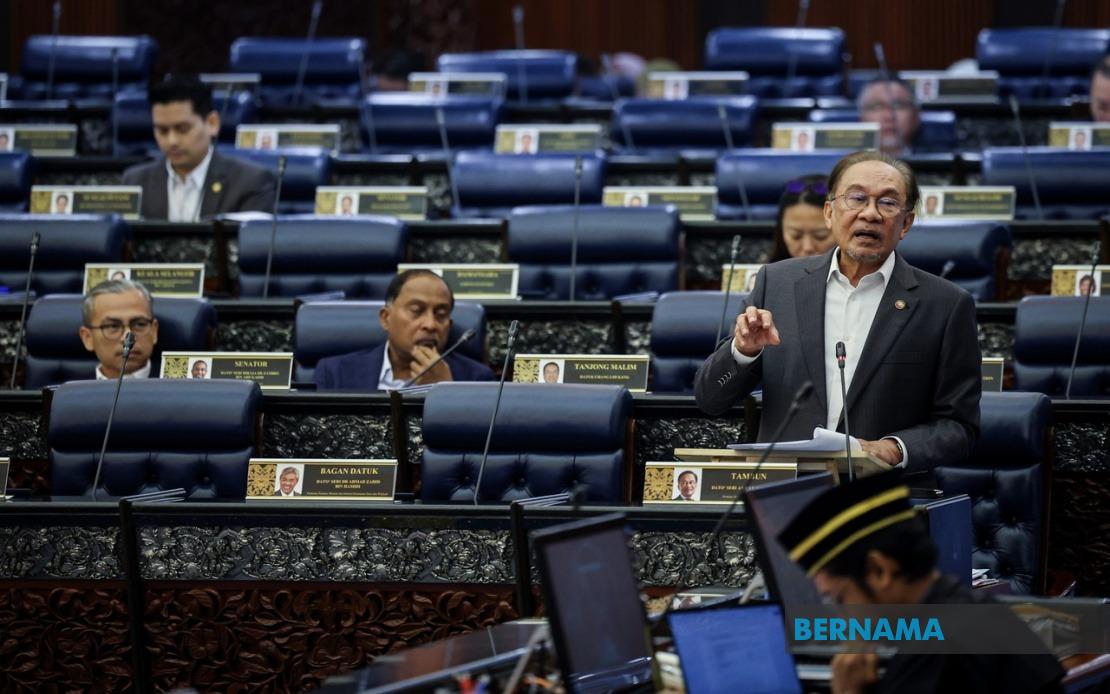
Malaysia's decline in the 2026 World Press Freedom Index reflects enforcement actions taken specifically against content touching on religion, race, and the royal institution rather than any systematic effort to silence political opposition, according to Prime Minister Datuk Seri Anwar Ibrahim. Speaking during parliamentary question time on July 7, the Prime Minister defended the government's media regulatory approach while acknowledging the country's slip from 88th place last year to 95th in the latest ranking released by Reporters Without Borders (RSF).
The international assessment that has influenced Malaysia's standing incorporates a complex range of criteria extending far beyond simple content restrictions. The ranking methodology examines the political environment, legal framework, economic conditions, socio-cultural context, and security situation across all evaluated nations. For Malaysia specifically, Anwar highlighted that enforcement decisions concerning two prominent media organisations have drawn particular international scrutiny. The action taken against Sin Chew Daily over the publication of an inaccurate illustration of the Jalur Gemilang, and proceedings against Sinar Harian regarding its publication of the Inspector-General of Police's biography, have significantly shaped how international media organisations perceive Malaysia's press environment.
Anwar emphasised that the distinction between protecting sensitive national interests and restricting legitimate journalism forms the crux of the government's position on press freedom. The enforcement actions directed at Sin Chew Daily have been characterised by the international media community as violations of journalistic freedom, though the Prime Minister stressed that the underlying issue concerned the treatment of Malaysia's national flag—a matter that warrants serious consideration from a national perspective. He acknowledged that different countries maintain varying thresholds for what constitutes an acceptable challenge to national symbols, and that international observers may not necessarily share Malaysia's position on the gravity of such matters.
Parliamentary oversight and transparency serve as key mechanisms through which the government addresses content concerns without resorting to blanket enforcement measures, according to Anwar's account. The government has deliberately chosen to prioritise public clarification and parliamentary explanation over enforcement action in cases involving factual inaccuracy or political criticism alone. This approach reflects an attempt to navigate between legitimate national security and cultural sensitivities on one hand, and the democratic imperative to permit robust political debate on the other.
The government has also undertaken legislative reform aimed at recalibrating the balance between protection and freedom. Amendments to Section 233 of the Communications and Multimedia Act 1998 have specifically ensured that satirical remarks directed at the Prime Minister and other political leaders no longer attract criminal sanctions. This legislative adjustment represents a meaningful step toward reducing the scope of media prosecution for political commentary, signalling the government's intent to distinguish between protected speech and genuinely harmful content.
The Conference of Rulers has established clear parameters that guide government enforcement decisions, and these parameters remain binding on the administration's approach to media regulation. The conference closely monitors reports that contain insults against the royal institution or content calculated to inflame racial or religious tensions. This framework operates at a constitutional level, transcending ordinary legislative authority and reflecting Malaysia's unique constitutional structure in which the monarchy occupies a specially protected position. Anwar's repeated reference to this constitutional arrangement underscores that enforcement decisions reflect institutional arrangements rather than executive whim.
A significant and often overlooked factor in Malaysia's ranking involves the actions of technology platforms rather than government directives. Social media companies frequently remove or restrict content based on complaints from users or their own internal community standards, rather than in response to requests from Malaysian authorities. This dynamic means that Malaysia's press freedom score reflects decisions made by private entities headquartered outside the country, over which government agencies exercise limited direct control. Anwar's own experience illustrates this dynamic, as social media platforms removed posts related to Hamas despite the government's position that removal was inappropriate.
The Malaysian Communications and Multimedia Commission (MCMC) regularly engages with social media platforms regarding problematic content, but the ultimate decision-making authority rests entirely with platform operators themselves. Requests from MCMC are not automatically accepted, and platforms frequently decline to implement requested takedowns when such removal conflicts with their internal policies. This structural reality means that Malaysia's ranking partially reflects decisions beyond government control, a nuance that international press freedom assessments may inadequately account for when evaluating national regulatory environments.
The interplay between national security considerations and media freedom remains inherently contentious, particularly in Southeast Asia where several nations have experienced communal tensions or security challenges. Malaysia's specific vulnerability to content that could inflame religious or racial division, given the country's multicommunal composition, shapes the regulatory calculus differently than in more homogeneous societies. The government's position, as articulated by Anwar, holds that protecting national cohesion through enforcement against divisive content represents a legitimate state interest distinct from suppressing political dissent or protecting ruling party interests from criticism.
For Malaysian publishers and international media organisations operating in the country, the Prime Minister's clarification provides some guidance regarding the boundaries of acceptable coverage. Political criticism, factual inaccuracy, and even satire directed at government leaders enjoy greater latitude than in previous years. However, content touching on religious sensitivity, racial harmony, or respect for the monarchy remains subject to enforcement risk, a distinction that mirrors comparable regulatory frameworks in other constitutional monarchies across the Commonwealth.
The tension between Malaysia's ranking and the government's position reflects the broader challenge facing developing democracies in the region. Nations attempting to maintain multicommunal stability while expanding democratic participation inevitably encounter international scrutiny that prioritises press freedom metrics over localised concerns about social cohesion. Malaysia's case demonstrates how context-specific regulatory approaches, however carefully calibrated, may register as freedom restrictions when measured against universal indices developed with different national circumstances in mind.

