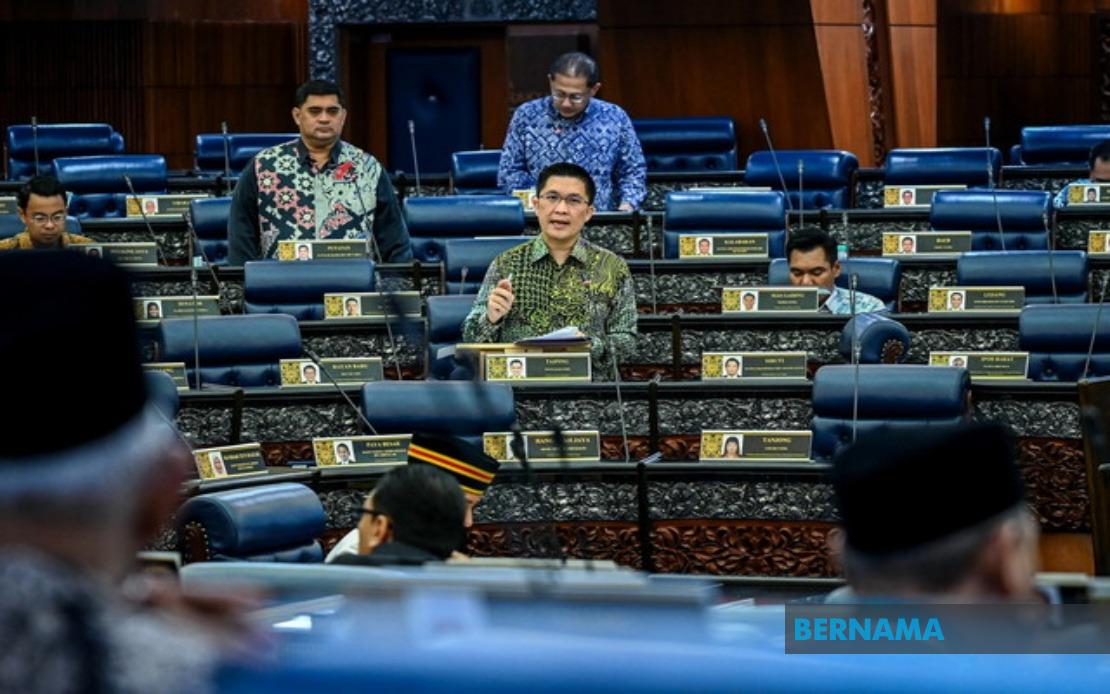
The Education Ministry has achieved near-complete staffing levels across its preschool programme, with 99.8 per cent of teaching positions filled as of July 1, according to information presented to parliament this week. The successful recruitment drive has placed 10,478 qualified teachers in preschool settings throughout the country, addressing escalating demand for early childhood education services across Malaysia's diverse regions.
Deputy Minister Wong Kah Woh disclosed that between 2023 and 2025, the ministry deployed 1,202 new preschool educators to strengthen classroom capacity. Rather than pursuing aggressive one-time recruitment campaigns, the ministry has adopted a phased and systematic approach to teacher deployment, calibrating staffing levels to anticipated enrolment growth in different geographic areas. This measured strategy reflects recognition that preschool expansion must align with actual population movements and demographic patterns, avoiding wasteful over-recruitment in declining areas while ensuring adequate staffing where demand is rising.
The education sector's investment in teacher quality extends beyond mere hiring numbers. The ministry has substantially upgraded training frameworks across three dimensions: service training for existing educators, pre-service programmes preparing new entrants, and in-service modules supporting continuous professional development. These initiatives aim to align preschool instructors with internationally recognised early childhood education standards, ensuring that Malaysia's youngest learners receive instruction from competent, well-prepared professionals. By strengthening the pedagogical foundations of the preschool workforce, the ministry seeks to elevate learning outcomes and establish robust foundations for subsequent primary education.
As of late May, the ministry operated 10,491 preschool classes nationwide, collectively serving 217,026 children. This impressive enrolment figure underscores both the programme's reach and its critical role in Malaysia's education ecosystem. Preschool attendance has become increasingly central to educational policy, with growing recognition that early intervention and quality early-stage learning produce measurable benefits in literacy, numeracy, and social-emotional development throughout a child's educational trajectory.
The geographic distribution and expansion of preschool facilities responds to carefully structured assessment criteria. Rather than applying uniform expansion templates nationwide, the ministry evaluates multiple factors when deciding where to establish or enlarge classes, including the density of children within eligible age groups and locally articulated demand from parents and communities. This evidence-based location strategy helps optimise resource allocation and ensures that new facilities genuinely serve underserved populations rather than duplicating existing capacity in saturated areas.
Looking forward, the ministry has committed to opening 300 additional preschool classes during the coming year, representing a significant expansion momentum. This initiative forms part of a longer-term strategic trajectory spanning five years, during which the ministry aims to establish or expand 1,040 preschool classes in total. Translated into actual impact, this expansion would substantially increase access to government-subsidised early childhood education, particularly benefiting lower and middle-income families who might otherwise rely on expensive private facilities or forgo formal preschool preparation entirely.
The expansion carries particular significance for six-year-old children who previously missed preschool opportunities. Rather than viewing these older children as ineligible for intervention, the ministry intends to maintain preschool programme flexibility, allowing delayed entry where justified. Simultaneously, the ministry recognises that providing universal access to quality preschool demands collaborative effort across multiple government agencies and tiers of administration. The ministry has accordingly engaged State Education Departments, the Community Development Department (KEMAS), and other relevant organisations in a coordinated approach designed to progressively remove barriers to preschool participation.
This collaborative governance model reflects understanding that educational access depends on more than classroom infrastructure and teaching staff. Transport accessibility, affordability for poor families, awareness campaigns reaching marginalised communities, and alignment with state-level education planning all influence whether eligible children actually attend preschool. By orchestrating involvement from KEMAS, which maintains established community networks, and state agencies with local administrative authority, the ministry enhances its capacity to identify and reach target populations.
For Malaysia's broader development agenda, preschool expansion holds considerable importance. Early childhood education is increasingly recognised as one of the highest-return investments in human capital development, yielding benefits spanning improved academic performance, reduced dropout rates, and higher lifetime earnings. The ministry's systematic expansion, underpinned by teacher recruitment and quality assurance measures, positions Malaysia to capture these returns more widely across its population, particularly benefiting children from disadvantaged backgrounds who historically experienced lowest preschool participation rates.
The achievement of 99.8 per cent staffing completion also signals improved public sector human resource management in education. Historically, teacher recruitment in Malaysia faced challenges including delays, geographical mismatches between supply and demand, and quality concerns. The ministry's success in nearly eliminating vacant positions while simultaneously implementing training enhancements suggests maturing capacity in workforce planning, recruitment execution, and retention. These capabilities will prove essential as Malaysia pursues increasingly ambitious educational targets.

