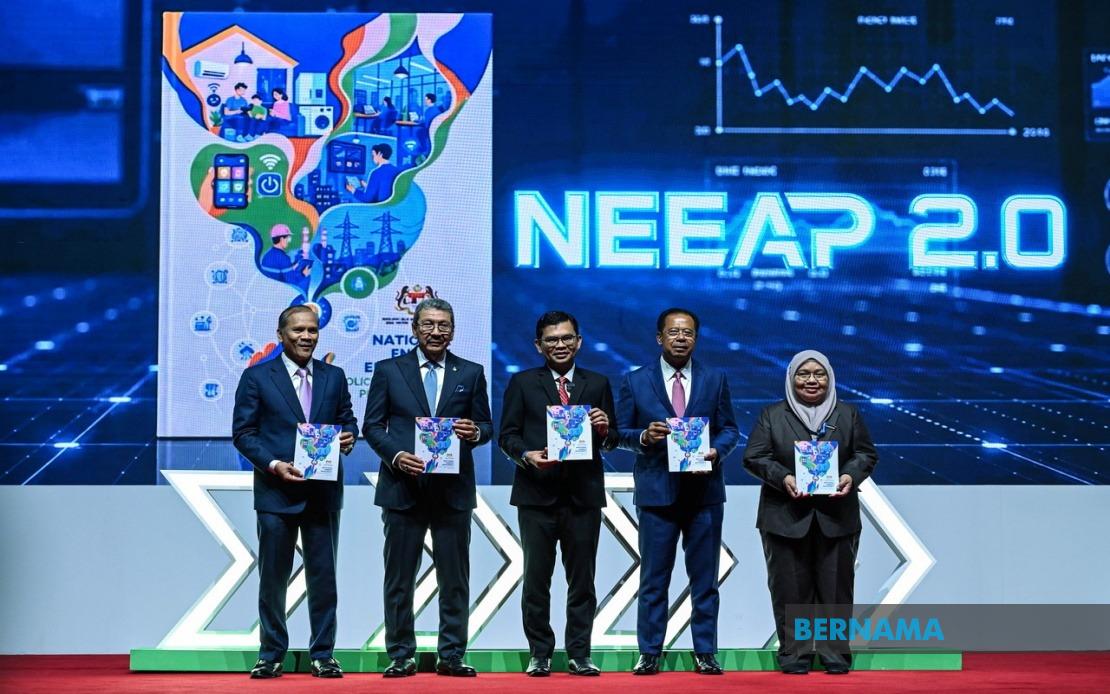
Malaysia has unveiled an ambitious decade-long energy efficiency roadmap that promises substantial economic and environmental dividends. The National Energy Efficiency Policy and Action Plan 2026-2035, officially launched on August 11 in Putrajaya, represents the government's intensified commitment to transitioning the nation towards sustainable energy practices. According to the Ministry of Energy Transition and Water Transformation (PETRA), the comprehensive policy framework is anticipated to yield RM85 billion in net energy savings and unlock RM36 billion in private sector investment over the ten-year implementation period, positioning Malaysia as a regional leader in the energy efficiency movement.
The employment potential embedded within NEEAP 2.0 reflects broader economic considerations beyond environmental metrics. The policy is projected to generate approximately 29,000 new job opportunities across various sectors, from manufacturing and construction to consultancy and installation services. This employment dimension carries particular significance for Malaysia, where the government actively seeks to diversify economic opportunities beyond traditional industries and support workforce development in emerging green economy segments. The jobs created would span technical roles in energy auditing, renewable energy installation, building retrofitting, and managerial positions overseeing efficiency programmes in both public and private institutions.
From an environmental standpoint, the initiative targets a reduction equivalent to 26 million tonnes of carbon dioxide by 2035, a reduction that assumes considerable importance given Malaysia's commitment to achieving net-zero emissions by 2050. This carbon abatement objective underscores the nation's broader climate commitments within the international framework while acknowledging that energy efficiency represents one of the most cost-effective pathways to emissions reduction. The cumulative impact of efficiency improvements across industrial, commercial, and residential sectors will contribute meaningfully to Malaysia's climate action trajectory, even as the country continues expanding renewable energy capacity.
The technical targets embedded within NEEAP 2.0 demonstrate the policy's specificity and measurability. The framework aims to improve electricity and thermal energy efficiency by 11.6 per cent compared to a business-as-usual scenario—a target that, while precise, reflects realistic expectations grounded in sectoral analysis. This improvement translates into estimated cumulative energy savings of 815,000 terajoules, a figure that PETRA illustrates by noting it equals approximately two years' worth of Peninsular Malaysia's total electricity demand. Such comparisons render the abstract concept of energy savings concrete, helping policymakers, investors, and the public grasp the magnitude of potential resource conservation.
The sectoral approach embedded within NEEAP 2.0 prioritises high-impact areas that simultaneously stimulate economic growth and environmental progress. Rather than imposing uniform efficiency standards across all sectors, the policy concentrates resources and regulatory attention on industries where efficiency improvements deliver maximum returns. This targeted methodology reflects sophisticated policy design, as marginal improvements in heavy manufacturing, commercial buildings, or industrial processes generate substantially greater absolute energy savings than equivalent percentage improvements in small enterprises or households. The approach thus optimises both environmental and economic outcomes.
NEEAP 2.0 functions as the successor to earlier energy efficiency initiatives, building upon achievements from the previous action plan whilst addressing emerging challenges and opportunities. The evolution from earlier iterations to this second-generation framework incorporates lessons learned from implementation, technological advancements that have occurred since the original policy design, and recognition that energy efficiency culture must permeate society more thoroughly. Continuity in policy direction provides business certainty, allowing companies to plan long-term investments in efficiency technologies with confidence that government support mechanisms will remain stable.
Alignment with Malaysia MADANI—the government's overarching development aspiration—grounds NEEAP 2.0 within a broader national vision that extends beyond energy considerations alone. The aspiration incorporates efficiency and sustainability into a framework emphasising citizen well-being, low-carbon development, and responsible stewardship of natural resources. This positioning ensures that energy efficiency policy receives political backing at the highest levels and connects to complementary initiatives across water security, transportation, and industrial development, creating synergies that magnify overall policy effectiveness.
The private investment dimension of NEEAP 2.0 reflects the government's recognition that public funding alone cannot achieve the transformation magnitude required. By establishing policy certainty and potentially offering incentive structures, the framework aims to attract RM36 billion in commercial capital towards efficiency projects. This private sector engagement proves essential, as energy service companies, technology providers, and corporate investors possess operational expertise, capital access, and efficiency-technology knowledge that government alone cannot replicate. The balance between regulatory requirements and investment incentives will prove crucial in determining whether projected private investment materialises.
Implementing NEEAP 2.0 across such diverse sectors demands institutional coordination spanning manufacturing, utilities, building standards authorities, and commercial establishments. The Ministry of Energy Transition and Water Transformation must establish clear regulatory pathways, define technical standards that equipment and installations must meet, and create monitoring mechanisms that verify compliance and track progress towards targets. Regional disparities in industrial composition and development levels across Malaysia necessitate differentiated implementation approaches, with policies adapted to local conditions whilst maintaining overarching national efficiency objectives.
For Malaysian businesses and households, NEEAP 2.0 will likely manifest through a combination of regulatory requirements, financial incentives, and technological opportunities. Larger industrial and commercial entities will face mandatory energy audits and efficiency improvement obligations, alongside potential access to government financing or tax incentives for investments meeting specified criteria. Building codes may incorporate stricter thermal efficiency standards for new construction. Households might benefit from subsidised retrofitting programmes, improved availability of efficient appliances, or educational initiatives promoting conservation behaviours.
The regional context enriches understanding of Malaysia's energy efficiency ambitions. Within Southeast Asia, Malaysia positions itself as a development leader with capacity to pioneer efficiency-driven industrial transformation. As regional economies seek models for balancing growth with sustainability, Malaysia's experience implementing NEEAP 2.0 offers case studies and lessons applicable across the Association of Southeast Asian Nations. The policy demonstrates that emerging markets need not choose between development and environmental responsibility, but can pursue integrated pathways combining both objectives.
Success in achieving NEEAP 2.0's targets depends substantially on factors extending beyond policy formulation. Sustained political commitment across electoral cycles, adequate funding for implementation institutions, and genuine cooperation from private sector actors will all prove essential. International partnerships accessing global expertise in energy efficiency, technology transfer, and financing mechanisms could accelerate progress. Transparent monitoring and periodic public reporting on progress towards targets will maintain accountability and adjust strategies should implementation reveal unforeseen challenges, ensuring the policy remains responsive to emerging realities.

