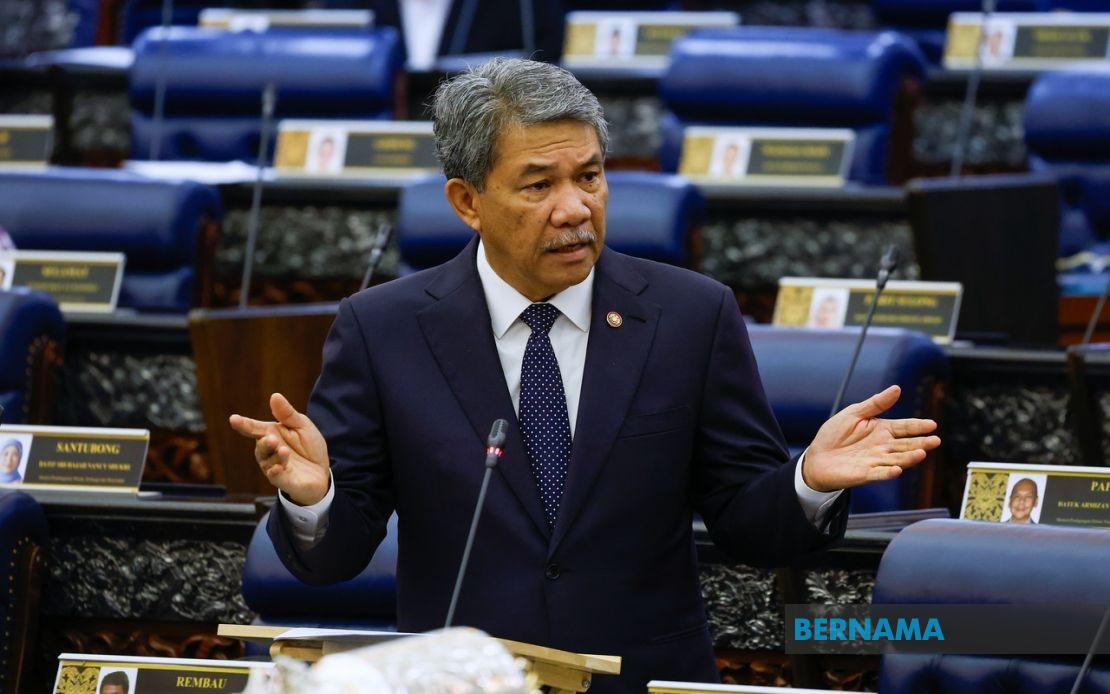
Malaysia's Foreign Minister Datuk Seri Mohamad Hasan has moved to dispel concerns about the country's diplomatic engagement with Myanmar, firmly stating that a Malaysian delegation's visit to the country last May should not be interpreted as recognition of the military administration. Speaking in Parliament on June 25, the FM emphasised that Malaysia continues to maintain its principled stance against recognising the Myanmar junta, despite the high-level contact and ongoing communication channels between both nations.
The clarification comes at a sensitive moment for Malaysian-Myanmar relations and underscores the delicate balancing act that ASEAN nations must perform when dealing with the military-controlled state. While Malaysia has been vocal about its opposition to military takeovers across the region, the need to maintain diplomatic lines with Myanmar reflects the bloc's broader concern that complete isolation could prove counterproductive to achieving lasting political change. Mohamad Hasan explained that the visit was sanctioned by decisions made at the 48th ASEAN Summit, which explicitly encouraged ASEAN's foreign ministers to engage in informal communications with Myanmar on critical matters.
During his meeting with Myanmar Foreign Minister Tin Maung Swe, Mohamad Hasan selected a neutral venue—a hotel rather than the Foreign Ministry—to underscore the informal nature of the engagement. This deliberate choice of location signals Malaysia's intention to distinguish between diplomatic normalisation and pragmatic dialogue designed to influence policy outcomes. The FM conveyed Malaysia and ASEAN's collective expectations regarding governance changes needed to resolve the ongoing humanitarian and political crisis, making clear that symbolic gestures alone will not suffice to move the situation forward.
A central theme of Mohamad Hasan's parliamentary remarks concerned the concept of mutual responsibility within the ASEAN framework. He emphasised to his Myanmar counterpart that while ASEAN member states possess certain rights and prerogatives, these must be balanced against corresponding obligations to the regional community. This approach reflects ASEAN's traditional emphasis on consensus-building and shared responsibility, though it also highlights the tension between protecting sovereignty and enforcing accountability for internal conflicts that destabilise the wider region.
The rationale for maintaining open channels of communication, rather than imposing isolation, lies in what Mohamad Hasan characterised as a strategic imperative to prevent a geopolitical vacuum. The FM warned that prolonged international isolation of Myanmar could inadvertently create space for external powers with competing interests to expand their influence within the country, potentially fragmenting ASEAN's cohesion and undermining the bloc's ability to shape regional outcomes. This concern reflects the reality that Myanmar's position as a border state between South and Southeast Asia makes it strategically significant to global powers seeking to expand their footprint in the Indo-Pacific region.
Enhancing this perspective, Malaysia's approach to Myanmar reflects a broader understanding that sustained dialogue and engagement, even with governments that violate democratic norms, may ultimately prove more effective at achieving political change than outright rejection. This philosophy has deep roots in ASEAN's founding principles of non-interference and consensual diplomacy, though it has often been criticised by human rights advocates who argue it enables authoritarian behaviour. The tension between these competing values remains unresolved within Malaysian policy circles and across the ASEAN community more broadly.
The Five-Point Consensus, which Mohamad Hasan repeatedly referenced, represents ASEAN's core framework for addressing the Myanmar crisis. Adopted in 2021, the consensus calls for cessation of violence, commencement of dialogue, humanitarian assistance, and visits by ASEAN envoys—elements that Malaysia continues to champion through its bilateral and multilateral engagement efforts. By anchoring his remarks to this established framework, Mohamad Hasan sought to demonstrate that Malaysia's engagement with Myanmar remains consistent with the organisation's collective position rather than constituting an independent policy departure.
Looking ahead, Malaysia plans to convene further meetings with Myanmar stakeholders in early or mid-July, indicating that the engagement process will intensify rather than diminish in coming weeks. These anticipated talks will provide additional opportunities to press for concrete progress on the humanitarian front, where the situation remains dire for Myanmar's civilian population. The planned meetings also suggest that Malaysia sees diplomatic momentum as achievable and wishes to capitalise on any openings that might emerge from sustained high-level contact.
For Malaysian readers and policymakers, understanding this nuanced approach to Myanmar is essential to comprehending ASEAN's broader diplomatic strategy in Southeast Asia. The region faces mounting pressure from major powers seeking to expand their influence, and ASEAN's ability to maintain unity and leverage collective pressure on member states depends partly on the willingness of countries like Malaysia to engage persistently with difficult partners. Simultaneously, Malaysia must navigate domestic sensitivities around military governance and respect for democratic principles, particularly given its own recent democratic transitions and ongoing political debates about good governance.
The FM's parliamentary statement also reflects Malaysia's wider role as a moderate voice within ASEAN, capable of explaining complex foreign policy positions to skeptical domestic audiences. By explicitly denying recognition of the junta and reaffirming commitment to the Five-Point Consensus, Mohamad Hasan sought to assure opposition parliamentarians and civil society groups that engagement does not mean acquiescence to authoritarian rule. This distinction between pragmatic dialogue and principled opposition will likely remain a defining feature of Malaysia's Myanmar policy for the foreseeable future, as the country attempts to balance humanitarian concerns, strategic interests, and ASEAN solidarity.

