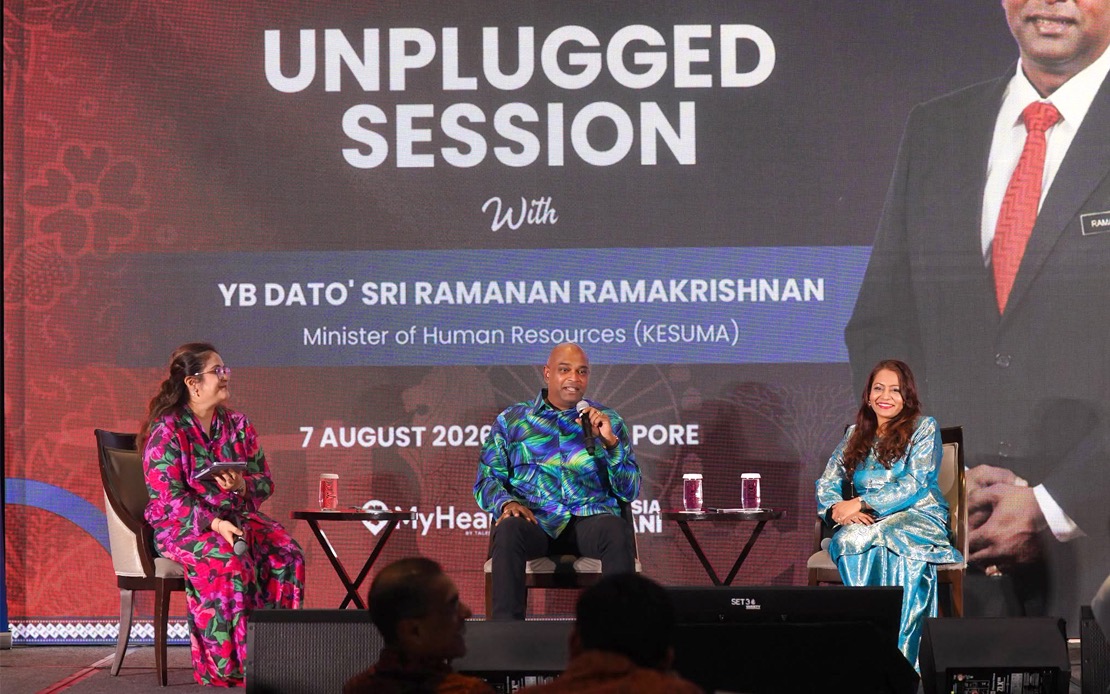
Malaysia's push to deepen ties with regional vocational education institutions has taken a significant step forward, with the Ministry of Human Resources proposing a bilateral student exchange programme linking the country's premier technical college with Singapore's respected Institute of Technical Education. Human Resources Minister Datuk Seri Ramanan Ramakrishnan unveiled the initiative following a working visit to ITE Singapore, signalling Kuala Lumpur's commitment to elevating technical and vocational training standards through cross-border collaboration.
The proposed exchange between Kolej Teknologi Termaju Jabatan Tenaga Manusia (ADTEC JTM) and the Singapore-based ITE represents more than a simple student mobility arrangement. According to Ramanan, the framework encompasses knowledge sharing, exposure to alternative training methodologies, and mutual understanding of best practices in skills development. ITE Singapore's receptive response to the overture has created momentum for both institutions to move toward finalising specific programme details, suggesting that implementation could occur within a reasonable timeframe.
For Malaysian vocational students, the exchange offers a rare opportunity to observe how a neighbouring nation approaches technical education in an environment already acclaimed for aligning curriculum with real-world industrial demands. Singapore's ITE system is widely recognised throughout Southeast Asia for its responsiveness to labour market evolution and its integration of cutting-edge pedagogical approaches. By exposing ADTEC JTM learners to these practices, Malaysia aims to broaden their perspectives beyond domestic frameworks and equip them with comparative insights that could enhance their career prospects in an increasingly competitive regional job market.
The minister emphasised that this collaboration addresses a critical challenge confronting technical institutions across Southeast Asia: the need for continuous curriculum adaptation in response to technological disruption. Artificial intelligence, industrial automation, and the emergence of entirely new vocational sectors demand that TVET providers remain intellectually agile and forward-looking. Rather than operating in isolation, Malaysian institutions must maintain active dialogue with peers in more economically advanced neighbouring countries to understand how training content is being recalibrated to prepare workers not merely for today's vacancies but for tomorrow's employment landscape.
Ramanan's articulation of this broader strategy reveals a maturation in Malaysia's approach to vocational education policy. The recognition that TVET cannot flourish without robust engagement with industry stakeholders and international peer institutions reflects growing alignment with global best practices. This philosophy acknowledges that skills training in a globalised economy requires constant recalibration against both regional and international standards, ensuring that graduates remain competitive whether they seek employment domestically or abroad.
The proposed exchange arrangement will likely yield secondary benefits beyond direct student participants. Faculty members from both institutions may gain opportunities to observe alternative teaching methodologies, potentially spurring pedagogical innovation within ADTEC JTM. Administrative and management personnel could exchange insights on operational efficiency, institutional governance, and strategic planning. Such broader institutional learning often proves as valuable as direct student exposure, creating multiplier effects that improve overall educational delivery quality.
For Malaysia's broader vocational education ecosystem, this initiative carries symbolic significance. By positioning ADTEC JTM as a peer institution worthy of collaboration with a regionally respected technical education provider, the country signals confidence in its TVET infrastructure while simultaneously committing to continuous improvement. This balanced positioning—neither dismissive of local capacity nor complacent about international standards—reflects pragmatic policymaking attuned to genuine capability gaps.
The timing of this initiative proves particularly relevant to Malaysia's economic restructuring agenda. As the nation attempts to move beyond dependence on routine manufacturing and lower-skilled service provision, the quality of technical workforce development becomes increasingly consequential. Students exposed to international best practices in vocational training will carry enhanced competencies into industries ranging from advanced manufacturing and renewable energy to digital infrastructure and precision engineering. The correlation between vocational training quality and industrial competitiveness has become difficult to ignore among policymakers throughout the region.
MESUA's commitment to coordinate programme finalisation with relevant stakeholders indicates that bureaucratic mechanisms exist to translate ministerial ambitions into institutional reality. The involvement of ITE deputy leadership and international coordination divisions from Singapore's delegation signals serious intent on both sides. Whether this translates into a smoothly functioning exchange programme will depend significantly on how both institutions navigate practical logistics, curriculum alignment, and regulatory coordination between two separate national systems.
The initiative also reflects broader Southeast Asian trends toward increased educational mobility and regional integration. As ASEAN continues emphasising deeper economic cooperation and the free movement of skilled labour, educational exchanges at the vocational level become strategic infrastructure investments. Students who have studied alongside peers from neighbouring countries often develop professional networks and mutual understanding that facilitate cross-border employment and collaboration throughout their careers.
Looking forward, the success of this exchange will be measured not merely by the number of students participating but by the tangible improvements observable within ADTEC JTM's curriculum, teaching approaches, and graduate employment outcomes. Meaningful collaboration tends to generate iterative learning cycles where initial exchanges spark deeper partnerships, faculty research collaborations, and eventual institutional alignment around shared quality benchmarks. If Malaysia's ministry can sustain momentum and resist the temptation to treat the exchange as a one-off diplomatic gesture, the long-term benefits could fundamentally strengthen the nation's technical education capacity.

