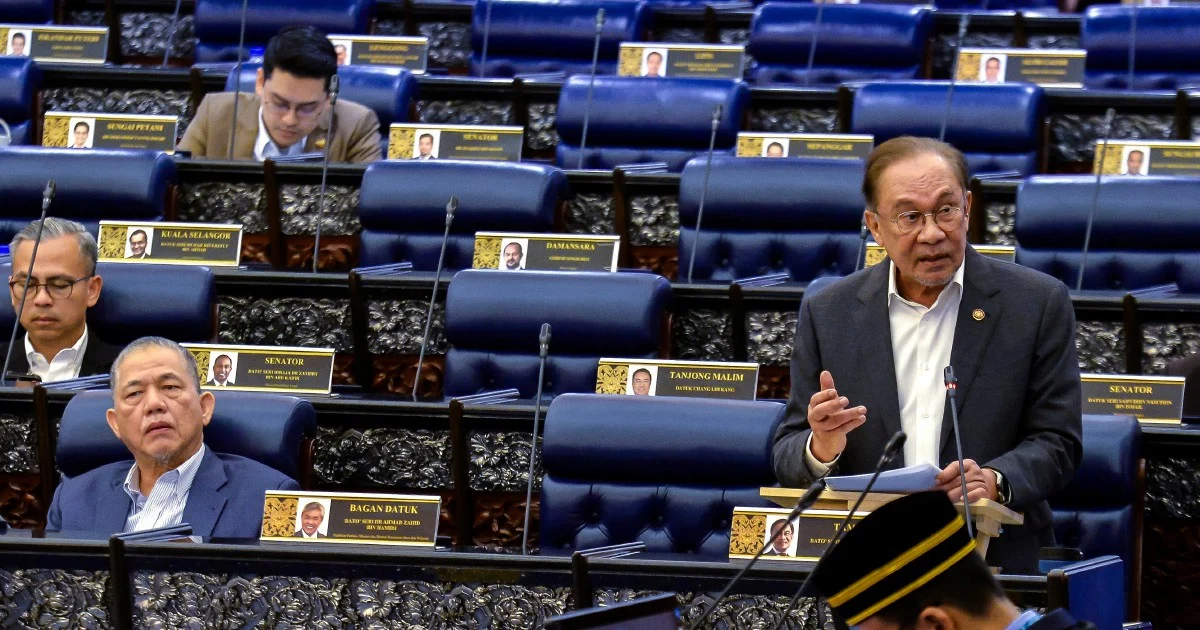
Malaysia's household debt has reached a significant milestone, standing at RM1.73 trillion at the conclusion of March 2026, according to Prime Minister Datuk Seri Anwar Ibrahim. This substantial figure translates to 84.4 per cent of the nation's gross domestic product, underscoring the substantial financial obligations that individual households across the country have accumulated. The disclosure comes amid broader economic concerns facing Malaysian consumers, who continue navigating inflationary pressures, rising living costs, and employment uncertainties in an increasingly complex global economic landscape.
The debt-to-GDP ratio of 84.4 per cent places household indebtedness as a critical economic indicator that policymakers and financial regulators must carefully monitor. This proportion signals that for every ringgit of economic output generated by Malaysia, households have incurred approximately 84 sen in debt obligations. The magnitude of this figure becomes more apparent when considering that it encompasses mortgages, personal loans, credit card balances, hire purchase agreements, and other consumer borrowing across the entire Malaysian population. For a developing economy like Malaysia, such high household leverage creates vulnerability to external economic shocks and interest rate fluctuations.
The accumulation of household debt reflects multiple underlying trends in the Malaysian economy. Rising property prices and the necessity for most Malaysians to secure housing financing have contributed substantially to mortgage obligations. Additionally, the proliferation of consumer credit facilities, instalment purchasing arrangements, and the ease of accessing personal loans through digital banking platforms have made borrowing increasingly accessible. Many households have resorted to debt financing to maintain consumption patterns amid stagnant wage growth relative to inflation, effectively mortgaging future income to sustain current living standards.
Regional and international economic headwinds have intensified the household debt challenge in Malaysia. Global supply chain disruptions continue affecting import-dependent sectors, while exchange rate volatility impacts the purchasing power of Malaysian consumers and the servicing costs of foreign-currency denominated debts. The broader Southeast Asian region faces similar pressures, though Malaysia's household debt ratio remains comparatively elevated, suggesting that Malaysian consumers have become increasingly reliant on credit financing relative to income generation.
The implications of elevated household debt extend beyond individual financial stability to systemic economic risks. Commercial banks and financial institutions holding substantial portions of this debt exposure face potential asset quality deterioration if economic conditions worsen or employment opportunities contract. Consumer loan defaults could cascade through the financial system, affecting lending capacity and credit availability precisely when struggling households most need financial flexibility. Central bank regulators must therefore balance supporting economic growth through accommodative policies while guarding against excessive credit expansion that could destabilise the financial sector.
Government support measures and targeted interventions become increasingly crucial when household debt reaches such elevated levels. Policymakers must consider initiatives that address the root causes of excessive borrowing rather than merely treating symptoms. This includes focusing on wage competitiveness, employment quality, and income stability for workers across various sectors. Additionally, financial literacy programmes that educate consumers about prudent borrowing, debt management, and long-term financial planning could help mitigate future debt accumulation among younger Malaysians entering the workforce.
The composition of household debt matters significantly in assessing overall financial health. Productive debt incurred for home ownership or education typically generates long-term value and income potential, whereas consumer debt for discretionary spending carries higher risks without comparable asset appreciation. Understanding how Malaysia's RM1.73 trillion breaks down between these categories would provide greater clarity on whether current debt levels reflect necessary investment in human capital and housing or unsustainable consumption patterns. The Prime Minister's disclosure, while highlighting the magnitude of household obligations, leaves questions about debt composition and sustainability unanswered.
Comparative analysis with peer economies in Southeast Asia and the broader Asia-Pacific region offers important context. Several neighbouring countries grapple with similar household debt challenges as expanding middle classes increasingly access formal credit systems. However, the pace of debt accumulation and the relationship between debt growth and underlying economic fundamentals differ substantially. Malaysia's trajectory warrants close examination to determine whether current household debt levels reflect normal financial deepening accompanying economic development or excessive leverage that could constrain future growth prospects.
Looking forward, managing household debt levels will require coordinated efforts across multiple fronts. Monetary policy must balance inflation control with financial stability considerations. Fiscal authorities should prioritise investments in education, skills development, and job creation that enhance earning capacity. Financial regulators need robust prudential frameworks ensuring banks maintain adequate capital buffers and conduct rigorous credit assessments. Simultaneously, individual households must develop greater financial discipline and seek professional guidance in managing complex borrowing decisions. The sustainability of Malaysia's economic trajectory depends significantly on successfully addressing the household debt challenge while maintaining robust economic growth.

