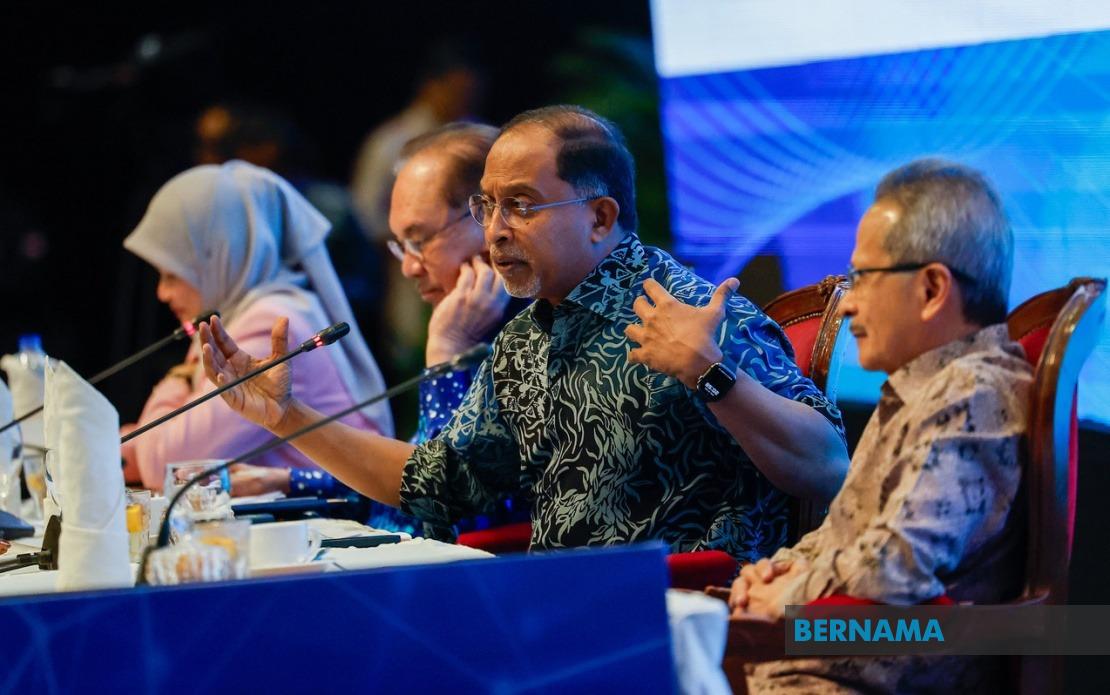
Malaysia's higher education system stands at a critical juncture, requiring sweeping legislative reform to meet contemporary challenges and unlock the potential of the nation's scholars and students. This assessment came from Higher Education Minister Datuk Seri Dr Zambry Abd Kadir during a high-level forum on education policy held at the University of Malaya, where he outlined the urgent necessity to revisit and modernise the legal frameworks governing the tertiary sector, particularly the Universities and University Colleges Act 1971, commonly known as AUKU.
Zambry's intervention reflects growing recognition within Malaysia's political and academic establishments that decades-old legislation designed for a vastly different era no longer adequately serves institutional or national interests. Speaking as a panelist at the MADANI Malaysian Scholars Forum Series 13, the minister articulated a compelling case for comprehensive legislative renewal, arguing that existing regulations have become impediments rather than enablers for institutional development. The forum, which attracted Prime Minister Datuk Seri Anwar Ibrahim in a moderating capacity, underscored the seriousness with which the government now approaches questions of educational governance and reform.
Central to Zambry's argument is the contention that Malaysia's universities labour under constraints that stifle institutional vitality and restrict the freedoms essential to scholarly endeavour. The minister specifically emphasised the need to guarantee academic freedom and protect students' capacity for genuine intellectual engagement—concerns that have animated debates about AUKU's restrictive provisions for many years. By explicitly linking these freedoms to the broader project of keeping Malaysia's higher education ecosystem internationally competitive, Zambry positioned what might otherwise appear as a technical legislative matter as fundamentally strategic for national development and regional standing.
The government's approach extends beyond simply amending existing statutes piecemeal. Instead, the Ministry of Higher Education is exploring the possibility of drafting a unified legislative instrument—a One Higher Education Act—capable of consolidating and harmonising the various laws currently fragmented across the higher education landscape. This consolidation strategy addresses a persistent structural problem: the proliferation of separate, sometimes contradictory legal instruments that impose compliance burdens on institutions and create confusion about regulatory jurisdiction. Such an integrative approach would establish a coherent, modernised framework within which Malaysian universities could operate with greater clarity and flexibility.
To translate this legislative vision into practical policy, the government has already established an Independent Committee tasked with the substantive work of canvassing and evaluating submissions from academics, student representatives, and other stakeholders. This consultative architecture matters considerably for legitimacy and effectiveness. Rather than imposing reforms from above, the committee approach creates space for those most directly affected by university governance to shape the contours of change. The involvement of student voices in this process carries particular significance, as young people represent both the immediate beneficiaries of any reforms and the constituency most constrained by existing restrictions on free expression and association.
Education Minister Datuk Seri Fadhlina Sidek, appearing alongside Zambry at the same forum, articulated a complementary vision for the education sector more broadly, one that extends concern for equity and human development across the entire pipeline from early childhood through higher learning. Her ministry's commitment to what she termed a "humane education" approach represents a philosophical counterpoint to purely utilitarian models that reduce students to economic inputs or examination statistics. This emphasis on educating whole persons—attending to intellectual, emotional, and moral dimensions of human development—resonates with the implicit critique of overly restrictive university legislation that Zambry had articulated.
Fadhlina's specific policy initiatives reveal how this humanistic orientation translates into concrete action. The expansion of equitable access through initiatives such as Schools in Hospital and dedicated models for Orang Asli students demonstrates commitment to ensuring that Malaysia's educational opportunities reach beyond privileged demographics. Similarly, the large-scale expansion of free pre-school access reflects recognition that genuine equity demands intervention at the earliest stages of childhood development, when foundational capacities and confidence are formed. These initiatives directly challenge structural inequalities that have historically limited access to education based on geography, socioeconomic status, or ethnicity.
The minister's insistence that education should not be narrowly oriented toward examination grades or labour market competitiveness, but rather toward developing resilient, morally grounded individuals, articulates a value system often marginalised in policy discourse dominated by economic metrics. By explicitly rejecting the reduction of children to "numbers or exam grades," Fadhlina validated what many educators intuitively understand but institutional incentives often suppress: that schooling serves purposes beyond producing a compliant workforce. Students arrive with anxieties, talents, and aspirations that institutional systems must acknowledge and nurture rather than standardise away.
The convergence of Zambry and Fadhlina's remarks at a forum attended by the Prime Minister himself signals that educational reform has become a priority at the highest levels of government. This positioning matters strategically. When senior political figures champion modernisation of higher education law and expansion of equitable access, they create political space for more robust implementation and provide insulation against conservative resistance that might otherwise derail reform. Anwar's presence as moderator particularly signifies that the administration views these questions as integral to its broader development agenda.
For Malaysian universities and their international standing, the implications of comprehensive AUKU reform are substantial. Peer institutions across Southeast Asia and globally have steadily modernised their governance frameworks to enhance institutional autonomy and protect academic freedoms. Failure to undertake comparable reform risks leaving Malaysian universities at a competitive disadvantage in attracting top talent, securing research partnerships, and contributing meaningfully to global knowledge production. Academics contemplating career moves increasingly evaluate not merely salary and facilities but also the regulatory environment within which intellectual work occurs. Similarly, international research collaborators and student cohorts increasingly expect universities to operate within governance frameworks aligned with contemporary norms of institutional independence.
The proposed legislative reforms also carry implications for Malaysia's regional position within Southeast Asia and the broader Indo-Pacific. As tensions around academic freedom and university governance escalate in various jurisdictions, Malaysia has an opportunity to position itself as a jurisdiction that combines institutional dynamism with strong moral education and social equity. Higher education systems that balance scholarly excellence with commitment to developing intellectually engaged citizens capable of navigating complex ethical questions enjoy considerable soft power. Countries recognised as centres of genuine intellectual freedom and serious moral development attract students and scholars internationally, creating virtuous cycles of institutional strength and national influence.
The challenge ahead lies in translating aspirations for reform into legislative reality. While the establishment of the Independent Committee represents a constructive step, the process of drafting new legislation, managing stakeholder interests, and navigating parliamentary processes typically involves considerable time and often generates unforeseen complications. Additionally, the success of new legal frameworks depends ultimately on institutional cultures within universities themselves. Legislation that formally protects academic freedom achieves little if administrative practices, informal hierarchies, or resource constraints continue to constrain genuine intellectual independence. Both structural legal reform and cultural change within Malaysian universities will likely prove necessary.
As Malaysia contemplates these educational transformations, the discourse has already shifted meaningfully. Senior government figures now openly acknowledge that existing legal frameworks constrain rather than enable excellence, that academic freedom and student empowerment merit explicit protection, and that educational systems must serve humanistic as well as economic purposes. Whether that rhetorical commitment translates into comprehensive, durable legislative and institutional change will largely determine whether Malaysia's universities can claim genuine modernisation or whether AUKU's fundamental restrictions ultimately persist in reformed guise.

