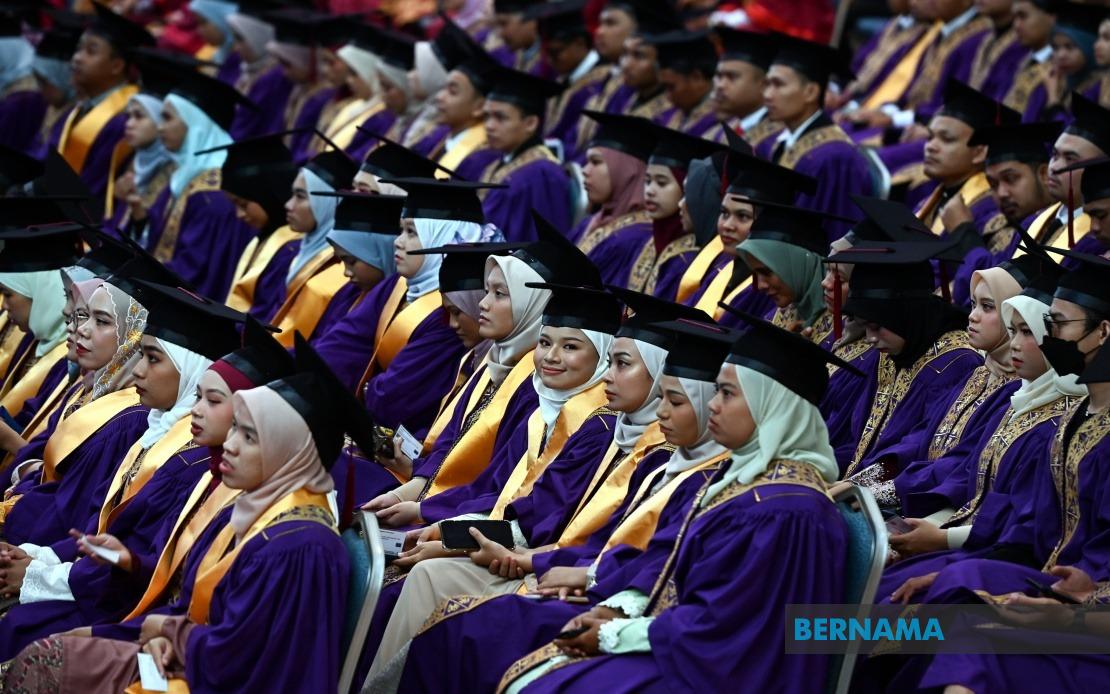
Malaysia's Higher Education Ministry (MoHE) has declared an immediate suspension of disciplinary proceedings against students at public universities involving matters of freedom of expression, criticism, and peaceful assembly. The directive, announced on August 28, represents a significant shift in the government's stance toward campus activism and student rights, reflecting broader efforts to liberalise higher education governance across the country.
The announcement follows remarks made by Prime Minister Datuk Seri Anwar Ibrahim at the Malaysia MADANI Intellectuals Forum Series 13, where he signalled the government's intention to repeal the Universities and University Colleges Act 1971 (Act 30), commonly known as AUKU. This legislation has long been criticised by civil society groups, student activists, and international human rights bodies as an overly restrictive framework that stifles campus discourse and limits fundamental freedoms within Malaysia's tertiary education institutions.
MoHE has simultaneously begun reviewing provisions within AUKU and existing Student Disciplinary Rules to identify which clauses restrict student freedoms and can be exempted as interim measures while the process of drafting new legislation proceeds. The ministry has flagged several areas for immediate exemption, including the right to establish and manage student associations and clubs without excessive bureaucratic oversight, the ability to organise student activities independently, and the freedom to express views, assemble peacefully, use digital communication platforms, and circulate published materials.
These exemptions directly address longstanding grievances within Malaysia's student community. For decades, campus activists have faced investigation and punishment under AUKU for engaging in peaceful demonstrations, issuing public statements on political matters, or organising events deemed insufficiently aligned with government priorities. The restrictions have made Malaysian campuses among the world's most tightly controlled university environments, constraining intellectual discourse and limiting students' ability to engage in the civic participation expected in mature democracies.
However, the ministry has emphasised that expanded freedoms must be exercised responsibly and within the bounds of law. Acts involving violence, destruction of property, criminal conduct, academic dishonesty, or violations of remaining valid disciplinary rules remain subject to prosecution and sanctions. This balancing act reflects the government's attempt to navigate between expanding civil liberties and maintaining institutional order, though the threshold between legitimate protest and prohibited conduct will likely remain contested on campuses.
The scope of MoHE's reform extends beyond institutions governed by AUKU. The ministry has signalled that parallel reviews will examine provisions affecting students at the International Islamic University Malaysia (IIUM) and Universiti Teknologi MARA (UiTM), both of which operate under different regulatory frameworks. Aligning these institutions' student governance rules with the broader reform agenda will ensure consistency across Malaysia's higher education sector and prevent students at private institutions from facing harsher restrictions than their counterparts at public universities.
Prime Minister Anwar has stressed that waiting for complete legislative overhaul should not delay implementation of student freedoms. Rather than postponing reforms until a entirely new Act is drafted, approved by Parliament, and enacted—a process that typically spans months or years—the government is pursuing an expedited approach whereby immediate relief is granted through administrative action and targeted exemptions from existing rules. This pragmatic strategy acknowledges the political and social costs of maintaining current restrictions while acknowledging that comprehensive legal change requires deliberative processes.
For Malaysia's student population and civil society organisations, this development marks a potentially transformative moment. University campuses have historically served as venues for political mobilisation and social debate in Malaysia, yet AUKU has severely constrained these functions. Student unions have been weakened, political forums have been restricted, and youth voices have been marginalised from public discourse precisely at a stage when their engagement should be cultivated. The suspension of discipline cases involving expression rights may catalyse increased campus activism and youth participation in democratic processes, with ripple effects throughout Malaysian society.
The reform initiative also carries implications for Malaysia's regional and international standing. Neighbouring democracies such as Thailand and Indonesia have faced international criticism for suppressing campus free speech; Malaysia has similarly been scrutinised by human rights bodies. Liberalising higher education governance enhances Malaysia's credibility as a democracy committed to fundamental freedoms and may improve its soft power positioning in Southeast Asia. Educational institutions globally serve as intellectual incubators and training grounds for informed citizenship; freeing Malaysian campuses from excessive political constraints could strengthen the nation's knowledge economy and democratic institutions.
Implementation of these reforms will depend heavily on how university administrators interpret and apply the new guidance. Some institutional leaders may enthusiastically embrace expanded student freedoms, while others might adopt narrow interpretations or seek workarounds to maintain control. The effectiveness of the suspension will ultimately depend on clear ministerial communication, regular monitoring of compliance across institutions, and meaningful student and stakeholder engagement in developing the new legal framework that will eventually replace AUKU.
Looking ahead, the formal repeal of AUKU and enactment of replacement legislation will determine whether this current suspension represents a genuine inflection point or merely a temporary reprieve. The drafting process for new higher education law must be transparent and inclusive, incorporating student perspectives and international best practices. Civil society watchdogs should remain engaged to ensure that any successor legislation preserves and strengthens rather than erodes the freedoms now being granted.

