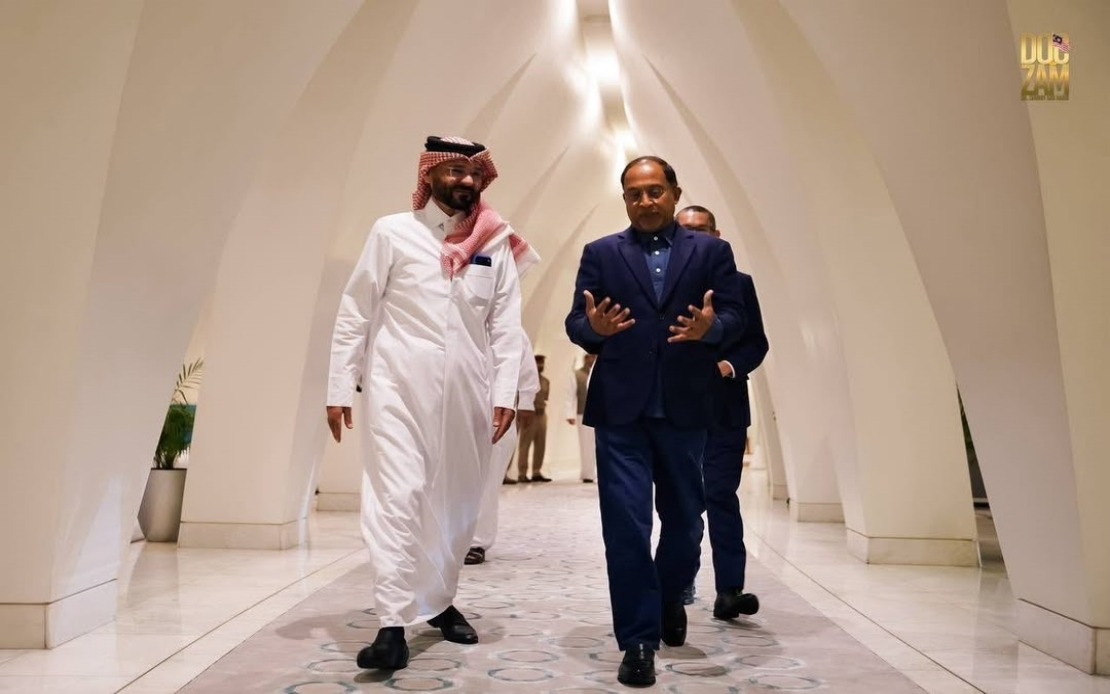
Datuk Seri Dr Zambry Abd Kadir, Malaysia's Higher Education Minister, touched down in Doha on Tuesday morning as the official government representative to pay final respects to Sheikh Hamad bin Khalifa Al Thani, the former ruler of Qatar who died on Sunday at the age of 74. The trip underscores the diplomatic importance Malaysia places on its relationship with the oil-rich Gulf nation, particularly during a period of state mourning that extends across the entire country.
Zambry's presence at the funeral reflects Malaysia's commitment to maintaining strong bilateral ties with Qatar, a significant economic and strategic partner in the Middle East. The minister announced his intention to meet with the current Amir, Sheikh Tamim bin Hamad Al Thani, at the Lusail Palace, signalling that the visit carries official weight beyond mere ceremonial attendance. Such high-level representation at the funerals of regional leaders has become standard diplomatic protocol, particularly when death claims a historically significant figure like Sheikh Hamad.
Sheikh Hamad's passing marks the end of an era that fundamentally transformed Qatar from a modest Gulf state into a global power. His 18-year reign from 1995 to 2013 was characterized by sweeping modernization, massive oil and gas wealth exploitation, and the country's emergence as a major player in Middle Eastern geopolitics. During his leadership, Qatar invested heavily in infrastructure, hosting the 2022 FIFA World Cup under his successor's rule, establishing itself as a hub for international business and diplomacy. His decision to voluntarily hand over power to his son Sheikh Tamim in 2013 was itself remarkable, defying regional norms and setting a precedent for peaceful succession in Gulf monarchies.
The relationship between Malaysia and Qatar has deepened considerably over recent decades, extending beyond traditional trade into education, investment, and strategic partnerships. Qatari sovereign wealth funds have invested in Malaysian assets, while Malaysian universities have established partnerships with Qatari institutions. Qatar's vast natural gas reserves, particularly its liquefied natural gas exports, have made it an important energy supplier with regional significance. For Malaysia, maintaining strong diplomatic channels with Doha is therefore both a cultural courtesy and an economic imperative.
Qatar's official mourning period, which commenced on Sunday and extends for four days, represents a solemn pause in the nation's ordinary functioning. All government ministries, state entities, and public institutions have closed their doors as a mark of respect. This nationwide shutdown demonstrates the profound reverence Qatari society accords to Sheikh Hamad, whose transformative vision shaped the nation's contemporary identity. The formal ceremony and associated rituals provide an opportunity for regional and international leaders to gather and reaffirm diplomatic bonds during a period of collective grief.
Zambry's statement expressing Malaysia's deepest condolences carried the weight of official government sentiment. By articulating Malaysia's sympathy to both Qatar's leadership and its broader population, the minister's message conveyed recognition of Sheikh Hamad's historical importance not merely as a ruler but as a transformative figure whose legacy extended beyond Qatar's borders. The tone struck appropriate solemnity while emphasizing the shared values and mutual respect that characterise bilateral relations between Kuala Lumpur and Doha.
For Malaysian observers, Sheikh Hamad's passing serves as a reminder of Qatar's pivotal role in Gulf politics and global energy markets. The succession to Sheikh Tamim, who has continued many of his father's initiatives while pursuing his own strategic agenda, has proceeded smoothly—a contrast to succession crises that have occasionally troubled other regional states. This stability, built partly on Sheikh Hamad's initial groundwork, remains important for Malaysia's economic and diplomatic calculations in the region.
The funeral gathering in Doha will likely attract dignitaries from across the Muslim world and beyond, creating a forum for informal diplomatic engagement among major powers and regional players. For Malaysia, representation at such gatherings maintains visibility within Gulf power structures and provides opportunities to reinforce partnerships with multiple nations simultaneously. Zambry's attendance thus serves multiple purposes: honouring a departed statesman, consoling the current Qatari leadership, and subtly reinforcing Malaysia's presence and interests within regional networks.
Sheikh Hamad's legacy will endure through the institutions he built and the trajectory he set for Qatar's development. His 18-year stewardship established many precedents that continue to influence Gulf governance and regional diplomacy. As the Islamic world and the international community pay tribute to his contributions, Malaysia's presence through its Higher Education Minister signals that Malaysian leaders understand and appreciate the significance of this historical moment.

