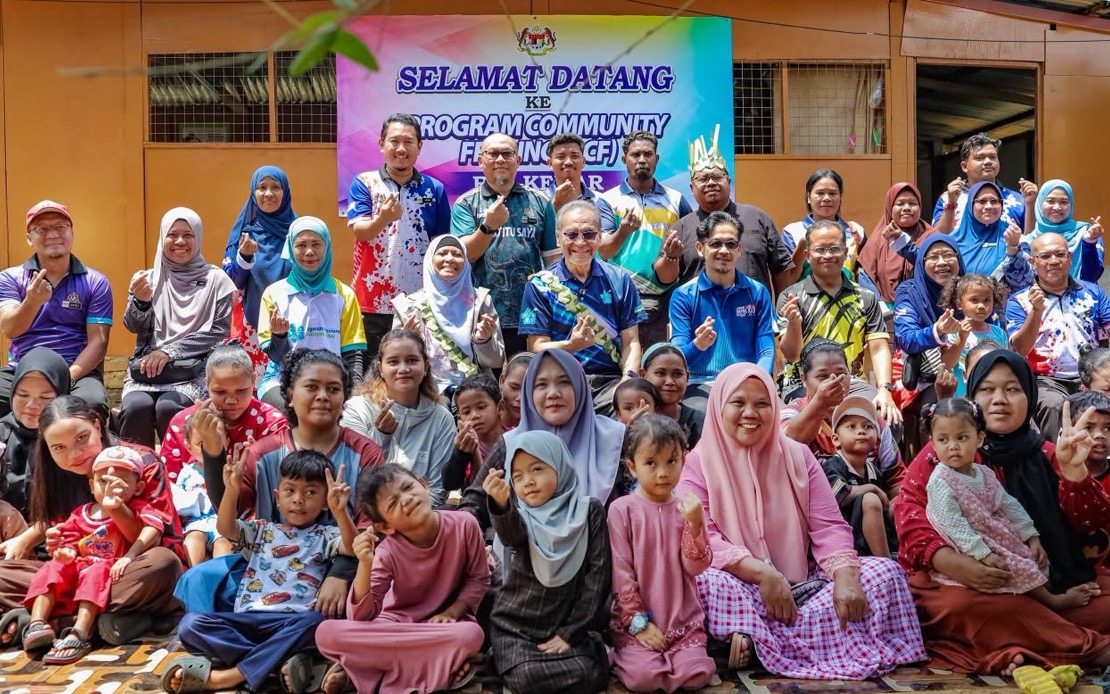
The Ministry of Health has pledged immediate funding of RM500,000 to enhance medical infrastructure at the Kemar Health Clinic in Gerik, demonstrating renewed efforts to address healthcare disparities facing the indigenous Orang Asli community in Hulu Perak. The announcement, made during Health Minister Datuk Seri Dr Dzulkefly Ahmad's recent site visit to the facility, signals a coordinated approach to dismantling barriers that have historically limited healthcare access for remote populations dependent on waterway transportation.
Central to the investment is construction of a modern boat storage facility, addressing a critical operational bottleneck that has long constrained the clinic's service delivery capacity. The existing structure, now beyond eleven years old, has deteriorated significantly and can accommodate only a single vessel, creating logistical constraints for healthcare personnel attempting to reach scattered settlements across the region's river network. The facility's limited capacity has forced staff to choose between protecting equipment and maintaining operational readiness, a choice that has ultimately compromised both asset preservation and service reliability for vulnerable populations.
The funding envelope extends beyond infrastructure to encompass essential operational assets. Plans include acquisition of a replacement four-wheel-drive vehicle to retire an ageing transport unit currently in service, ensuring reliable ground-based mobility when river conditions render waterborne access unfeasible. Equally significant is procurement of sophisticated medical equipment including a Video Laryngoscope, a specialist instrument crucial for managing airway emergencies in remote settings where advanced surgical capabilities remain unavailable. This equipment acquisition reflects understanding that remoteness should not necessitate clinical compromise during life-threatening situations.
Complement the facility upgrades is deployment of the Medik 8 multipurpose boat at the Belum Rainforest Resort Jetty, a RM350,000 asset designed to reduce emergency response intervals for approximately 4,500 Orang Asli residents clustered around RPS Kemar settlements. The twelve-passenger vessel expands the ministry's existing aquatic fleet from six to seven units, fundamentally transforming response capacity for populations with no alternative transportation modality. Healthcare workers previously navigating treacherous river conditions with inadequate equipment now possess a purpose-designed platform combining speed with safety, embodying the principle that geography should never predetermine health outcomes.
Dr Dzulkefly's framing of these investments explicitly referenced Malaysia MADANI's foundational conviction that healthcare constitutes an inalienable right transcending topographical barriers. This articulation signals philosophical repositioning within government discourse, moving beyond rhetoric of "bridging divides" towards operational commitment to equitable access as non-negotiable policy. The minister's acknowledgement that sophisticated assets remain meaningless absent frontline personnel dedication highlighted often-overlooked reality that infrastructure investments depend entirely upon workforce capacity and commitment, particularly among boat operators and field healthcare workers routinely exposing themselves to occupational hazards.
The ministry's longer-term vision encompasses construction of a new Type 5 health clinic at Kemar, representing structural transformation beyond current facility capabilities. This facility classification signals intention to establish comprehensive primary care infrastructure capable of managing routine healthcare provision, maternal and child services, and chronic disease management without requiring referrals to distant urban centres. For Orang Asli populations currently forced to endure extended river journeys for non-emergency care, such facility upgrading translates directly into improved health-seeking behaviour and earlier intervention for developing pathology.
Parallel nutritional intervention efforts underscore integrated approach to indigenous health improvement. The Community Feeding Programme operating since 2015 at Pos Kemar has achieved remarkable epidemiological outcomes among target populations of children aged six months through six years. Stunting prevalence—a critical indicator of chronic malnutrition and developmental compromise—declined dramatically from 75.2 percent to 50.8 percent across the decade-long implementation period. Complementary reduction in underweight prevalence from 43.7 percent to 25.2 percent demonstrates that targeted nutritional intervention addressing both energy and micronutrient deficiencies generates measurable population-level health improvements within reasonably circumscribed timeframes.
These nutritional gains assume particular significance within Malaysian context where indigenous populations historically experience disproportionate burdens of childhood malnutrition, stunting, and associated developmental sequelae. Success at Pos Kemar provides proof-of-concept for scalable interventions combining structured feeding, fortified milk provision, multivitamin supplementation, and therapeutic nutritional support for identified malnutrition cases. The programme's emphasis on Ready-to-Use Therapeutic Food represents evidence-based approach preventing progression from moderate to severe acute malnutrition requiring institutional management.
Integration of facility improvement, equipment provision, transportation enhancement, and nutritional programming reflects sophisticated understanding that healthcare access involves multiple dimensions beyond mere facility construction. Remote populations confront cascading barriers encompassing transportation limitations, equipment deficits, workforce availability, and nutritional foundations that sustain health. Addressing any single dimension without simultaneous action elsewhere yields limited population-level benefit; the Kemar initiative's comprehensiveness therefore represents departure from historical piecemeal approaches characterising rural health development.
For Southeast Asia broadly, Malaysia's demonstrated commitment to indigenous health equity carries regional implications. Orang Asli populations share demographic characteristics with indigenous groups across Thailand, Myanmar, Cambodia, and Laos, confronting comparable healthcare access barriers stemming from geographic isolation and economic marginalisation. Malaysia's strategic investments in waterborne service delivery, facility modernisation, and integrated nutritional support provide replicable models for neighbouring health systems grappling with comparable challenges among dispersed indigenous populations.
The fiscal commitment, while substantial at RM500,000, reflects recognition that equitable healthcare systems require proportionate resource allocation favouring disadvantaged populations. Perak's indigenous communities have historically absorbed disproportionate epidemiological burdens while receiving minimal proportional healthcare investment. Current allocation attempts recalibration, positioning health equity not as aspirational objective but as budgetary reality requiring dedicated annual commitment and long-term infrastructure development.
Moving forward, sustainability requires institutional commitment beyond initial capital investment. Operating costs for expanded boat fleet, maintenance of advanced equipment, and continuous nutritional programming demand recurring budget allocation. Healthcare worker retention in remote settings necessitates competitive remuneration, specialist training opportunities, and operational support preventing burnout among personnel accepting occupational hazards. Success at Kemar will ultimately depend upon government willingness to sustain financial commitments extending beyond ceremonial facility inaugurations towards genuine operational integration of indigenous health provision within Malaysia's broader healthcare architecture.

