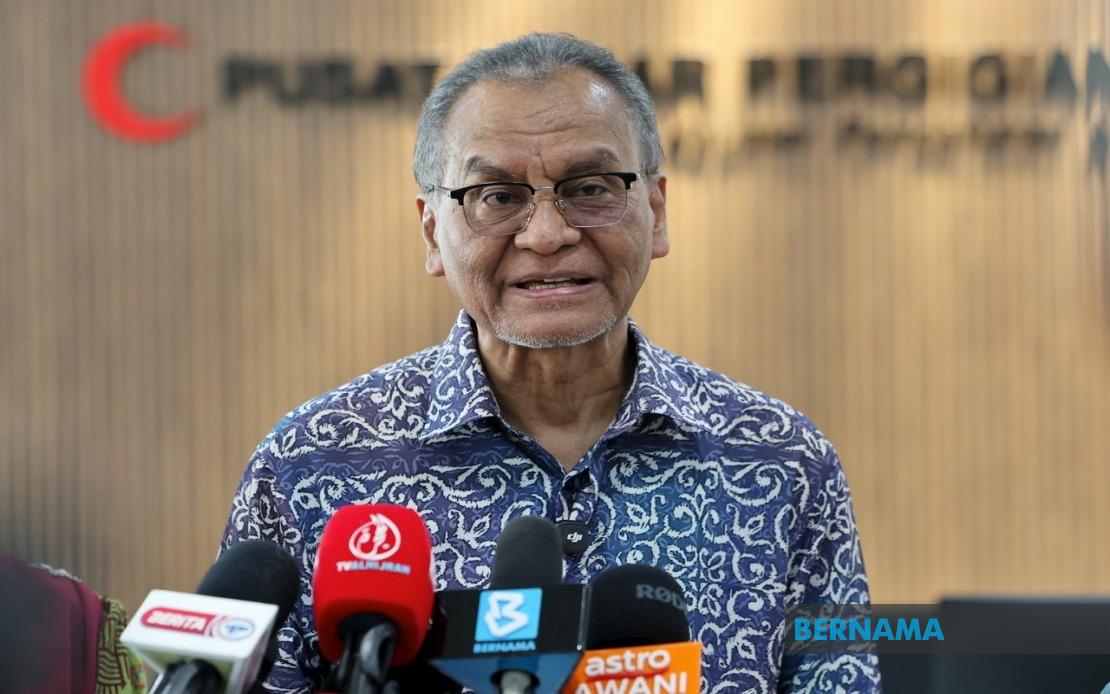
The Ministry of Health remains in the research phase regarding the inclusion of dengue vaccine within the National Immunisation Programme, according to Health Minister Datuk Seri Dr Dzulkefly Ahmad. Speaking in Seremban on August 27, the minister emphasised that the decision requires thoroughness and cannot be rushed, despite growing public health concerns surrounding the rising dengue epidemic currently gripping the nation.
The primary impediment to swift integration appears financial. Dr Dzulkefly highlighted that newly available dengue vaccines command substantial prices, necessitating detailed economic modelling before committing to a nationwide rollout. The ministry is directing particular attention toward a Japanese dengue vaccine candidate, subjecting it to rigorous cost-benefit analyses to determine whether public resources can justify its adoption across the immunisation schedule.
Currently, one dengue vaccine has already secured approval and registration from Malaysia's National Pharmaceutical Regulatory Agency and is available within private healthcare facilities. However, the minister indicated that private sector adoption does not automatically trigger public programme inclusion, as the government must satisfy itself that taxpayer funds deliver optimal value. The evaluation extends beyond price considerations to encompass broader immunisation strategy and competing health priorities vying for limited budgetary allocation.
The urgency of dengue control cannot be overstated given current epidemiological trends. As of Epidemiological Week 33 in 2026, covering data through August 22, Malaysia had documented more than 61,000 dengue infections—a dramatic 60.8 per cent increase compared with the equivalent period in 2025. The outbreak has claimed 58 lives, underscoring the severity of what remains a significant public health challenge, particularly in urbanised regions where mosquito breeding habitats proliferate.
In response to escalating transmission, the ministry has activated a dedicated dengue operations room and strategically positioned personnel throughout identified transmission hotspots, notably across Kuala Lumpur and Selangor. Simultaneously, health authorities continue expanding deployment of Wolbachia-infected mosquitoes as a biological control intervention, representing an innovative non-chemical approach to vector suppression that complements traditional mosquito elimination efforts.
Dr Dzulkefly underscored that combating dengue transcends the ministry's institutional boundaries. Effective disease suppression demands coordinated action involving local government authorities, municipal corporations, and various government agencies responsible for maintaining sanitary conditions in residential zones. Community engagement and environmental management—particularly preventing Aedes mosquito breeding in domestic water containers—remain foundational to any sustained reduction in transmission.
Beyond dengue management, the ministry is advancing dental health initiatives as part of its preventive care agenda. Officials are examining proposals to extend fundamental dental screening and treatment services through the PeKa B40 assistance scheme, targeting lower-income households. Once formally approved, this expansion would integrate dental care more substantially into primary healthcare frameworks and contribute to managing non-communicable diseases, which increasingly burden Malaysia's health system.
The newly inaugurated Negeri Sembilan Dental Specialist Centre, constructed at a cost of RM32 million, exemplifies the ministry's commitment to decentralising specialist care. Operating since September 25, 2025, the facility has become Malaysia's first dental specialist referral centre functioning outside traditional hospital settings. By June, it had served 11,085 patients, demonstrating considerable demand for specialist orthodontic and oral surgery services previously requiring lengthy travel or extended waiting periods.
The centre functions as a regional hub serving five jurisdictions—Negeri Sembilan, Selangor, Kuala Lumpur, Putrajaya, and Melaka—collectively housing approximately 11.89 million residents. Installation of eighteen contemporary dental treatment chairs has expanded daily patient capacity from eighty to one hundred fifty individuals, nearly doubling throughput. Remarkably, specialist treatment waiting times have compressed from two months to just two or three weeks, substantially improving service accessibility for patients requiring complex dental interventions.
This model depends substantially on technological infrastructure, particularly an integrated Dental Information System coupled with advanced imaging capabilities and training facilities for clinical staff development. The structured approach enables consistent quality and continuous professional improvement among dental personnel. Rather than remaining confined to Negeri Sembilan, the ministry intends to replicate this zonal model progressively across Malaysia, beginning with regional coordinating hubs like Borneo's designated zone before advancing toward state-level implementation.
Mobility has emerged as another avenue for expanding access. The ministry plans to deploy eight additional Mobile Dental Clinics by year's end, targeting Sabah, Perlis, Penang, Selangor, Putrajaya, and Johor. These peripatetic facilities extend specialist and preventive dental services to geographically remote communities and populations with constrained transportation capacity, aligning with government commitments to equitable healthcare distribution across diverse terrain and demographic circumstances.

