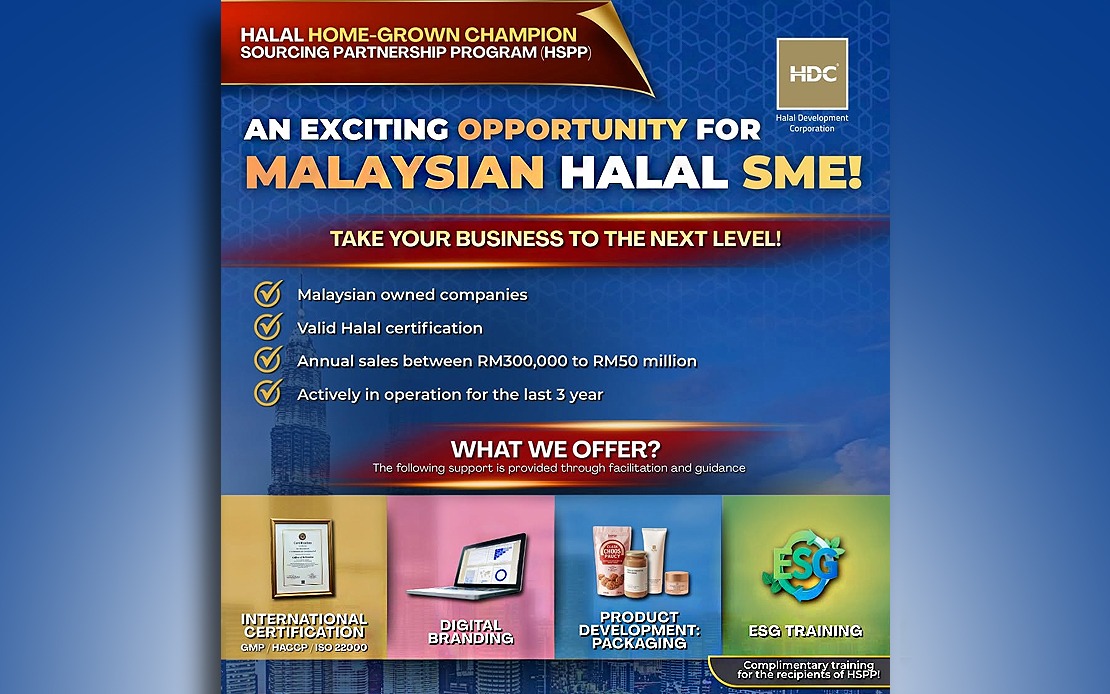
Malaysia is reinforcing its grip on the global halal industry through a targeted government support programme that has already channelled assistance to over 300 companies, with plans to amplify this reach significantly over the coming years. The Halal Home Grown Champion – Sourcing Partnership 2.0 initiative, operating across the 2024 to 2026 period, represents a deliberate strategic push by the Ministry of Investment, Trade and Industry (MITI) to nurture local enterprises within the halal ecosystem and unlock fresh revenue streams for the nation's micro, small, and medium enterprises.
The programme's track record speaks to its effectiveness in reaching diverse business segments. By mid-2024, it had successfully supported 313 halal-certified companies, with particular emphasis on empowering historically underrepresented entrepreneurial groups. Among the beneficiaries were 158 Bumiputera-owned enterprises and 52 women-owned businesses, reflecting government efforts to ensure inclusive economic participation across Malaysia's business landscape. The combined market potential of these supported ventures stands at RM187.91 million, a figure that underscores both the programme's scope and the commercial viability of Malaysia's homegrown halal sector when given adequate institutional backing.
The initiative operates as a direct intervention designed specifically for smaller players within the halal economy who often struggle to achieve scale and market visibility without coordinated support. Rather than taking a one-size-fits-all approach, the Sourcing Partnership 2.0 framework recognises the distinct challenges faced by micro and small enterprises trying to navigate supply chains, secure consistent orders, and meet international quality standards simultaneously. By functioning as a bridge between local producers and larger commercial opportunities, the programme addresses a critical market failure that has historically constrained the growth of Malaysian halal MSMEs relative to their international counterparts.
Looking ahead to 2026, Malaysia plans to leverage this momentum through one of the sector's flagship events. The Malaysia International Halal Showcase, scheduled for September 23 to 26, 2026, will once again occupy centre stage as the world's largest halal trade exhibition. Hosted at the Malaysia International Trade and Exhibition Centre in Kuala Lumpur, the event will feature approximately 2,400 exhibition booths, providing an unprecedented platform for local businesses to showcase their products and establish direct connections with international buyers and supply chain partners. This concentration of commercial activity in a single event creates a multiplier effect, enabling smaller enterprises to access networks and opportunities that would otherwise require individual international marketing efforts.
The scope of participation anticipated for MIHAS 2026 underscores the growing maturity of Malaysia's halal ecosystem. Officials project that more than 1,000 local MSMEs will benefit from business opportunities generated by the showcase, a figure that suggests both wide representation across the entrepreneurial base and genuine confidence in the event's ability to generate substantive commercial transactions. For many participating businesses, the showcase will function not merely as a marketing platform but as a structured opportunity to enter new geographic markets, identify potential joint venture partners, and secure letters of intent from international importers and distributors.
The strategic backdrop to these initiatives reflects broader geopolitical and economic realities shaping Malaysia's positioning in global trade. The government's emphasis on the halal sector extends beyond religious or cultural considerations; it represents a deliberate economic strategy to capture growing consumer demand in Muslim-majority regions and among the expanding global Muslim consumer base. As Southeast Asian economies compete for regional trade dominance, Malaysia's established reputation for halal certification integrity and its comprehensive regulatory framework provide competitive advantages that domestic enterprises can leverage when adequately supported.
MITI's framing of these programmes addresses specific parliamentary inquiries about market diversification strategies for the halal sector beyond traditional markets. In response to questions raised by Tan Sri Mahiaddin Mohd Yassin, the ministry outlined how new market exploration remains central to sectoral growth objectives. By directing resources toward helping MSMEs increase product value-added, the government signals recognition that Malaysia's halal sector cannot sustain growth solely through commodity-based exports. Instead, value-chain sophistication—encompassing product innovation, branding, packaging, and service integration—will determine competitive positioning in increasingly discerning global markets.
The emphasis on reducing dependence on traditional export destinations reflects lessons learned from market concentration risks. When halal suppliers rely excessively on established buyers and geographic regions, they become vulnerable to trade disputes, regulatory changes, or demand fluctuations in those specific markets. By systematically nurturing MSMEs' capacity to serve diverse international customers across multiple regions, Malaysia builds economic resilience while creating employment opportunities across its enterprise ecosystem. This approach also attracts foreign investment attention, as multinational companies increasingly seek reliable local supply chains capable of serving multiple geographic markets simultaneously.
Malaysia's trajectory as a global halal industry leader rests on foundations that extend beyond programme-based interventions. The nation has cultivated internationally recognised halal certification standards, invested in halal research and development infrastructure, and built institutional expertise within regulatory bodies that command respect in global commerce. However, certifications and regulations alone cannot drive sector growth; they must be paired with commercialisation support that helps certified producers actually penetrate markets and build sustainable businesses. The Halal Home Grown Champion programme represents this crucial bridge between regulatory infrastructure and commercial reality.
The women-owned business component of the programme merits particular attention, as it addresses a persistent gap in Malaysia's entrepreneurial landscape. Women-owned enterprises frequently encounter financing constraints, limited access to supply chain networks, and underrepresentation in export-oriented sectors. By explicitly targeting 52 women-owned businesses through this initiative, the government demonstrates commitment to inclusive sectoral development while simultaneously expanding the talent pool contributing to halal sector growth. International experience suggests that women entrepreneurs often display sophisticated business acumen and strong commitment to sustainable growth, attributes that strengthen rather than compromise sectoral competitiveness.
Bumiputera participation in the programme also carries significant policy implications. The 158 Bumiputera-owned firms receiving support reflect ongoing efforts to ensure that Malaysia's commercial opportunities extend across demographic groups as defined by constitutional provisions. Halal sector growth offers particular opportunities for Bumiputera entrepreneurs, given the sector's alignment with cultural and religious values while simultaneously accessing global market demand. Successfully channelling halal sector opportunities toward Bumiputera business participation strengthens the economic justification for supportive policies while advancing broader inclusivity objectives.
Moving forward, the success of these initiatives will depend on programme continuation, international market reception, and the capacity of supported enterprises to translate government-facilitated opportunities into sustainable business growth. The RM187.91 million in potential sales represents an expectation, not a guarantee; converting this potential into actual revenue streams requires sophisticated enterprise management, quality consistency, and responsive customer service. Malaysian policymakers and industry participants must therefore view current initiatives as establishing momentum toward systemic competitiveness rather than delivering definitive solutions to sectoral challenges.

