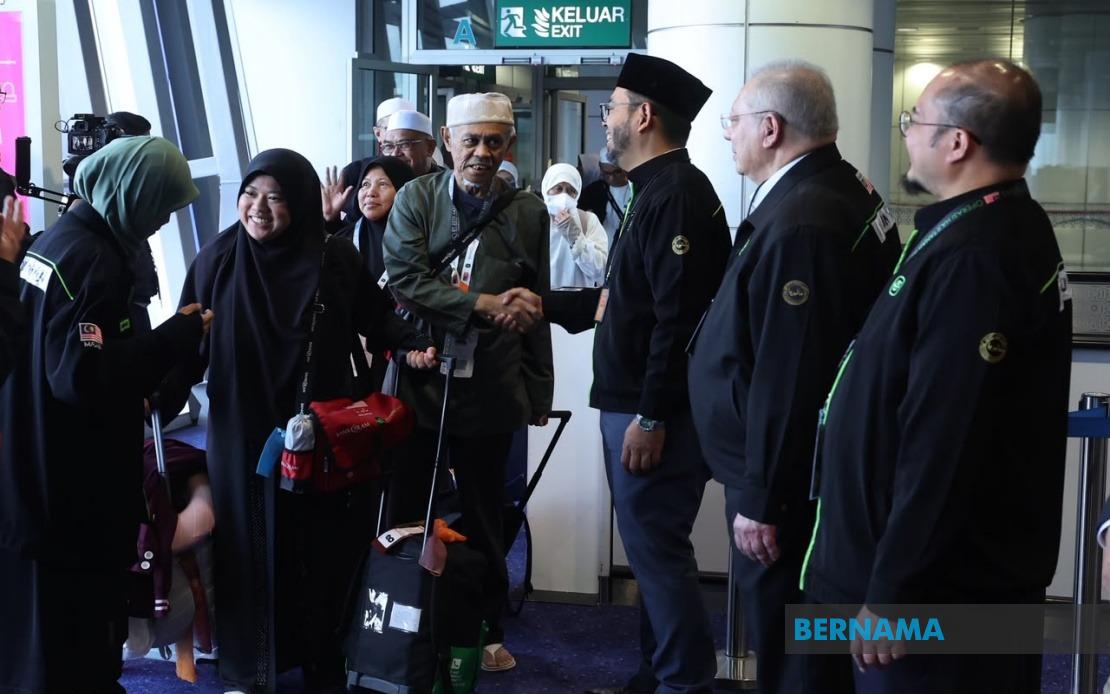
The journey of Malaysia's entire haj contingent for the 1447 Hijrah season came to a symbolic close on Tuesday when 258 pilgrims touched ground at Kuala Lumpur International Airport at 12.10 pm local time. The Malaysia Airlines flight MH 8385 had departed Madinah the previous evening, carrying home the last group of devotees who had undertaken the sacred Islamic pilgrimage to the Holy Land. Their safe arrival marked the culmination of an operation that had unfolded seamlessly throughout the season, notwithstanding the broader geopolitical instability affecting the West Asian region.
Dr Zulkifli Hasan, the Minister in the Prime Minister's Department overseeing religious affairs, underscored the symbolic importance of the moment to gathered media at the airport. He emphasised that the successful departure and return of all Malaysian pilgrims in good health represented not merely a logistical achievement but a validation of the meticulous planning and coordination orchestrated across multiple government entities and private sector partners. The jubilant tone of his remarks reflected the significance placed on this outcome, particularly given external headwinds that could have disrupted travel and pilgrim welfare.
One of the most remarkable recognitions to emerge from this season was Malaysia's receipt of the Labbaikum Diamond Award, bestowed by Saudi Arabia's Ministry of Haj and Umrah. This accolade represents the world's most prestigious distinction in haj management and service provision, a testament to the calibre of Malaysia's institutional competence in orchestrating such a complex undertaking. The award carries particular weight as it originates from the host nation itself, which possesses unparalleled expertise in managing millions of pilgrims annually from across the globe. For Malaysian stakeholders and the broader Muslim community in the country, the recognition underscores the nation's standing as a responsible custodian of its citizens' spiritual obligations.
The infrastructure and systems deployed during this season reflected significant innovation aimed at enhancing pilgrim experience and operational efficiency. The introduction of the MyNIISe system streamlined visa processing, reducing bureaucratic friction at critical junctures. Physical accommodations in the holy cities received attention with sofa beds and improved tent facilities, seemingly modest upgrades that nonetheless contribute meaningfully to the comfort and dignity of pilgrims undertaking an arduous spiritual journey. The provision of round-the-clock bus services connecting mosques to lodgings addressed practical daily challenges that can accumulate into sources of stress and fatigue.
The Tabung Haji board, led by chairman Tan Sri Abdul Rashid Hussain, alongside Deputy Minister Marhamah Rosli, brought their institutional gravitas to the welcoming ceremony, signalling the government's comprehensive engagement with every facet of the haj enterprise. The collaborative framework encompassing the Health Ministry, the Immigration Department, Malaysia Airlines, and an array of logistics providers demonstrated how successful public administration depends on seamless inter-agency coordination. Each component of this ecosystem bore responsibility for distinct but interconnected dimensions of pilgrim welfare and operational logistics.
Malaysia's approach to haj preparation has increasingly emphasised intensive pre-departure training and orientation programmes administered by Tabung Haji. These structured courses equip pilgrims with knowledge spanning spiritual, physical, health, and behavioural dimensions of the journey. The investment in human capital through education appears to have yielded tangible dividends, as Dr Zulkifli attributed the season's success partly to the discipline and commitment exhibited by Malaysian pilgrims themselves. This represents a recognition that effective haj management extends beyond logistics to encompass the character and preparedness of individual participants.
Looking forward, the institutional apparatus has already commenced evaluative processes to identify shortcomings and opportunities for refinement. The post-mortem procedures being undertaken by Tabung Haji reflect the organisational maturity required to sustain excellence across successive seasons. Such systematic reflection prevents the complacency that can accompany successful outcomes and ensures that institutional learning translates into tangible improvements. The scheduled National Haj Muzakarah conference in August will provide a formal forum for stakeholders to deliberate on emerging challenges and propose strategic enhancements to the governance and administration of Malaysia's haj operations.
The geopolitical context deserves particular attention here. That Malaysia's haj season proceeded smoothly despite pronounced regional tensions demonstrates both the resilience of the pilgrimage infrastructure and the commitment of Malaysia's diplomatic and administrative establishments to insulate this essential religious observance from external disruptions. For a Muslim-majority nation navigating complex regional politics, the ability to facilitate uninterrupted access to the Hajj represents both a religious imperative and a marker of state capacity. The absence of significant security incidents or logistical catastrophes sends reassuring signals to the Malaysian public that their government can protect their interests even amid turbulent circumstances.
For Malaysia specifically, this successful conclusion carries implications extending beyond the immediate participants and their families. The country's growing institutional proficiency in haj management burnishes its regional standing within the Islamic world and positions it as a reliable administrator of large-scale religious and humanitarian operations. This capability and reputation may prove valuable for Malaysia's broader diplomatic and economic positioning in the Indo-Pacific region, where soft power dimensions increasingly matter in international relations. The award from Saudi Arabia acknowledges not just technical competence but the respect and partnership between the two nations in facilitating one of Islam's most consequential obligations.

