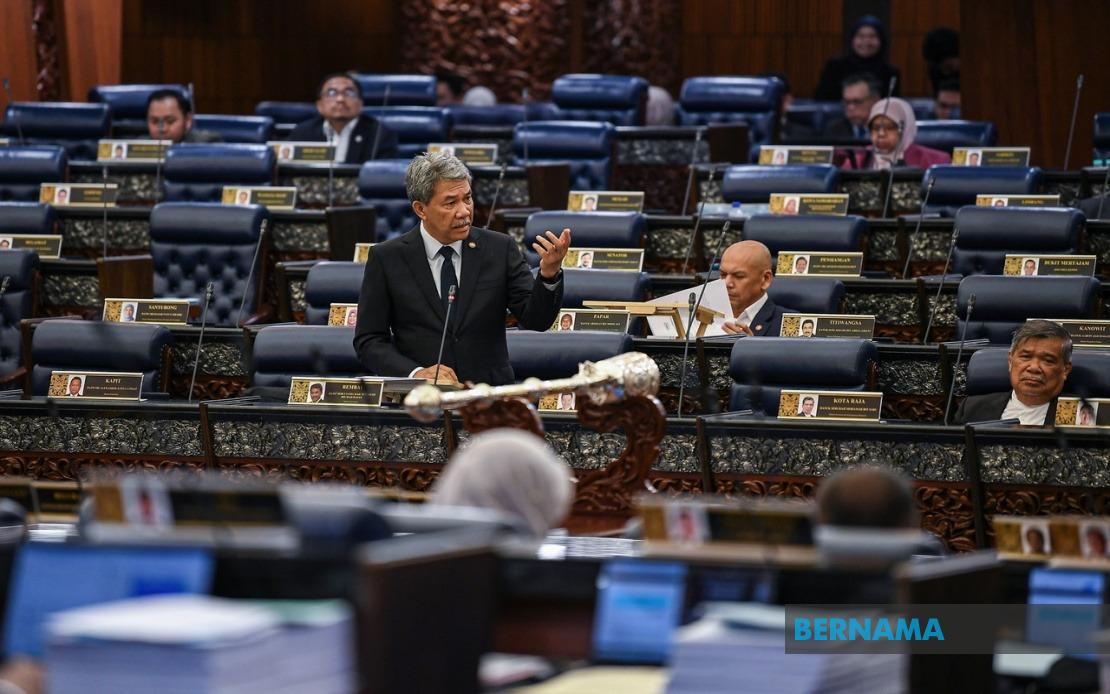
Foreign Minister Datuk Seri Mohamad Hasan has moved to reassure Parliament that Malaysia's Humanitarian Trust Fund for the People of Palestine (AAKRP) operates under stringent oversight mechanisms, responding to public concerns about fund administration. Speaking during Question Time in the Dewan Rakyat on June 23, Mohamad stated categorically that allegations questioning the fund's management are unfounded, stressing that the AAKRP functions as a government-controlled trust account rather than an independently operated vehicle that might escape scrutiny.
The fund operates within a framework of multiple accountability layers designed to ensure public confidence in resource allocation. Mohamad explained that the AAKRP is subject to audits conducted by Malaysia's Auditor-General, the constitutional officer responsible for examining government accounts and agencies. Beyond external audits, the fund also undergoes regular reporting cycles to the Cabinet, Malaysia's highest executive body, ensuring that senior government decision-makers maintain direct awareness of fund operations and disbursements. This dual-track accountability system—combining independent auditing with ministerial oversight—represents a deliberate effort to insulate the fund from the kind of governance questions that can undermine public trust in humanitarian initiatives.
A critical distinction Mohamad emphasized concerns the nature of fund governance itself. By maintaining the AAKRP as a government-managed trust account, rather than delegating operations to a private organisation or non-governmental entity, Malaysia retains direct administrative control and responsibility. This institutional design stands in contrast to some humanitarian mechanisms where funds flow through independent organisations with their own governance structures, potentially creating opacity concerns. The foreign minister's clarification directly addressed circulating social media claims that suggested the fund operated beyond governmental accountability, framing such assertions as factually incorrect and misleading to the public.
To maximise the effectiveness of humanitarian assistance reaching intended beneficiaries, Malaysia has established a network of established international and regional partners through which aid flows. Rather than attempting direct delivery of all assistance to Gaza, the ministry channels resources through the United Nations Relief and Works Agency for Palestine Refugees in the Near East (UNRWA), the Jordan Hashemite Charity Organisation (JHCO), the Palestine Red Crescent Society, and King Hussein Hospital. These organisations possess on-the-ground operational capacity, established relationships with local populations, and their own institutional credibility, making them logical intermediaries for Malaysia's humanitarian efforts.
The choice of delivery partners reflects pragmatic understanding of the logistical and security constraints affecting Gaza operations. UNRWA, as the UN agency mandated to serve Palestinian refugees across the region, maintains the largest humanitarian footprint in Gaza and possesses decades of operational experience in the territory. The Jordan-based organisations bring experience managing cross-border humanitarian flows and institutional knowledge of Palestinian communities' specific needs. By partnering with established entities rather than attempting independent delivery mechanisms, Malaysia reduces administrative burden while leveraging existing infrastructure and expertise.
Beyond cash transfers, Malaysia has deployed tangible humanitarian aid directly to Gaza, including food supplies, medical equipment, and healthcare materials intended to address acute shortages in a territory where basic services have deteriorated significantly. Mohamad noted that some consignments faced earlier delays but have now successfully reached Gaza following the reopening of overland humanitarian corridors coordinated with the Egyptian government. This logistical detail underscores the complexity of Gaza humanitarian operations, where political negotiations and security arrangements between multiple governments determine whether physical aid can reach beneficiaries. Malaysia's success in delivering goods through reopened routes demonstrates active engagement with regional stakeholders to facilitate assistance.
The humanitarian situation Gaza faces represents one of the most serious crises currently affecting civilian populations globally. Mohamad described the conditions as remaining critical, with infrastructure damage extending across multiple essential sectors. Hospitals have sustained significant damage, reducing medical capacity precisely when disease prevention and acute care needs are highest. Educational institutions have been similarly affected, disrupting schooling for hundreds of thousands of children and eroding long-term human capital development. Religious buildings, which serve important functions in maintaining community cohesion and providing social support networks, have also been damaged, further fragmenting Palestinian social structures already strained by conflict.
The scale of infrastructure destruction creates cascading humanitarian consequences beyond immediate physical reconstruction needs. Damaged hospitals mean Palestinians seeking treatment face delays and inadequate conditions; disrupted schools interrupt generational educational progression; damaged religious spaces weaken community resilience mechanisms. Malaysia's assistance, whether delivered as direct aid or channelled through partner organisations, addresses symptoms of these systemic failures while acknowledging that longer-term humanitarian stabilisation requires broader political resolution.
Mohamad's parliamentary statement can be understood partly as preemptive management of an information environment where social media narratives sometimes diverge significantly from official government operations. By emphasising the professional and responsible administration of the AAKRP, the foreign minister attempted to inoculate the fund against future allegations and to discourage public reliance on unverified social media claims. The emphasis on audits, Cabinet reporting, and established delivery partners constitutes a narrative strategy designed to position Malaysia's humanitarian engagement as both morally committed and administratively sound.
For Malaysian stakeholders invested in Palestinian causes, Mohamad's assurances provide institutional confidence that contributions through the AAKRP reach intended beneficiaries. For critics questioning fund management, the detailed enumeration of oversight mechanisms and delivery partners demonstrates that Malaysia has structured Palestinian assistance within conventional governance frameworks rather than creating parallel or opaque systems. The foreign minister's defense reflects broader tensions in humanitarian operations between the imperative to deliver aid rapidly and the parallel imperative to maintain governance standards that ensure public confidence in resource allocation.