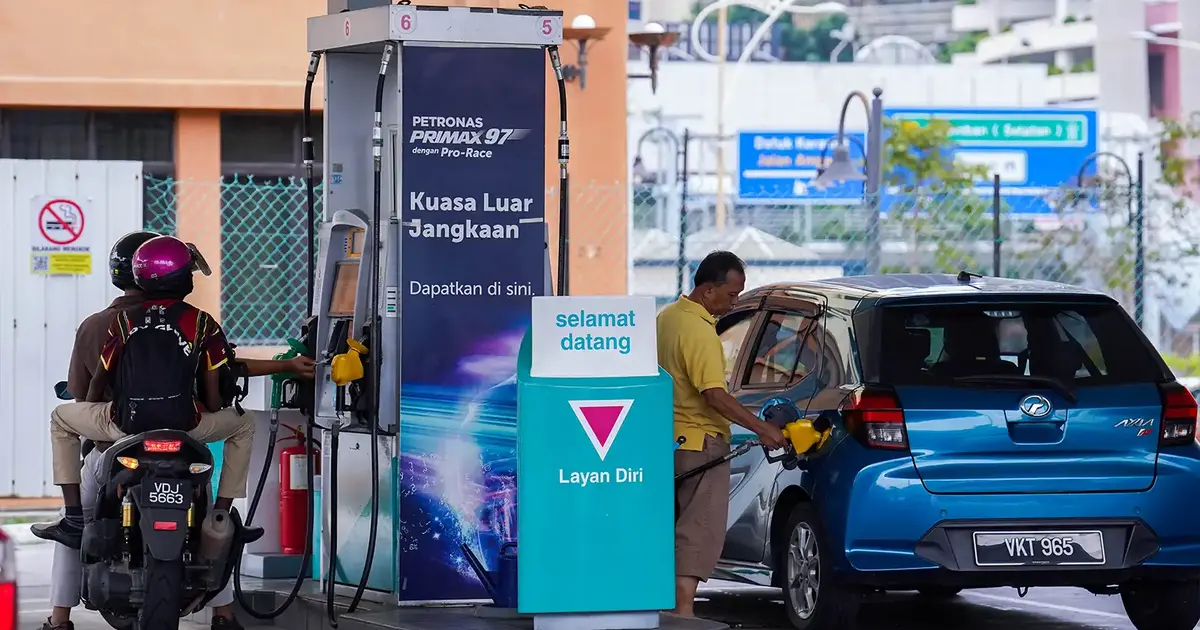
Prime Minister Anwar Ibrahim has underscored the government's commitment to maintaining petroleum availability across Malaysia, even as the state budget faces escalating costs from fuel subsidy programmes. The reassurance comes amid projections that annual subsidy expenditure will swell to RM40 billion, representing a significant drain on public finances at a time when the administration is pursuing fiscal consolidation.
The ballooning subsidy bill reflects the structural challenge confronting Malaysian policymakers: reconciling the political necessity of keeping fuel prices affordable for ordinary Malaysians with the economic realities of volatile global crude oil markets and constrained government budgets. When international oil prices surge, the gap between controlled domestic pump prices and world market rates widens dramatically, forcing the Treasury to absorb increasingly large compensation payments to retailers and refiners.
Malaysia's fuel subsidy architecture has evolved considerably over two decades. Previous administrations attempted various approaches to contain costs, from targeted subsidies favouring lower-income households to periodic price adjustments. The current government's approach emphasises maintaining broad-based affordability while gradually implementing efficiency measures. This balancing act has proven politically sensitive, as fuel price increases directly affect transport costs, food prices, and overall inflation perceptions among voters.
The RM40 billion projection underscores how energy subsidies have become one of the largest discretionary items in the federal budget, competing with allocations for healthcare, education, and infrastructure development. For context, this figure approaches the annual government spending on defence or education, illustrating the scale of resources directed towards maintaining cheap fuel. Such allocation decisions inevitably force trade-offs elsewhere in government priorities.
Anwar Ibrahim's reiteration that petroleum supplies remain stable and sufficient addresses underlying concerns about energy security in the region. Malaysia remains a significant oil and gas producer, with proven reserves and ongoing upstream operations. However, domestic production has gradually declined over the past decade, with Malaysia transitioning increasingly towards importing refined products to meet demand. This shift makes pricing policy more vulnerable to international market fluctuations and supply disruptions.
The government's petroleum stability assurances carry particular weight given regional energy market dynamics. Southeast Asia has experienced periodic supply pressures, and several neighbouring economies face energy security challenges. Malaysia's position as both a producer and consumer, combined with its refining capacity, grants it relative advantages in navigating global energy volatility, advantages that policymakers are keen to preserve.
Looking ahead, the sustainability of current subsidy levels faces serious questions. Demographic trends show rising vehicle ownership and energy consumption, suggesting demand will continue climbing. Simultaneously, global oil price volatility remains unpredictable, and the transition towards renewable energy may alter long-term petroleum economics. This convergence suggests that purely subsidy-based affordability strategies may become increasingly untenable.
Several economic analysts have advocated for alternative mechanisms to assist consumers whilst controlling subsidy expenses. Targeted cash transfers, voucher schemes, and gradual price rationalisation coupled with complementary social support represent potential paths forward. However, each approach involves political complexities and implementation challenges that governments must navigate carefully.
The RM40 billion subsidy projection also intersects with Malaysia's broader economic objectives, including reducing debt-to-GDP ratios and improving fiscal sustainability. The Asian Development Bank and International Monetary Fund have consistently highlighted energy subsidy reform as crucial for long-term macroeconomic stability. Yet rapid subsidy removal risks provoking inflation spikes and political backlash, creating policy dilemmas for any administration.
Regional comparisons illuminate Malaysia's position. Several neighbouring countries have undertaken subsidy reforms with varying degrees of success and social dislocation. Thailand, Indonesia, and the Philippines have experimented with targeted schemes and managed price transitions, offering both cautionary tales and potential models. Malaysia's experience navigating these pressures will likely influence regional energy policy conversations.
The government's current approach appears focused on maintaining the status quo while exploring efficiency improvements, such as reducing leakages and smuggling losses that inflate subsidy costs. These operational improvements offer potential savings without politically contentious price increases, though analysts suggest such measures alone cannot fully address the structural subsidy challenge.
Anwar Ibrahim's emphasis on petroleum stability may also signal government priorities for maintaining investor confidence in Malaysia's energy sector. Predictable subsidies and stable supply policies help attract downstream investment and support economic activity dependent on energy availability. This dimension connects energy policy directly to broader development and employment objectives.
Ultimately, the RM40 billion subsidy figure encapsulates a fundamental policy tension facing contemporary Malaysian governance: providing immediate consumer relief against acknowledging long-term fiscal constraints. How successfully the government manages this balance will shape not only energy policy but broader macroeconomic trajectories and public sector resource allocation for years ahead.

