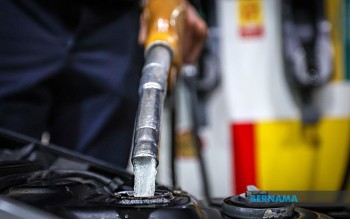
Malaysia faces mounting fuel subsidy costs if global crude oil prices remain stubborn around the US$90 per barrel mark, with Deputy Finance Minister Liew Chin Tong revealing projections that paint a complex fiscal picture for the resource-dependent economy. Speaking in parliament's upper house, Liew outlined estimates showing RON95 petrol subsidies alone could swell to approximately RM2 billion monthly, while diesel subsidies would add another RM1.5 billion, totalling RM3.5 billion in direct support to consumers each month. The estimates underscore the tension facing the government between maintaining price stability for voters and managing an increasingly expensive subsidy regime that strains the federal budget.
The sustained elevation in oil prices reflects broader geopolitical uncertainties and supply concerns that have kept international crude under pressure throughout the year. For Malaysia, a country heavily dependent on hydrocarbon revenues, elevated crude prices present a double-edged proposition—higher subsidy outlays collide with enhanced government petroleum income. Liew highlighted this offsetting dynamic, noting that each US$1 rise in the barrel price translates into approximately RM300 million in additional government revenue from Malaysia's own oil and gas operations. This mechanism provides the government some fiscal relief even as citizen-facing subsidies climb, though the relationship between revenue gains and subsidy increases is not one-to-one, creating potential shortfalls that must be absorbed elsewhere in the budget.
The Deputy Finance Minister's remarks came during parliamentary questioning about whether the government could maintain its fiscal deficit targets should crude oil prices climb further beyond current projections. This reflects growing concern among lawmakers about Putrajaya's ability to balance its books if energy markets become even more volatile. Liew sought to project confidence, insisting that Malaysia's fiscal position remains resilient and that official fiscal projections remain on track despite the oil price turbulence. His measured tone appeared designed to forestall panic about potential budget revisions, even as the numbers suggest significant contingencies are already baked into planning assumptions.
The timing of these disclosures carries political weight. Prime Minister Datuk Seri Anwar Ibrahim is scheduled to present the 2025 Budget in October, a key moment when the government will recalibrate its financial forecasts based on then-prevailing economic conditions. Liew's comments suggest the government will wait until that moment to announce any material changes to fiscal targets or subsidy trajectories. This approach allows ministers to present the budget against the most current oil price environment, potentially avoiding multiple mid-year corrections that might undermine public confidence in economic management. The strategy also provides political cover should revisions prove necessary—they will be framed as responsive adjustments rather than earlier miscalculations.
Subsidies remain a politically fraught issue in Malaysia, where fuel and food price support has long been wrapped in electoral calculations and social stability concerns. The prospect of RM3.5 billion monthly expenditure, running to RM42 billion annually, represents a significant drain on resources that could otherwise fund infrastructure, education, or health services. Previous governments have attempted controlled subsidy reduction schemes, but these efforts often provoke public backlash and have occasionally contributed to political vulnerability. The current administration's approach appears more cautious, maintaining broader subsidy frameworks while selectively adjusting eligibility and quantum for specific user groups.
This targeted flexibility was evident in Liew's response to parliamentary questions about expanding diesel quotas under the BUDI scheme for Sabah and Sarawak, two resource-rich states with substantial indigenous populations reliant on diesel for transportation and economic activity. Rather than announcing blanket quota increases—which would further inflate subsidy costs—the government indicated willingness to review case-specific applications from defined constituencies. The Deputy Finance Minister cited pickup truck owners as an example, who had been granted an additional 100-litre quota through streamlined application procedures. This granular approach allows the government to target support more precisely while managing overall fiscal exposure.
The BUDI scheme itself reflects Malaysia's complex subsidy architecture, where different user categories and geographic regions receive differentiated support levels. Sabah and Sarawak, as peninsular Malaysia's resource-bearing siblings, have historically commanded special consideration in diesel allocation given their larger agricultural, mining, and plantation sectors dependent on fuel-intensive operations. Expanding quotas for these states carries economic logic but also exposes the government to criticism that it is providing preferential treatment to specific regions, potentially exacerbating east-west tensions if not carefully managed.
Malaysia's fuel subsidy burden sits uncomfortably within the broader regional context. Neighbouring Singapore and Brunei have largely dismantled consumer fuel subsidies, allowing market prices to clear and encouraging efficiency. Thailand and Indonesia maintain varying levels of price support, though both have experimented with targeted rather than universal schemes. Malaysia's continuing commitment to broad-based subsidies reflects policy choices rooted in social contract assumptions and electoral calculations rather than economic orthodoxy. This positioning leaves Malaysia vulnerable to the contradiction between fiscal sustainability and political palatability.
Longer-term, the subsidy trajectory raises questions about whether current policy can persist indefinitely should crude oil prices climb further or remain elevated for extended periods. At US$100 per barrel, subsidy costs would swell to an unsustainable level; preliminary calculations suggest monthly outlays could exceed RM4 billion. The government's strategic reserve position and petroleum asset base provide some cushion, but neither is bottomless. Energy transition dynamics also loom—as the world gradually shifts toward renewable and electric vehicle adoption, Malaysia's hydrocarbon-dependent revenue model faces secular headwinds that no amount of price support can overcome.
For Malaysian businesses and consumers, the subsidy equation influences everything from transport costs to goods pricing. Manufacturing sectors dependent on fuel-intensive logistics benefit from suppressed energy prices, as do rural populations with limited public transport alternatives. However, the fiscal cost represents a transfer from general taxpayers and future generations toward current energy consumers, a distributional choice with long-term consequences. The government's willingness to expand quotas for specific groups like pickup truck owners suggests political pressure from rural and agricultural constituencies who view diesel access as essential to livelihoods.
The Deputy Finance Minister's parliamentary statements ultimately convey a holding pattern—acknowledge rising subsidy costs, emphasize revenue offsetting mechanisms, project fiscal confidence, and defer significant policy decisions until the October budget presentation. This approach buys time for economic conditions to clarify and allows political calculations to stabilize, but it does not resolve the fundamental arithmetic problem. Unless crude oil prices retreat substantially or the government embraces more aggressive subsidy rationalization, Malaysia will face difficult choices about fiscal priorities and subsidy sustainability within the next fiscal year.

