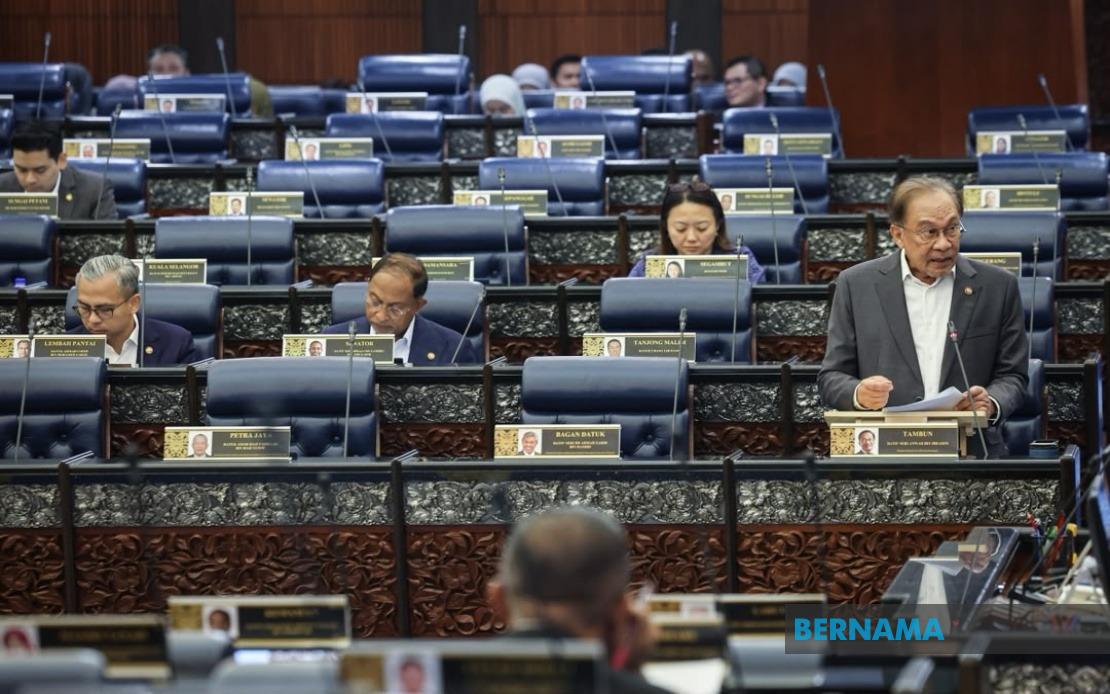
Prime Minister Datuk Seri Anwar Ibrahim has moved to counter perceptions that Malaysia's fuel prices have become uncompetitive, pointing to comparative pricing data from the world's leading petroleum exporters to substantiate his government's record on energy affordability. Speaking in Parliament today, Anwar highlighted that subsidised RON95 petrol under the BUDI MADANI initiative continues to be priced at RM1.99 per litre, a figure he argues demonstrates sustained commitment to keeping fuel accessible for Malaysian motorists even as global energy markets remain volatile.
The Prime Minister's remarks directly address a line of questioning from Datuk Rosol Wahid of Hulu Terengganu, a Perikatan Nasional backbencher, regarding the disparity between fuel pricing under the previous administration of Datuk Seri Najib Razak and the current government's performance against opposition-era promises. This thinly-veiled comparison reflects ongoing political tensions over economic management, with critics potentially suggesting that Anwar's administration has failed to fulfil campaign commitments made during its time in opposition.
Comparing Malaysia's current pricing with that of Saudi Arabia provides the clearest illustration of Anwar's argument. The Saudi kingdom, despite its status as the world's largest oil exporter and custodian of vast proven reserves, has allowed fuel prices to climb above RM2.40 per litre—a threshold substantially higher than Malaysia's ceiling. This comparison carries particular weight given Saudi Arabia's structural advantages in production costs and market position, advantages that do not extend to the Malaysian economy. The contrast underscores how pricing policy reflects political choice as much as market forces, with Riyadh evidently prioritising fiscal considerations over fuel subsidisation in recent years.
Qatar presents a similarly instructive case study. Despite possessing enormous hydrocarbon wealth derived from natural gas production and export, Qatar has not maintained pricing significantly below Malaysia's current levels. This reality challenges a common public assumption that all major oil and gas exporters automatically translate resource abundance into dramatically lower consumer fuel costs. Instead, global commodity pricing, refinery economics, and government revenue requirements converge to produce broadly comparable consumer prices across different producing nations—a nuance that often escapes public discourse in Malaysia.
The United Arab Emirates, though not traditionally framed as a primary oil producer in the regional context, offers another pertinent reference point. Anwar specifically noted that the UAE has recently implemented fuel price increases despite possessing substantial petroleum resources, a move that reinforces his broader contention that maintaining stable, affordable prices represents an active policy commitment rather than a natural consequence of resource endowment. The timing of UAE's price adjustments two months prior to his parliamentary statement suggests deliberate government decision-making responding to changed economic conditions rather than inevitable market pressures.
Anwar's framing reflects a subtle but important shift in how the government constructs its energy narrative. Rather than exclusively emphasising absolute affordability against historical Malaysian prices or idealised targets, the administration increasingly positions Malaysia within a comparative regional context—a rhetorical strategy that redefines what constitutes successful fuel policy. By benchmarking against peer energy exporters, Anwar implicitly argues that Malaysia's performance should be evaluated not against abstract notions of cheapness but against realistic comparisons with similarly positioned economies.
The reference to his earlier opposition-era pledge to reduce fuel prices to RM1.50 per litre deserves particular examination. Anwar acknowledges this commitment existed and provides historical context: when that pledge was made, Saudi Arabian prices stood at approximately 50 sen per litre—a figure that dramatically illustrates global energy market volatility and how external conditions can reshape policy parameters. By invoking this historical comparison, Anwar suggests that campaign promises made under fundamentally different market conditions should not be mechanically evaluated against current performance without accounting for intervening economic changes.
This defense strategy carries implications extending beyond domestic politics. Malaysian consumers, particularly those in lower income brackets for whom fuel costs constitute a material household expense, naturally track petrol prices against neighbouring countries and recent history. The government's investment in the BUDI MADANI subsidy mechanism, which locks RON95 pricing at the RM1.99 level, represents a substantial fiscal commitment that competes with other budgetary priorities. Maintaining this price point requires active government intervention rather than market operation, making it a politically sensitive area where competing interests—fiscal responsibility, social welfare, energy security—constantly jostle.
Regional dimensions merit consideration as well. Singapore, Thailand, and Indonesia all represent important reference points for Malaysian consumers and businesses. While Anwar's statement focuses on major oil producers, the absence of comparison with these geographically proximate economies is notable. Singapore's refined petroleum products typically command premium pricing due to its role as a regional refining hub and lack of domestic production capacity. Thailand's pricing reflects a different subsidy structure and market environment. Indonesia, as a former major exporter now increasingly reliant on energy imports, offers yet another comparative lens. The selective geographical framing of Anwar's argument, while rhetorically effective, leaves unexplored the question of how Malaysian prices compare with the regional competitors that actually influence Malaysian consumer behaviour and business competitiveness.
The parliamentary setting of these remarks matters significantly. By addressing the issue in Dewan Rakyat, Anwar ensured his statement entered the legislative record and received media attention, allowing him to control the narrative framing around fuel pricing ahead of potential future adjustments. This proactive positioning suggests anticipation of continued pressure on prices, whether from global commodity markets or domestic political demands for further action.
Moving forward, Malaysia's fuel pricing strategy will likely continue balancing multiple pressures. Global energy markets remain subject to geopolitical disruption, supply shocks, and demand fluctuations. Domestically, the government faces expectations from both urban consumers accustomed to subsidised pricing and fiscal policymakers concerned about budgetary sustainability. Anwar's parliamentary defense establishes a baseline argument: that current pricing represents a defensible position reflecting genuine economic commitment to affordability, even if it falls short of campaign-era rhetoric. How long this position remains politically tenable as energy markets evolve will substantially influence the government's economic narrative and public trust.

