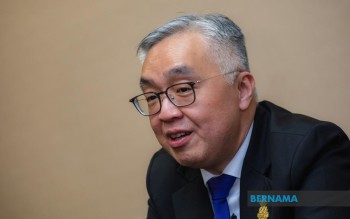
The Food and Drinks Malaysia exhibition is on track to break through last year's sales ceiling of RM1.081 billion as the country's food and beverage sector demonstrates resilience against mounting external pressures. Henri Tan, managing director of SIAL Network ASEAN & India, expressed optimism about exceeding the previous target, attributing the expected growth to a confluence of factors including heightened buyer-seller interactions, surging exhibitor and visitor numbers, and sustained appetite for Malaysian food products and raw materials across international markets.
The three-day event, hosted at the Malaysia International Trade and Exhibition Centre and organised by SIAL, the world's premier food innovation network, has drawn considerable international attention with more than 450 exhibitors from across the globe. The international contingent represents approximately 60 per cent of all participants, with major representation from South Korea, Brazil and Turkiye, reflecting the growing appetite among global food companies to access ASEAN markets and source from Malaysian suppliers. This international calibre speaks to Malaysia's positioning as a strategic hub within the regional food ecosystem.
Visitor numbers are projected to climb significantly to 18,000 participants, representing a 20 per cent increase from the 15,184 attendees recorded during the previous edition. This surge in footfall underscores the gathering importance of the exposition as an annual meeting point for industry stakeholders seeking to navigate an increasingly complex global food landscape. The expected traffic surge reflects not merely seasonal fluctuations but rather a deliberate pivot by international companies to strengthen their presence and networks within Southeast Asian markets.
However, beneath this optimistic outlook lies a sobering reality: the global food industry is grappling with intensifying cost pressures and supply chain fragmentation. Geopolitical tensions, particularly the ongoing conflict in West Asia, have disrupted critical shipping lanes including the Strait of Hormuz, creating bottlenecks that have inflated transportation expenses and, by extension, food prices throughout Malaysia and the region. These disruptions have cascading effects across the entire supply chain, from raw material sourcing through to final consumer prices.
Industry participants are increasingly vocal about the need for government intervention to cushion the impact of rising operational costs. Tan highlighted the potential for the 2027 Budget to serve as a policy instrument for supporting food manufacturers, producers and retailers through targeted technological funding initiatives. Such support could enable businesses to invest in digital infrastructure and train their workforces in adopting cutting-edge technologies that enhance operational efficiency and reduce waste across production processes.
Small and medium enterprises, which form the backbone of Malaysia's food sector, face particular vulnerability to current economic headwinds. Tax incentives, subsidies and financial support mechanisms could enable these smaller players to absorb new technologies, upgrade their business capabilities and, critically, harness artificial intelligence tools to streamline operations and improve competitiveness. AI adoption remains a frontier for many SMEs, yet its potential to revolutionise production planning, quality control and supply chain visibility is substantial and increasingly urgent.
Regional cooperation emerges as a vital antidote to supply chain fragmentation. Tan advocated for enhanced regulatory alignment and cross-border collaboration among ASEAN member countries to facilitate efficient sourcing of food products and ingredients within the region. Closer integration between Malaysia, Thailand and Indonesia could enable manufacturers to build resilient supply networks grounded in regional production and distribution rather than maintaining dependence on European and Middle Eastern sources, where logistical costs have surged due to geopolitical instability. Such intra-regional integration could simultaneously strengthen food security across the bloc while reducing import bills.
Yet realising this vision faces structural obstacles. Export quotas imposed by neighbouring countries and protectionist regulatory barriers reflect individual governments' prioritisation of domestic food security over regional market integration. Additionally, local production capacity remains insufficient to meet regional demand, compelling countries including Malaysia to source from distant suppliers such as India. Addressing this capacity gap requires coordinated investment in agricultural productivity, processing infrastructure and supply chain modernisation across Southeast Asia.
Food innovation presents a pathway through these challenges. Tan identified emerging success stories including oyster farming development in Johor, value-added durian product lines and novel applications of local ingredients such as pepper-based products. These initiatives demonstrate the industry's capacity to reduce import reliance while building higher-value product portfolios that command premium pricing in global markets. Innovation focused on resource efficiency and waste reduction can simultaneously address cost pressures and sustainability imperatives that increasingly influence consumer and institutional purchasing decisions.
The food and beverage sector's historical adaptability furnishes grounds for confidence despite contemporary uncertainties. The industry weathered the 2002 SARS outbreak and, more recently, the COVID-19 pandemic through a combination of business model innovation and consumer behaviour adjustment. These experiences suggest that Malaysian and Southeast Asian food companies possess the organisational flexibility and market acumen to navigate current geopolitical turbulence. Consumer spending patterns may shift, and businesses will continue refining efficiency measures, yet fundamental demand for food remains inelastic and provides a foundation for ongoing adaptation.
Looking forward, the trajectory of Malaysia's food sector hinges on three interdependent factors: targeted government policy support that addresses technology gaps and financial constraints for smaller enterprises, meaningful ASEAN-level regulatory harmonisation that unlocks regional supply chain potential, and sustained industry investment in innovation that transforms raw material into differentiated, value-added products. The Food and Drinks Malaysia exposition serves as both a barometer of industry health and a networking platform where these broader strategic imperatives are advanced through direct stakeholder engagement.

