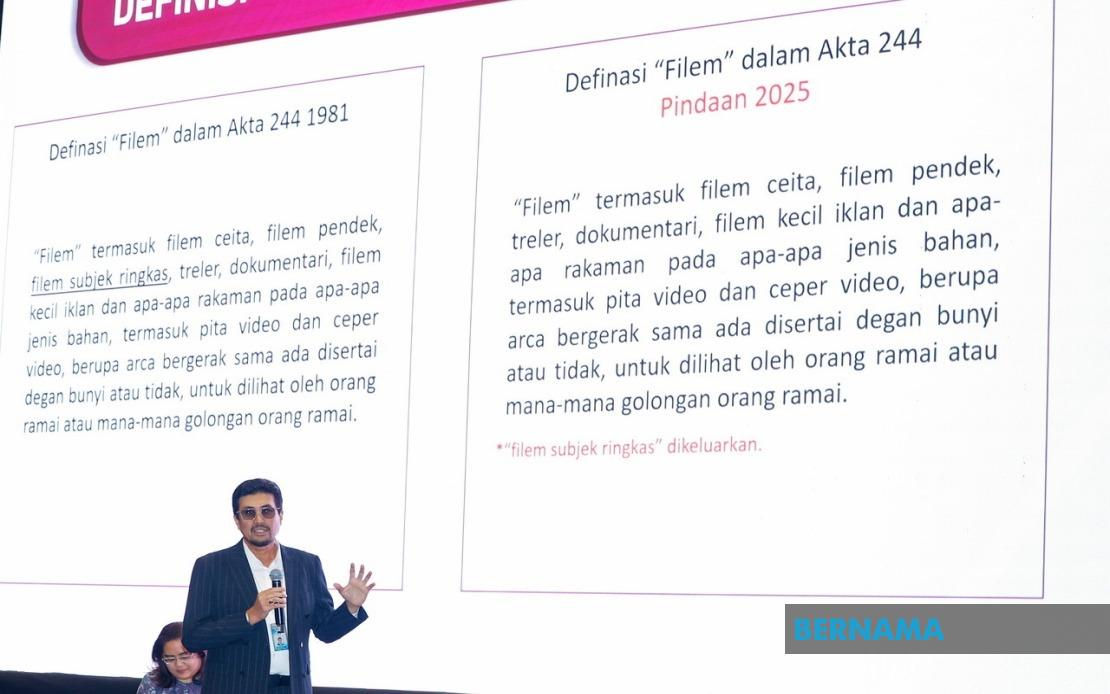
Malaysia's film industry is on the cusp of transformation with the impending launch of the National Film Policy 2026-2035, a comprehensive strategic framework designed to reshape how the country's creative sector operates and competes globally. The policy, which has undergone two years of intensive stakeholder consultation, represents the most significant legislative update to Malaysia's film governance since the previous framework was established in 2005. According to Datuk Azmir Saifuddin Mutalib, chief executive officer of the National Film Development Corporation Malaysia (FINAS), the policy is expected to receive Cabinet approval and launch by year-end, pending final refinements and formal publication.
The strategic direction embedded within the National Film Policy 2026-2035 reflects a deliberate pivot toward sustainability and economic viability. Whereas earlier policies focused primarily on content creation and industry support, this new iteration acknowledges the structural challenges facing Malaysian filmmakers—particularly the persistent difficulty in securing adequate financing for production and distribution. The policy encompasses more than 70 distinct initiatives organised across five foundational pillars: Financing and Investment; Marketing and Promotion; Industry Collaboration and Technology; Human Capital Development and Management; and Governance and Legislation. This multi-pronged architecture suggests policymakers have identified that no single intervention can address the sector's complexities, and instead favours a holistic, interconnected approach.
Alternative financing mechanisms emerge as perhaps the most commercially critical component of the new policy framework. Traditional sources of film funding in Malaysia—whether from production companies' retained earnings or government grants—have proven insufficient to match regional competitors, particularly neighbouring Thailand and Indonesia, which have developed more sophisticated venture capital ecosystems for creative content. The National Film Policy 2026-2035 signals a willingness to explore crowdfunding platforms, tax incentive structures, co-production partnerships with international studios, and private sector investment models that have proven successful elsewhere. For Malaysian producers and directors, this represents a genuine opportunity to scale productions beyond the current constraints imposed by limited capital availability.
Market expansion constitutes the second strategic lever, acknowledging that even well-crafted Malaysian films struggle to find audiences beyond the domestic population of roughly 34 million. Southeast Asian markets—including Indonesia, Thailand, Vietnam, and the Philippines—represent substantial untapped potential, particularly given shared cultural touchstones and increasingly accessible digital distribution platforms. The policy's emphasis on expanding market access suggests FINAS recognises that Malaysian cinema cannot achieve economic sustainability through domestic consumption alone. Strategic initiatives under this pillar likely include establishing distribution partnerships with regional streaming services, facilitating co-productions that broaden appeal across Southeast Asia, and supporting Malaysian filmmakers in securing theatrical releases in neighbouring countries.
The deliberate incorporation of artificial intelligence and advanced technology adoption marks a departure from previous policy iterations, reflecting the sector's accelerating digital transformation. AI applications in film range from scriptwriting assistance and post-production automation to predictive analytics for audience targeting and distribution optimisation. For Malaysia, embracing these tools could substantially improve production efficiency and reduce per-unit costs, making Malaysian content more competitive on international platforms. However, this technological pivot also raises important questions about employment in traditional film roles—an issue that the policy's Human Capital Development pillar presumably addresses through workforce retraining and new certification standards.
The governance structure underpinning the National Film Policy 2026-2035 reflects extensive coordination across multiple government agencies and educational institutions. The policy's formulation involved consultations with industry players, government ministries, and cultural bodies including Universiti Teknologi MARA (UiTM) and the National Academy of Arts, Culture and Heritage (ASWARA). This consultative approach, while time-consuming—accounting for the two-year development timeline—offers the advantage of generating broad stakeholder buy-in and reducing policy conflicts across jurisdictions. A recurring theme from recent stakeholder engagement sessions centred on clarifying cooperation frameworks between FINAS and industry associations, suggesting that implementation success will depend heavily on clear delineation of responsibilities and collaborative mechanisms.
Intellectual property protections represent another substantive component, addressing a persistent vulnerability within Malaysia's creative sector. Piracy remains endemic across Southeast Asia, with estimated losses to content creators exceeding hundreds of millions annually. Strengthened IP frameworks within the National Film Policy 2026-2035 should encompass enhanced enforcement mechanisms, clearer legal pathways for protecting original works, and potentially international coordination to combat cross-border piracy. For independent Malaysian filmmakers and small production companies, robust IP protections could provide the assurance necessary to invest in original content without fearing wholesale theft of their creative output.
The philosophical positioning of cinema within Malaysian society represents a subtle but consequential evolution. Previous policy iterations emphasised content production and industry support; the National Film Policy 2026-2035 explicitly frames the film sector as an engine of economic growth, a platform for expressing Malaysia's multicultural identity, and an instrument for fostering national unity. This rhetorical shift carries practical implications, potentially elevating the sector's priority within broader government economic strategy and resource allocation. Moreover, positioning film as a reflection of Malaysian multiculturalism—encompassing Malay, Chinese, Indian, and indigenous perspectives—could encourage more diverse storytelling while potentially broadening appeal to international audiences curious about Southeast Asian societies.
Implementation timelines and funding mechanisms remain subjects requiring clarification. While FINAS leadership has committed to finalising the policy document and securing Cabinet approval within 2024, the actual deployment of the 70+ initiatives across five pillars will likely extend across the entire 2026-2035 period. Critical questions regarding budget allocation, which government agencies bear responsibility for specific initiatives, and mechanisms for tracking progress against defined success metrics require detailed exposition in the final policy documentation. Malaysian stakeholders—producers, directors, cinematographers, and investors—will be scrutinising these implementation details closely, as policy announcements without adequate resourcing frequently languish.
Regional dynamics add urgency to Malaysia's film policy refresh. Thailand's film industry has achieved international breakthrough success through strategic government support and venture capital mobilisation, while Indonesia's production output substantially exceeds Malaysia's despite comparable population sizes. Vietnam's emerging film sector has attracted regional and international investment capital by offering tax incentives and streamlined licensing processes. Within this competitive context, the National Film Policy 2026-2035 represents Malaysia's deliberate attempt to reclaim competitive ground and establish cinema as a genuine economic sector rather than a cultural subsidy. Success will require not merely policy adoption but sustained government commitment, private sector engagement, and industry-wide coordination across a fragmented sector.
The pathway from policy framework to tangible industry transformation involves numerous implementation challenges. Coordination failures between government agencies, insufficient funding allocations, bureaucratic delays in approving initiatives, and resistance from entrenched interests within existing structures could substantially diminish the policy's impact. Conversely, if executed with genuine commitment and adequate resources, the National Film Policy 2026-2035 could catalyse a meaningful renaissance of Malaysian cinema—attracting domestic talent retention, encouraging international investment, and establishing the sector as a genuine economic contributor. The coming years will reveal whether this policy represents genuine structural reform or merely aspirational rhetoric.
For Malaysian audiences and international observers, the National Film Policy 2026-2035 signals that policymakers have acknowledged cinema's potential as both cultural expression and economic asset. The emphasis on alternative financing, market expansion, and technological adoption reflects realistic assessment of global industry trends and regional competitive dynamics. Whether FINAS and government partners can successfully translate these policy commitments into sustained industry growth remains an open question, but the comprehensive nature of the strategic framework and the extensive consultation process suggest a serious institutional commitment to systematic reform. The sector awaits Cabinet approval and formal launch with considerable anticipation.

