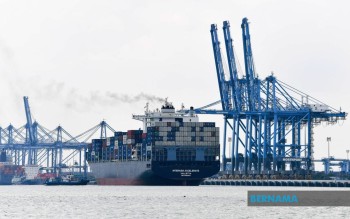
Malaysia's export sector is poised for substantial growth in 2026, with major investment banks significantly raising their forecasts amid strengthening global demand for technology products. RHB Investment Bank has upgraded its projection for the year to 21.7 per cent, representing a substantial revision from its earlier estimate of 15.3 per cent. This bullish reassessment reflects the country's robust export performance in the opening months of 2026, when shipments expanded by 27.5 per cent year-on-year, demonstrating momentum that has exceeded analyst expectations and pointing to sustained external demand.
The electrical and electronics sector stands as the primary engine driving this optimistic outlook. The ongoing global technology upcycle, coupled with the accelerating investment cycle in artificial intelligence, has created robust demand for semiconductors and related components—areas where Malaysia maintains significant manufacturing capabilities and deep integration into regional supply chains. This sector-specific strength provides a structural foundation for growth that extends beyond cyclical factors, as the demand drivers rooted in AI infrastructure expansion, cloud computing expansion, and the proliferation of data centres appear durable rather than temporary.
Supporting these positive indicators, Malaysia's trade balance has strengthened considerably. The country recorded a trade surplus of RM83.9 billion in the second quarter of 2026, a dramatic improvement compared with just RM15.3 billion in the corresponding quarter of the previous year. This fivefold increase in the trade surplus reflects both robust export expansion and measured import growth, delivering a significant contribution to overall economic activity. The widening surplus is expected to provide a meaningful tailwind to the country's second quarter gross domestic product figures, enhancing Malaysia's macroeconomic performance as measured in official statistics.
Parallel to RHB Investment Bank's assessment, MBSB Investment Bank has similarly upgraded its 2026 export forecast to 18.9 per cent, compared with 6.6 per cent recorded in the prior year. This independent projection corroborates the broader narrative of accelerating export momentum, though at a slightly more moderate pace. MBSB attributes this expansion to dual drivers: strengthening global appetite for technology-intensive products and rising international demand for commodity exports, particularly petroleum products and liquefied natural gas. This diversification of export growth sources—spanning both value-added manufacturing and natural resource sectors—suggests Malaysia's export base possesses breadth that should sustain momentum even if individual sectors experience cyclical softness.
Imports are also expected to accelerate in tandem with exports, reflecting Malaysia's role as both a manufacturing hub and a consumer market expanding with domestic economic activity. MBSB projects import growth of 13 per cent in 2026, up significantly from 6.0 per cent in the previous year. This parallel expansion of both imports and exports underscores Malaysia's deeply embedded position within multi-country supply chains, particularly across Southeast Asia. The country simultaneously sources components and materials from trading partners while supplying finished or semi-finished goods to global markets, a pattern that generates multiplier effects throughout the region.
Recent merchandise trade data provides empirical support for these projections. In June 2026 alone, Malaysia's total trade volume expanded by 44.7 per cent to RM340.9 billion, with exports climbing 45.4 per cent to RM177.9 billion and imports rising 43.9 per cent to RM163.0 billion. The trade surplus during the month surged 64.9 per cent to RM14.9 billion. These monthly figures, while subject to seasonal variation, demonstrate the potency of underlying demand and the scale of momentum already evident in real-time trade flows.
Analysts attribute Malaysia's resilience and growth prospects to the country's diversified economic structure and established position within global and regional supply networks. Unlike economies overly dependent on single sectors or trading relationships, Malaysia maintains exposure to multiple industries and markets. The country's semiconductor manufacturing ecosystem, petrochemical capabilities, palm oil production, and diverse service sectors create inherent buffers against sector-specific shocks. This structural diversity has proven particularly valuable as global supply chains have undergone realignment in response to trade tensions and geopolitical fragmentation in recent years.
However, several headwinds warrant careful monitoring. Prolonged geopolitical tensions—including ongoing disputes that affect shipping routes and trade relationships—could disrupt global commerce and dampen external demand. More immediately, persistently elevated oil prices could increase production costs, transportation expenses, and operational overhead for Malaysian exporters. Should energy price inflation persist, it could compress profit margins in export-oriented manufacturing sectors that operate on relatively thin returns, potentially constraining investment and limiting capacity expansion even amid robust demand.
The outlook for semiconductor and electronics exports specifically remains constructive, but not without vulnerability. Global semiconductor demand is driven by genuine structural trends including the expansion of artificial intelligence infrastructure, the buildout of cloud computing facilities, the acceleration of electric vehicle production, and the increasing automation of industrial processes. These demand sources appear durable and are expected to support the sector through 2026 and beyond. However, semiconductor markets are cyclical, and competitive dynamics can shift rapidly as manufacturing capacity expands across Asia. Supply chain disruptions, whether from geopolitical events, natural disasters, or logistics failures, could interrupt exports despite healthy underlying demand.
Trade policy represents another critical risk dimension. Both investment banks flag potential tightening of trade rules, particularly policies emanating from the United States. Any escalation of protectionist measures—whether in the form of tariffs on technology products, restrictions on semiconductor sales, or broader trade barriers—could rapidly undermine the demand conditions that currently support Malaysia's export growth. The U.S. market remains significant for Malaysian exports, and changes in American trade policy would transmit quickly through global supply chains to affect Malaysian manufacturers.
Beyond near-term cyclical considerations, Malaysia's continued success in export markets depends on sustained efforts to diversify both the geographic distribution of sales and the product composition of shipments. Competition from other Southeast Asian nations and from lower-cost producers in South Asia and elsewhere will intensify as global growth moderates from its current pace. Malaysian policymakers and private sector leaders must ensure that competitive advantages rooted in infrastructure quality, technical expertise, and supply chain position are continuously renewed through investment in skills development, industrial modernization, and technological capability building.
The 2026 export growth projections, while encouraging, should be understood within a context of heightened global uncertainty. Geopolitical risks, trade policy unpredictability, and the potential for demand softening if artificial intelligence investments disappoint all represent genuine tail risks. The investment banking consensus remains positive, but with acknowledged downside risks that could significantly alter outcomes. For Malaysian policymakers and businesses, the current environment presents both an opportunity to maximize returns from favorable external conditions and an imperative to build resilience against potential future shocks.

