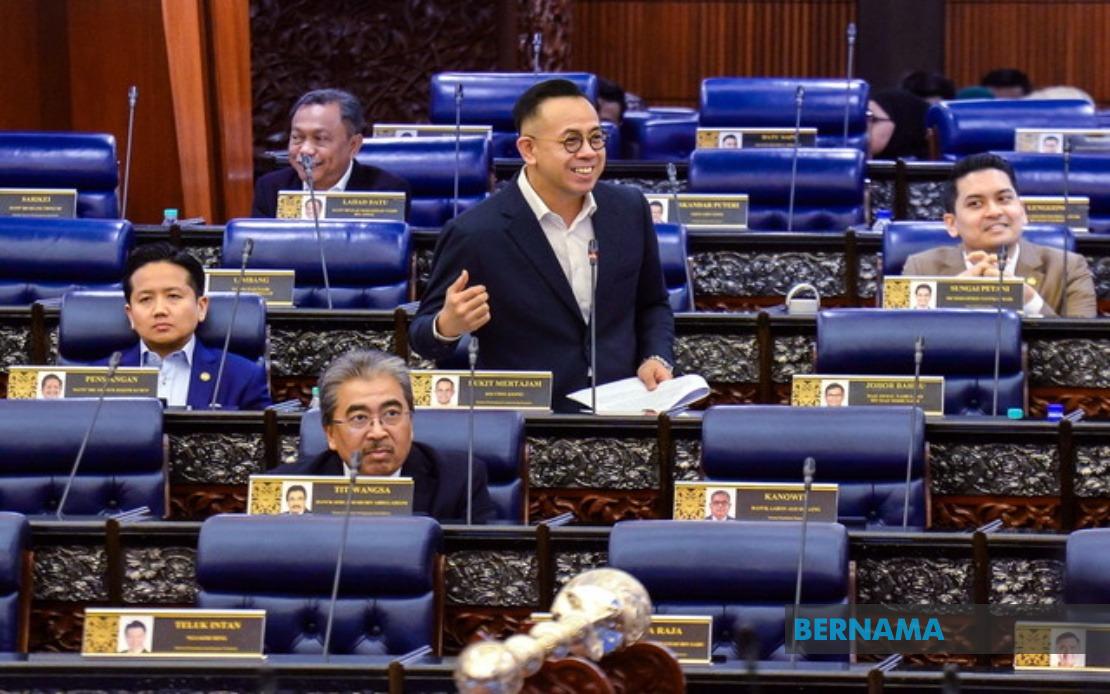
The Ministry of Entrepreneur and Cooperative Development (KUSKOP) has committed nearly RM3 billion between 2023 and 2025 to strengthen the entrepreneurial base among Bumiputera business owners, according to Minister Steven Sim Chee Keong. The government's sustained investment signals a deliberate policy shift toward tangible economic empowerment rather than symbolic gestures, reflecting the administration's recognition that meaningful business development requires substantial and sustained financial commitment.
The ministry measures programme success not merely through disbursement figures but through concrete business outcomes experienced by participating entrepreneurs. Among the key performance indicators tracked by KUSKOP are documented sales increases of at least 20 per cent among programme participants and verified cases of 150 companies successfully scaling up their operations. This outcomes-based approach represents a departure from traditional metrics that focus solely on fund distribution, instead emphasizing whether supported businesses achieve genuine commercial viability and market competitiveness.
Simultaneously, KUSKOP's financing machinery has maintained robust activity throughout 2025. During the first five months of this year alone, the ministry approved RM5 billion in financing arrangements benefiting nearly 180,000 entrepreneurs across multiple demographic groups and business sectors. This broad-based approach acknowledges that while Bumiputera empowerment remains a priority, the ecosystem supporting small and medium enterprises requires inclusive institutional support spanning all communities for systemic resilience.
When narrowing focus specifically to Bumiputera-targeted initiatives, the figures remain substantial. Between 2025 and May 2026, dedicated programmes administered through KUSKOP agencies have extended RM1.407 billion in financing to over 53,000 Bumiputera entrepreneurs. Within this cohort, the ministry has paid particular attention to youth engagement, with more than 11,469 young Bumiputera recipients accessing over RM251 million in support. Youth-focused entrepreneurship programming addresses demographic concerns about employment transitions and generational wealth creation while potentially establishing long-term business leaders.
Beyond conventional financing, KUSKOP has strategically incorporated halal industry development into its entrepreneurial support architecture. The ministry operates various initiatives helping business owners navigate halal certification processes, a credential increasingly essential for accessing regional and international markets. For Malaysian entrepreneurs, halal certification extends commercial reach into the Organisation of Islamic Cooperation marketplace representing nearly two billion consumers while enhancing domestic market positioning within Islamic finance and consumption sectors.
The institutional response to pressures for improved coordination reveals evolving sophistication in government entrepreneurship support delivery. Following proposals from parliamentarians regarding consolidated information systems, KUSKOP designated SME Corp Malaysia as the primary coordinating agency responsible for integrating assistance programmes. This centralization effort seeks to eliminate the traditional fragmentation where entrepreneurs must navigate multiple government departments independently, reducing transaction costs and information asymmetries that frequently disadvantage smaller business operators.
The designated coordinating role requires SME Corp to function as an integrated service hub addressing financing, grants, and various support mechanisms simultaneously. Rather than simply processing applications, the institution acts as a navigator directing entrepreneurs toward appropriate agencies based on their specific circumstances, business maturity levels, and sectoral requirements. This intermediation function reflects recognition that entrepreneur access to opportunity depends not only on programme availability but on knowledge about which interventions suit particular situations.
Recognizing information fragmentation across government, KUSKOP has initiated development of a consolidated digital portal functioning as a one-stop information and application centre. This platform aggregates offerings from more than 60 government agencies, attempting to make visible the full ecosystem of support available to aspiring and established business owners. In Southeast Asian contexts where government services remain distributed across multiple institutions, such consolidation efforts reduce barriers particularly affecting rural entrepreneurs and those operating outside major commercial centres lacking informal networks connecting them to opportunity information.
The scale of ministry operations reflects deeper government conviction that entrepreneurship represents a legitimate development strategy alongside conventional employment expansion. By concentrating RM3 billion specifically toward Bumiputera business empowerment over a three-year window, policymakers signal commitment to wealth creation pathways for communities historically experiencing lower business ownership rates and capital access. The approach acknowledges that structural inequality in business participation requires deliberate, sustained, and adequately resourced intervention rather than marginal adjustments to existing frameworks.
For Malaysian business observers and potential entrepreneurs, the disclosed financing volumes and outcomes suggest a ministry genuinely attempting to move beyond administrative rhetoric toward measurable impact. The 20 per cent sales growth baseline and 150-company scaling achievements provide benchmarks against which future performance can be assessed, establishing accountability mechanisms often absent in government entrepreneurship programming. Whether these achievements represent genuine market-driven success or reflect supportive measurement methodologies remains subject to independent verification.
The coordinated approach emerging around SME Corp and the proposed portal infrastructure indicates institutional learning within KUSKOP about what prevents entrepreneurs from accessing available support. Rather than simply increasing programme budgets, the ministry addresses systemic friction points that render even generous allocations ineffective when entrepreneurs cannot efficiently locate or navigate relevant opportunities. This systems-thinking approach may ultimately prove more consequential than individual programme size for measurable entrepreneurship growth across Malaysian communities.

