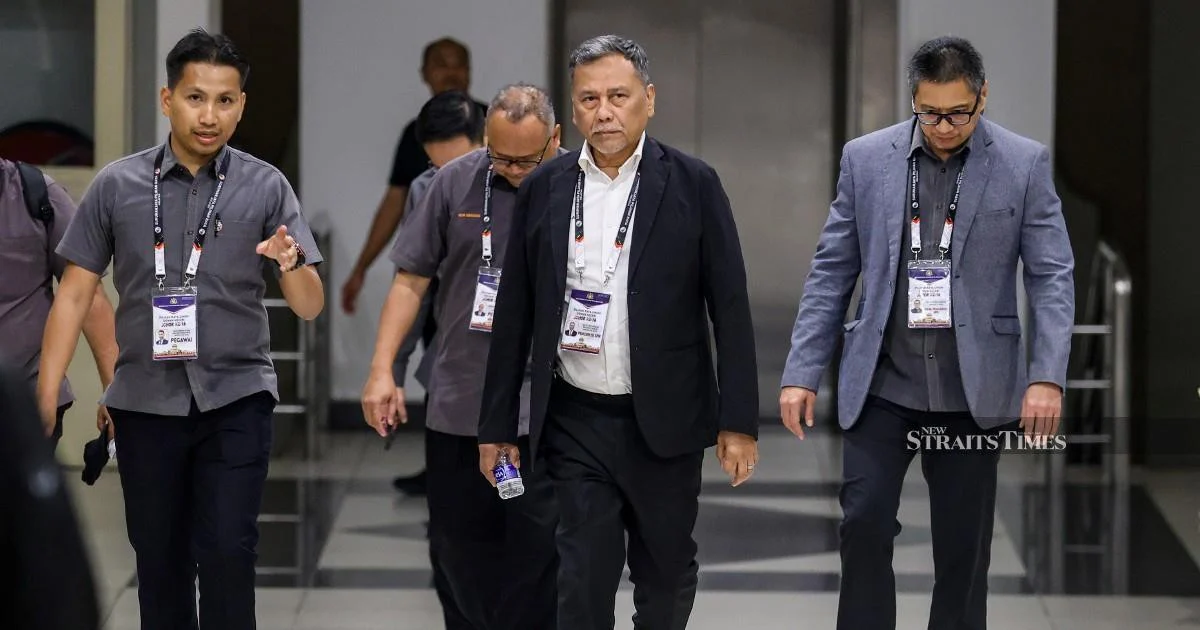
The Election Commission announced in Iskandar Puteri that it intends to examine cases where voters have been uploading photographs of marked ballot papers to social media platforms, marking a growing concern about the integrity of electoral processes in the digital age.
The development comes as election officials grapple with an emerging practice where voters, particularly younger Malaysians, document and share evidence of their voting choices online. This phenomenon has become more prevalent during recent electoral cycles, with supporters of various political parties using marked ballot photographs as proof of support, sometimes amplified by campaign networks and political machinery.
The secretive nature of the ballot box has long been considered a cornerstone of democratic elections worldwide, intended to protect voters from coercion, intimidation, and vote-buying schemes. Malaysia's electoral framework similarly enshrines ballot secrecy as a fundamental principle, embedded in both the federal constitution and election regulations. When voters publicly disclose their voting choices through photographs, they potentially undermine this foundational protection.
The phenomenon presents a complex challenge for electoral authorities. While individual voters posting such images might be exercising what they perceive as freedom of expression, the broader pattern—particularly when encouraged by political operatives—can create environments conducive to vote-buying, where individuals feel pressured to document their support for specific candidates or parties. In Southeast Asia's political context, where electoral malpractices have historically posed challenges in several democracies, this issue carries particular weight.
For Malaysian voters, the implications extend beyond abstract principles. Vote-buying remains a tangible concern in certain constituencies, and marked ballot photographs provide documentary evidence that can be leveraged by unscrupulous operators. The emergence of this practice on social media platforms—where political content spreads rapidly and reaches vulnerable populations—elevates the risk of coordinated efforts to compromise electoral integrity.
The Election Commission's decision to conduct a more thorough review suggests recognition of this problem and an intent to develop appropriate responses. However, regulatory approaches present their own complications. Determining whether individual voters have willingly shared such images or have been coerced into doing so requires careful investigation. Additionally, enforcing restrictions on such behaviour while respecting legitimate freedoms demands nuanced policy-making.
International precedent offers some guidance. Other democracies have addressed similar issues through a combination of public education campaigns emphasising ballot secrecy principles, investigation of organised vote-buying schemes, and in some cases, targeted enforcement against political operatives rather than individual voters. The emphasis typically falls on disrupting the incentive structures that make such documentation valuable to electoral fraudsters.
For Malaysia's political ecosystem, this review period will be significant. As the country approaches electoral cycles at both federal and state levels, clearer guidance on permissible conduct around ballot documentation could influence political behaviour substantially. The Election Commission faces pressure to protect electoral integrity while avoiding accusations of partisan enforcement, a balance that has proven challenging for the commission in previous years.
The social media dimension adds urgency to the matter. Platforms like Facebook, Instagram, and TikTok have become primary channels for political mobilisation in Malaysia, particularly among younger demographics. Once a marked ballot photograph is posted, removing it becomes difficult—the image may be screenshotted, shared across multiple platforms, and remain accessible indefinitely. This permanence and reach distinguish social media-based violations from in-person vote disclosure.
Stakeholders from across Malaysia's political landscape will likely scrutinise the Election Commission's approach carefully. Opposition parties may emphasise protection of electoral integrity, while government-aligned actors might raise concerns about overreach. Civil society organisations focused on democratic governance will be monitoring whether the review leads to actions that genuinely address organised schemes or merely constrain individual expression.
The commission's investigation will need to distinguish between various categories of behaviour. A voter posting a personal ballot photograph differs markedly from political operatives orchestrating coordinated campaigns of marked ballot imagery. A campaign worker encouraging constituents to document their votes occupies yet another category. Proportionate responses to this spectrum will require analytical rigour and institutional clarity.
Looking forward, the Election Commission may consider recommendations to political parties, guidance to social media platforms about removing such content, or refinements to electoral offences legislation. Public education campaigns explaining why ballot secrecy matters—not as technicalities but as protections against fraud—could shift cultural norms among voters.
Ultimately, this review reflects how electoral systems worldwide must adapt to technology and changing voter behaviour. Malaysia's response will set precedent for the region, where several countries face similar challenges as digital platforms reshape political participation. How the Election Commission balances protection of secrecy with practical enforcement capabilities will influence not just immediate electoral conduct but also broader public trust in the integrity of Malaysian elections.

