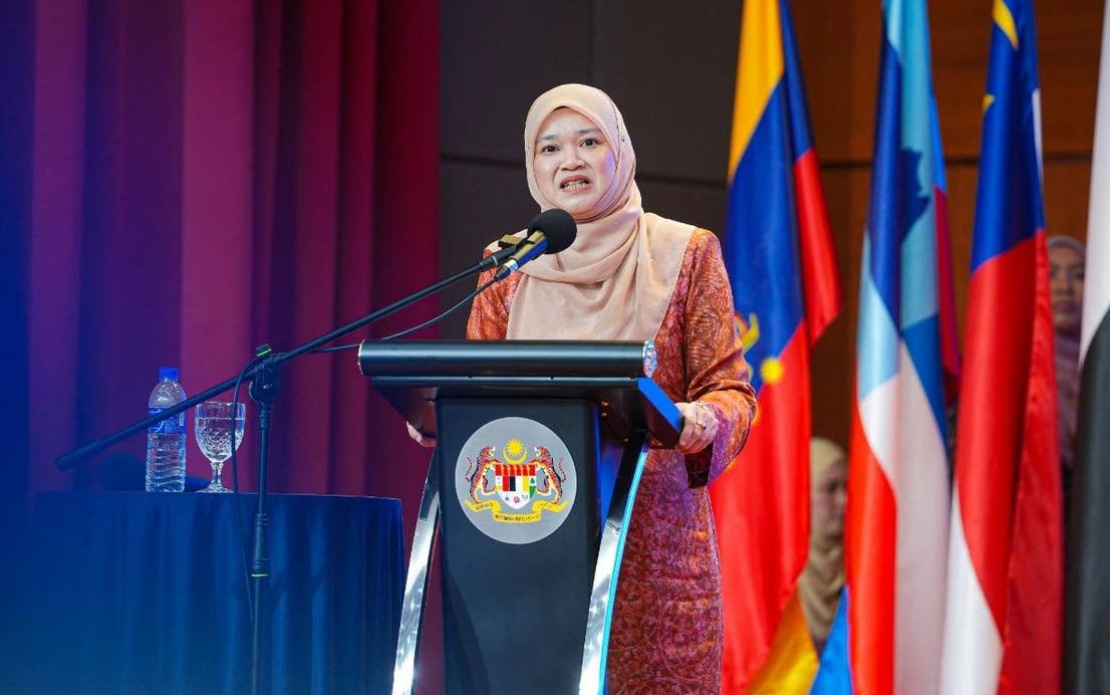
The Education Ministry has signalled a significant shift in educational policy by exploring how to formally recognise the co-curricular achievements and skills training undertaken by students within the nation's prison institutions. Minister Fadhlina Sidek announced the initiative whilst closing the 17th Hijrah Kasih Programme in Kajang, a collaborative effort between the ministry and the Malaysian Prison Department that champions educational advancement for incarcerated learners.
The core objective underpinning this review is straightforward yet ambitious: ensuring that educational pathways remain open for students even after they complete the Sijil Pelajaran Malaysia (SPM) and are released from prison institutions. Rather than treating their schooling as a terminal point, the ministry envisions a continuum where achievements gained during incarceration—whether in sports competitions, cultural activities, or practical pursuits—translate into tangible advantages when applying to universities. This approach acknowledges that merit and potential are not diminished by circumstance, and that students deserve recognition regardless of their institutional setting.
Parallel to co-curricular recognition, the ministry is exploring partnerships with the Technical and Vocational Education and Training division to award formal skills certificates. Students within these institutions acquire practical competencies spanning sewing, food preparation, and other trades that hold genuine value in the job market. By credentialising these skills, the ministry aims to equip students with marketable qualifications alongside their academic records, substantially improving their prospects upon reintegration into society.
The announcement gains particular significance given the demonstrated academic excellence emerging from prison schools. Over two consecutive years, students at these institutions have achieved a perfect pass rate in the SPM—a performance that decisively refutes assumptions linking circumstance to educational failure. Minister Sidek emphasised that success hinges not on institutional geography or privileged conditions, but on personal determination and resolve. This messaging reframes the narrative around incarcerated students, positioning them as achievers rather than statistics of disadvantage.
Implementing these reforms requires addressing persistent infrastructure gaps. Deputy Director-General of Education Datuk Zainal Abas revealed that the ministry is pursuing formal recognition of Physical, Sports and Co-curricular Assessment (PAJSK) scores this year, with the intention that SPM candidates from 2027 onwards can leverage these scores as merit components in university applications. The target involves translating co-curricular achievements into a standardised 10 per cent merit boost for higher education entry—a concrete mechanism that transforms aspirational policy into quantifiable advantage.
Digital equity represents another critical frontier. The Ministry is investigating ways to extend the DELIMa (Digital Educational Learning Initiative Malaysia) platform to integrity schools and Henry Gurney schools nationwide, enabling teachers to access digital resources and pedagogical tools comparable to those available in mainstream institutions. Crucially, officials are examining controlled access mechanisms that would permit students themselves to participate in online learning and retrieve educational materials digitally, thereby narrowing the technological divide that could otherwise disadvantage their learning outcomes.
The broader context reveals a ministry grappling with questions of social equity and institutional fairness. Prison schools serve an exceptionally vulnerable demographic: young individuals whose circumstances have placed them beyond conventional educational boundaries. Rather than accepting educational discontinuity, the MOE is attempting to construct bridges—through credentialisation, digital inclusion, and merit recognition—that facilitate smoother transitions to post-secondary life.
Parental engagement emerges as an equally vital consideration in this framework. Minister Sidek highlighted the importance of family support systems, particularly when students navigate their most challenging periods. This acknowledgement reflects understanding that educational success for incarcerated youth requires emotional and relational scaffolding alongside institutional investment. Families maintaining connection and encouragement become force multipliers in institutional efforts.
For Malaysian society and regional observers, this initiative signals evolving thinking about educational rehabilitation and second chances. Rather than viewing incarceration as terminal, the approach repositions it as a correctable circumstance from which learners can emerge with enhanced credentials and dignity. The policy implications extend beyond immediate beneficiaries: they suggest that systemic barriers to educational access can be methodically dismantled through deliberate, multi-faceted intervention.
Implementation will test the ministry's coordination capabilities and resource allocation. Achieving simultaneous recognition of co-curricular merit, skills certification, PAJSK standardisation, and digital platform expansion demands sustained institutional commitment. Yet the foundational principle—that incarcerated students deserve equitable pathways to higher education and economic opportunity—establishes a compelling policy direction that resonates with Malaysia's broader aspirations toward inclusive development.
The ministry's timeline for rolling out these measures remains selective. PAJSK recognition targeting 2027 SPM candidates suggests phased implementation rather than immediate universal application, allowing space for piloting and refinement. This measured approach reduces implementation risks whilst maintaining momentum toward systematic change that could fundamentally alter life trajectories for hundreds of incarcerated students annually.

