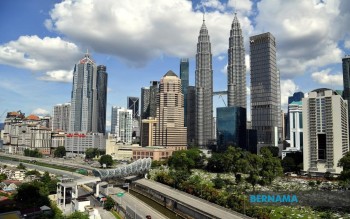
Malaysia's economy has continued to outpace regional and global expectations, expanding at 6.0 per cent in the second quarter of 2026, a performance that stands as the country's strongest quarterly result since 2014 outside pandemic-affected periods. Prime Minister Datuk Seri Anwar Ibrahim credited this resilience to a combination of deliberate government intervention and structural economic reforms implemented under the MADANI framework, which have insulated Malaysian households and businesses from the worst effects of international supply chain disruptions stemming from the West Asia conflict.
The government's strategic response to global economic headwinds has centred on direct support mechanisms designed to preserve purchasing power and sustain business operations. Financing schemes tailored to small and medium enterprises facing operational challenges, coupled with targeted fuel subsidies managed through the BUDI MADANI programme, have maintained domestic consumption levels and encouraged continued investment despite external uncertainty. These measures reflect a deliberate policy choice to cushion vulnerable populations whilst allowing the broader economy to expand, rather than implementing across-the-board austerity measures that might have constrained growth.
What distinguishes Malaysia's performance is its ability to maintain price stability whilst supporting economic activity. Despite global supply shocks pushing inflation upward in many economies, Malaysia's inflation rate remained contained at 1.9 per cent during the second quarter. This moderation owes significantly to the government's managed subsidy approach, which prevents commodity price shocks from cascading through consumer prices whilst avoiding the fiscal distortions associated with universal price controls. The MADANI Government has complemented this with cash assistance programmes, including Sumbangan Tunai Rahmah and Sumbangan Asas Rahmah, which directly supplement household incomes rather than artificially suppressing prices.
The second-quarter expansion of 6.0 per cent exceeded both the Department of Statistics Malaysia's own advanced estimate of 5.8 per cent and the median forecast from international analysts surveyed by Bloomberg. This consistent pattern of outperformance across three consecutive quarters demonstrates that Malaysia's growth is not merely a temporary bounce-back but reflects underlying economic momentum driven by both robust domestic demand and a competitive external sector. The economy's ability to expand faster than anticipated suggests that Malaysian businesses and consumers have adapted more efficiently to global disruptions than many counterparts in the region and beyond.
The composition of Malaysia's growth underscores the importance of the dual-engine approach. Resilient domestic demand reflects sustained consumer spending supported by government assistance and genuine employment growth, whilst the external sector has benefited from Malaysia's positioning within global supply chains for semiconductors, electronics, and petrochemical products. As international companies diversify sourcing away from countries directly affected by West Asia tensions, Malaysia has captured additional manufacturing orders and investment flows. This combination has enabled the economy to grow steadily rather than experience the volatile swings characteristic of economies dependent on a single growth driver.
Prime Minister Anwar's acknowledgement that growth benefits have not distributed evenly across Malaysian households and businesses reveals the government's awareness that headline statistics mask underlying pressures faced by workers and enterprises in particular sectors. Whilst aggregate growth figures are encouraging, cost-of-living pressures remain substantial for many Malaysians, and certain industries continue navigating difficult trading conditions. This candid assessment distinguishes the government's messaging from mere celebratory announcements and signals recognition that inclusive growth remains an unfinished agenda requiring sustained policy attention.
The first-half performance of 5.7 per cent growth positions Malaysia favourably against its full-year forecast range of 4.0 to 5.0 per cent. Meeting or exceeding this target would represent a significant achievement given the external uncertainties that have weighed on other economies in Southeast Asia and beyond. This trajectory suggests that the government's proactive approach has successfully decoupled Malaysia's growth trajectory from the pessimistic scenarios that many analysts anticipated when West Asia tensions intensified. The economy has proven sufficiently diversified and policy-responsive to absorb external shocks without collapsing into recession or stagnation.
Looking forward, the government has identified continued geopolitical uncertainty, persistent global supply chain disruptions, elevated input and food costs, and sectoral employment pressures as key risks that could undermine household well-being and business activity. These threats are neither new nor unique to Malaysia, but their ongoing presence requires sustained policy vigilance. The government has signalled its intention to continue prioritising measures that protect household purchasing power, support affected workers and enterprises, and ensure that economic growth translates into tangible improvements in living standards rather than remaining confined to aggregate statistics.
Malaysia's experience offers a compelling illustration of how proactive government policy, when carefully calibrated to avoid market distortions, can help economies weather external shocks whilst maintaining growth. The contrast between Malaysia's performance and the weaker outcomes in some regional peers suggests that policy design matters significantly. By combining targeted support for vulnerable groups with subsidies focused on essential commodities rather than universal price controls, and by maintaining macroeconomic discipline on inflation, the MADANI Government has created conditions conducive to sustained expansion. This approach contrasts sharply with both laissez-faire responses that leave households vulnerable and interventionist strategies that risk budgetary overextension.
The sustainability of Malaysia's growth trajectory will depend on whether external conditions stabilise or worsen in coming quarters. Whilst the West Asia situation remains fluid, Malaysia's diversified economic structure and flexible policy framework position the country relatively well to adapt to further developments. The challenge ahead lies not merely in maintaining headline growth figures but in ensuring that expansion benefits all segments of Malaysian society, particularly workers and small businesses navigating higher costs and uncertain trading environments.

