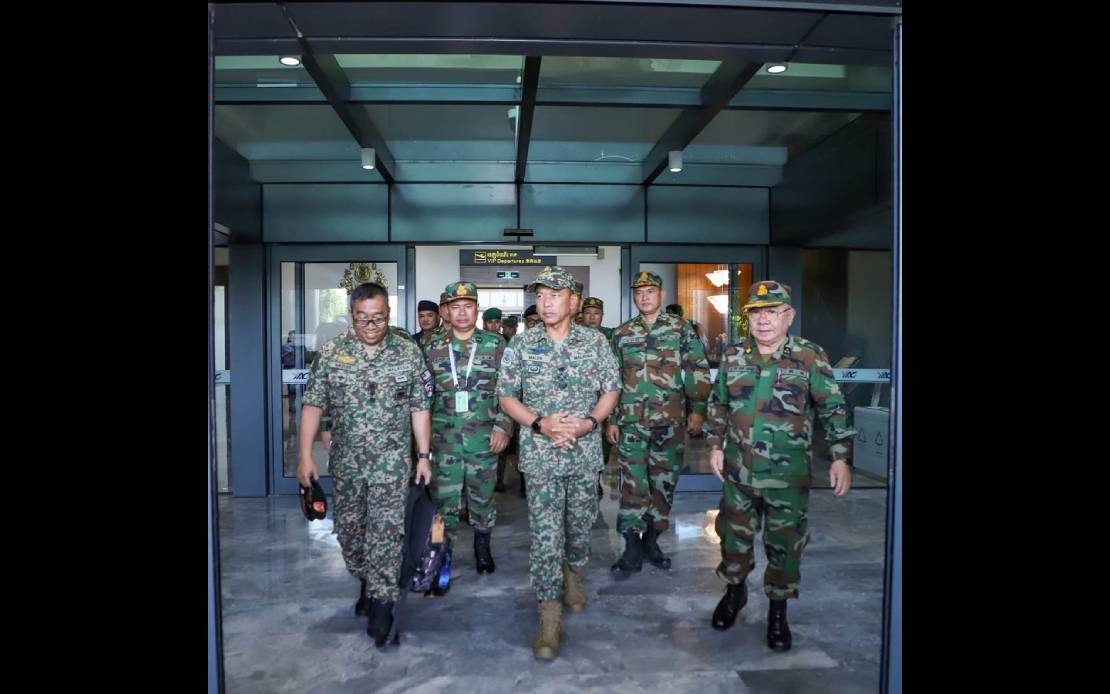
Malaysia's top military official, Gen Tan Sri Malek Razak Sulaiman, undertook a diplomatic visit to Cambodia's northwestern border region this week, signalling Kuala Lumpur's active engagement in monitoring regional stability amid ongoing tensions between two ASEAN neighbours. The Chief of Defence Force travelled to Banteay Meanchey province, a strategically significant area along the Cambodia-Thailand frontier, to obtain direct insight into the security environment and assess the effectiveness of international peacekeeping efforts currently in place.
The visit, occurring from July 8 to 11, came at the formal invitation of Cambodia's military leadership, specifically General Vong Pisen, Commander-in-Chief of the Royal Cambodian Armed Forces. This gesture underscores the diplomatic channels through which ASEAN members coordinate on sensitive border matters, particularly when territorial disputes have previously triggered armed confrontations. Such high-level engagement demonstrates Malaysia's commitment to playing a constructive role within the regional bloc, even when disputes involve other member states.
During his time in the border zone, Malek Razak received comprehensive briefings from the ASEAN Observer Team (AOT), a multinational contingent stationed specifically to monitor compliance with ceasefire agreements and maintain stability along the frontier. The AOT provided the Malaysian defence chief with current assessments of prevailing security conditions in Cambodia's northwestern province, offering him a detailed understanding of the challenges facing the region and the effectiveness of existing monitoring mechanisms.
The establishment of the AOT itself reflects the serious nature of the conflict that prompted its creation. The team was deployed following military clashes that erupted on July 24, 2025, when border disputes between Cambodia and Thailand escalated into direct armed confrontation. This violence underscored the fragility of ASEAN's internal stability and the potential for territorial disagreements to spiral into broader regional instability that could affect all member states, including Malaysia.
Currently, the Philippines leads the AOT in its capacity as the sitting ASEAN chair, a responsibility that carries significant diplomatic weight within the organisation. This leadership role places the Philippines at the forefront of regional dispute resolution and peacekeeping efforts, making it a key player in shaping how ASEAN responds to internal conflicts. Malaysia's participation in these monitoring frameworks, through visits such as Malek Razak's tour, reinforces the principle of collective responsibility for maintaining peace within the bloc.
For Malaysia specifically, the visit carries particular significance given the country's own border management challenges and its strategic interest in maintaining ASEAN cohesion. By demonstrating awareness of and concern for border security issues affecting other members, Malaysia reinforces its position as a stabilising force within Southeast Asia. The visit also allows Malaysian defence officials to gather intelligence and insights that could inform their own border management strategies and understanding of regional security dynamics.
The Cambodia-Thailand border dispute reflects broader tensions that have periodically flared between the two nations over competing territorial claims and demarcation issues. The July 2025 military confrontation represented one of the more serious recent incidents in a long history of occasional skirmishes along their shared frontier. The establishment of external monitoring mechanisms like the AOT represents ASEAN's attempt to prevent such incidents from escalating further and to create mechanisms for de-escalation and dialogue.
Malek Razak's presence in Banteay Meanchey symbolises Malaysia's commitment to understanding and addressing regional security challenges directly rather than from a distance. Defence chiefs typically undertake such missions when their nations view particular situations as requiring sustained attention and when they wish to strengthen bilateral relationships with counterparts in neighbouring countries. By visiting the border zone personally, Malek Razak demonstrated Malaysia's investment in the outcome of ASEAN's peacekeeping efforts.
The timing of the visit also reflects ongoing diplomatic efforts to maintain the fragile ceasefire and prevent further military escalation. With the AOT in place and led by the Philippines as ASEAN chair, there is an institutional framework attempting to manage the dispute, but the presence of senior defence officials from uninvolved member states like Malaysia helps reinforce the importance the bloc places on resolving internal conflicts peacefully. Such engagement also serves to remind Cambodia and Thailand of the broader ASEAN community's interest in their dispute resolution.
Looking forward, Malaysia's continued engagement with border security issues throughout ASEAN could position the country as a bridge-builder in regional disputes. By maintaining open dialogue channels with military and political leadership across the bloc, Malaysia enhances its ability to contribute to conflict prevention and resolution when tensions arise. The defence chief's visit to Cambodia thus extends beyond bilateral military cooperation to encompass Malaysia's broader role in supporting ASEAN's institutional mechanisms for maintaining peace and stability among member states.

