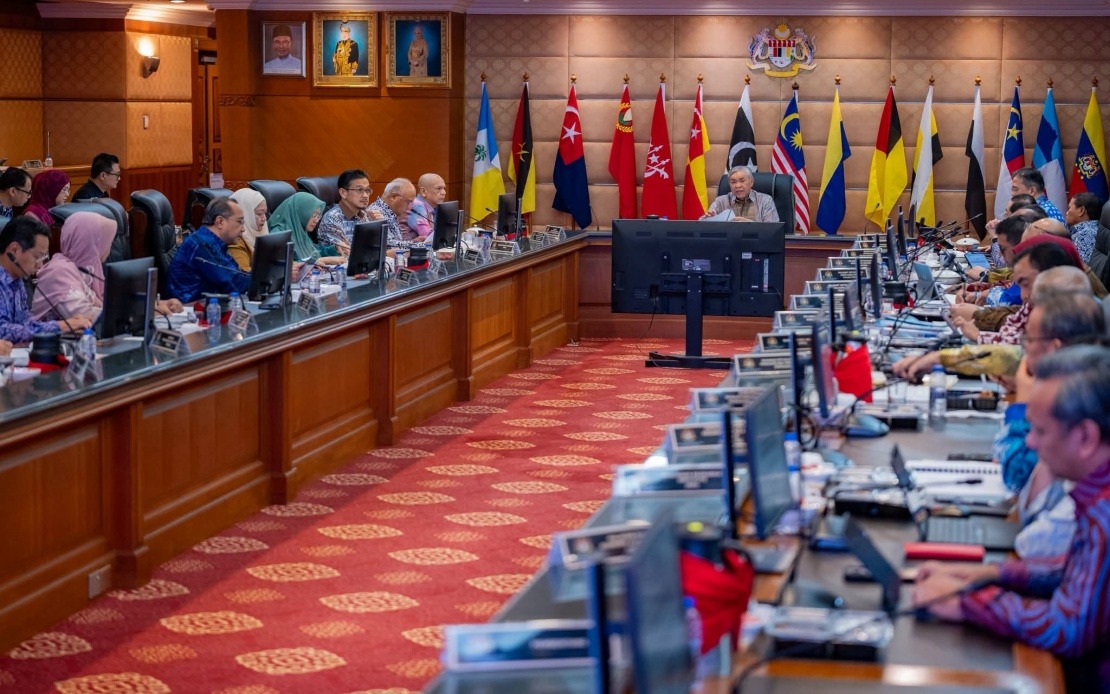
The National Cost of Living Action Council held its 18th Executive Committee meeting in Putrajaya on August 13, where Deputy Prime Minister Datuk Seri Dr Ahmad Zahid Hamidi led a comprehensive examination of how Malaysia can sustain its domestic rice sector while shielding economically disadvantaged communities from price shocks. The session reflected growing recognition that addressing affordability extends far beyond what appears on supermarket shelves, encompassing production expenses, distribution networks, nutritional security, medical fees, and educational access—particularly for those with limited means.
A central focus of the meeting involved scrutinising the local white rice roadmap, a strategic initiative designed to balance competing interests between household budgets and the economic viability of Malaysian farming operations. Ahmad Zahid emphasised that policymakers must navigate the tension between keeping rice affordable for consumers while ensuring producers—who depend on farming for their livelihoods—can sustain their operations without facing ruinous losses. This delicate equilibrium underscores a persistent challenge facing developing economies: protecting vulnerable populations without destabilising rural economies or eroding domestic agricultural capacity.
Among the concrete proposals emerging from the discussion was a phased transition strategy underpinned by subsidised rice supplies. This approach aims to provide a "soft landing" for lower-income households, allowing them time to adjust to any eventual policy modifications without experiencing abrupt purchasing-power losses. The measure reflects a shift away from blunt policy instruments toward more nuanced interventions that acknowledge the real constraints faced by poor families dependent on affordable staples. Rather than implementing sudden price adjustments, the framework enables gradual transition while maintaining a safety net for those least able to absorb costs.
The council also agreed to expand the Sumbangan Asas Rahmah (SARA) assistance programme—a direct cash-transfer initiative—to encompass fresh produce including fruits, vegetables, and fresh protein sources. This expansion signals recognition that food security involves more than carbohydrate intake; nutritional diversity and access to protein-rich foods matter substantially for health outcomes, particularly among children and vulnerable populations. By embedding fresh produce into targeted aid, the government aims to improve dietary quality rather than merely sustaining caloric consumption. This proposal will advance to the main NACCOL meeting chaired by Prime Minister Datuk Seri Anwar Ibrahim for formal consideration and potential approval.
Acknowledging external pressures on Malaysia's food system, Ahmad Zahid flagged mounting cost burdens affecting agricultural sectors and logistics operations. Geopolitical tensions in West Asia, volatile import markets, regulatory compliance expenses for imported goods, and the fiscal implications of subsidy restructuring collectively squeeze agricultural producers' margins. These multifaceted cost drivers create cascading effects throughout supply chains, potentially translating into consumer-level inflation if left unmonitored. The council's commitment to continuous surveillance of these risk factors reflects understanding that domestic price stability cannot be insulated from global economic and political currents.
To mitigate these pressures, relevant government agencies received directives to strengthen existing support mechanisms targeting farmers, fishermen, and affected communities. Rather than introducing novel programmes, the emphasis falls on refining established schemes to deliver assistance more effectively and efficiently. This approach acknowledges both budgetary constraints and implementation realities; strengthening existing infrastructure often proves more practical than launching parallel systems. Targeted interventions can address specific sectoral needs more precisely than universal approaches.
On healthcare costs, the council reviewed progress implementing 11 initiatives under the RESET strategy, designed to restrain private healthcare expenditure while simultaneously improving access and expanding treatment availability within the public system. This dual objective—controlling costs while enhancing quality and accessibility—represents ambitious policymaking. It recognises that healthcare affordability involves not merely capping prices but reshaping the competitive landscape and service delivery models to ensure cost-conscious consumers can access quality care without financial hardship. This healthcare review aligns with broader government priorities of integrated sector management rather than ad hoc interventions.
These individual initiatives gain coherence through their alignment with the Cost of Living Action Plan 2030, a comprehensive framework intended to coordinate action across multiple sectors. Rather than allowing different government agencies to pursue disconnected objectives, this integrated approach seeks synergies and prevents counterproductive policy conflicts. Healthcare measures, agricultural support, education funding, and aid programmes operate within a unified strategic architecture, increasing likelihood that improvements in one area reinforce rather than undermine progress elsewhere.
On education financing, Ahmad Zahid noted that 13 tertiary education assistance schemes distributed RM589.6 million to 62,937 Form Six and university students during the previous year. These figures illustrate the substantial public investment already directed toward reducing financial barriers to higher education, reflecting government philosophy that economic circumstances should never prevent capable young Malaysians from accessing tertiary qualifications. However, the council recognised that these support levels require reinforcement to universalise access, particularly as inflation erodes the purchasing power of fixed grant amounts and student populations grow.
The convergence of these policy discussions reveals how cost-of-living pressures permeate Malaysian society across sectors. A rice farmer cannot sustain production if input costs surge unmanageably; a student cannot concentrate on studies if hunger or illness distract from learning; a healthcare system cannot serve populations priced out of treatment. By examining rice policy, healthcare models, agricultural support, and education financing within a single strategic framework, Malaysia's policymakers implicitly acknowledge these interconnections. The challenge ahead involves translating recognition into effective execution, ensuring that proposed measures actually reach intended beneficiaries and achieve stated objectives without creating unintended fiscal or economic consequences.

